Mental math practice Normal Math Worksheets for Ages 5-9
5 filtered results
-
From - To
Boost your child's mental agility with our expertly crafted Normal Math Worksheets for Ages 5-9. Designed to enhance essential math skills, these engaging worksheets support young learners in developing quick, accurate calculations and problem-solving techniques. Each exercise focuses on building a strong foundation in addition, subtraction, multiplication, and division through fun, memorable activities. Ideal for both classroom and home use, our worksheets make math practice enjoyable and effective, empowering children to achieve their full potential and fostering a lifetime love of learning. Discover the benefits of consistency in mental math practice here!
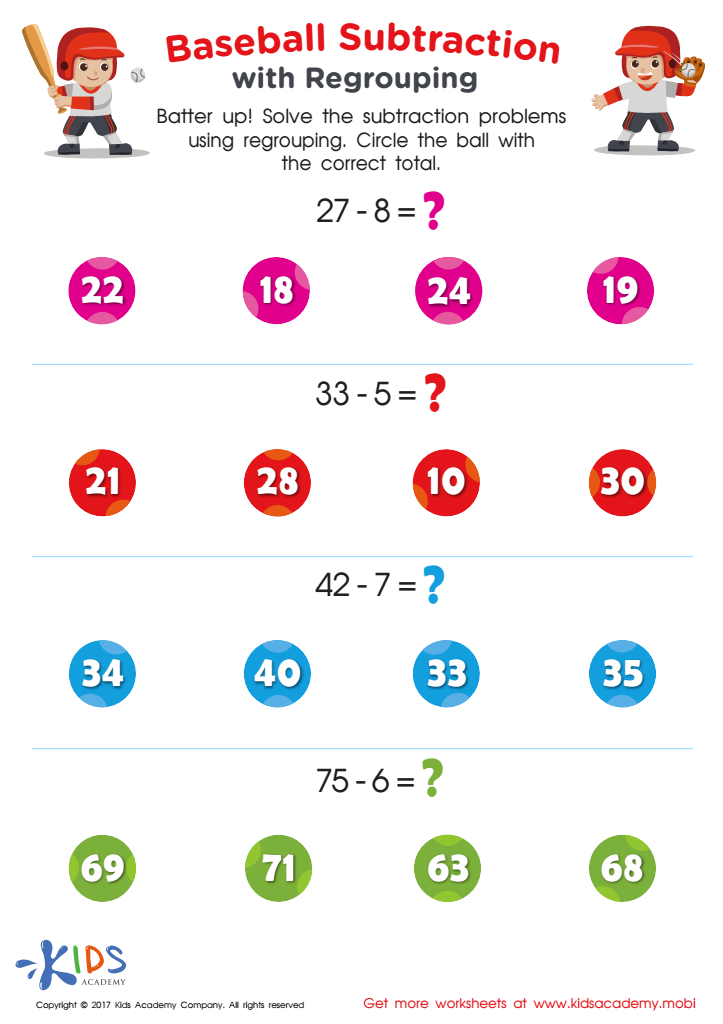
Subtraction With Regrouping for 2nd Grade Worksheet
 Assign to My Students
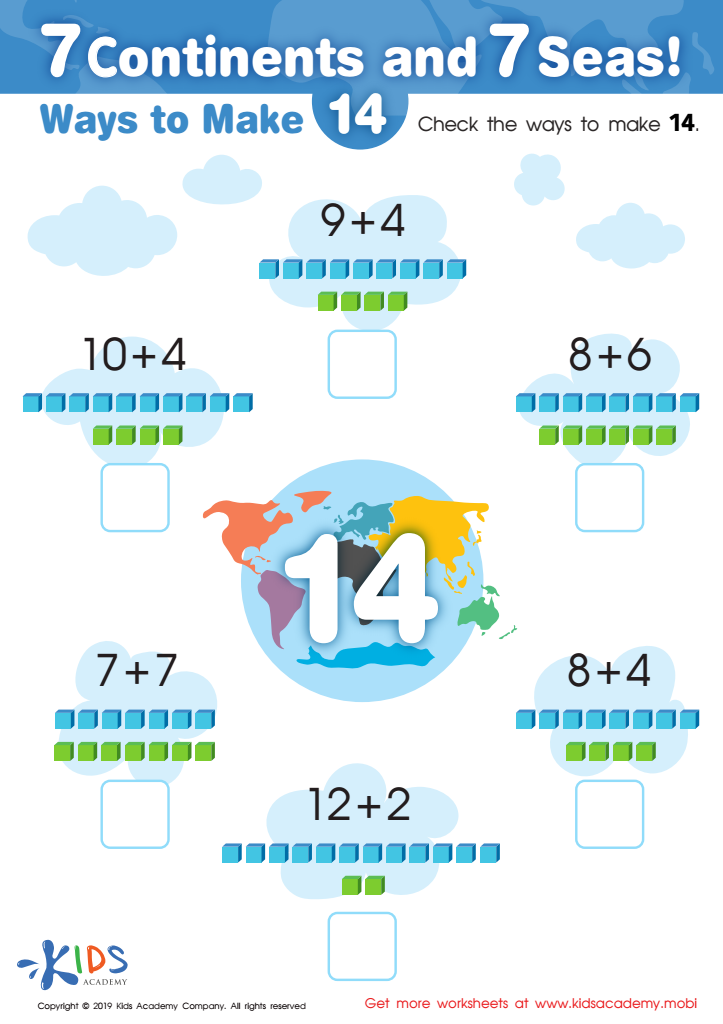
7 Continents and 7 Seas Worksheet

Adding at the Hospital Worksheet
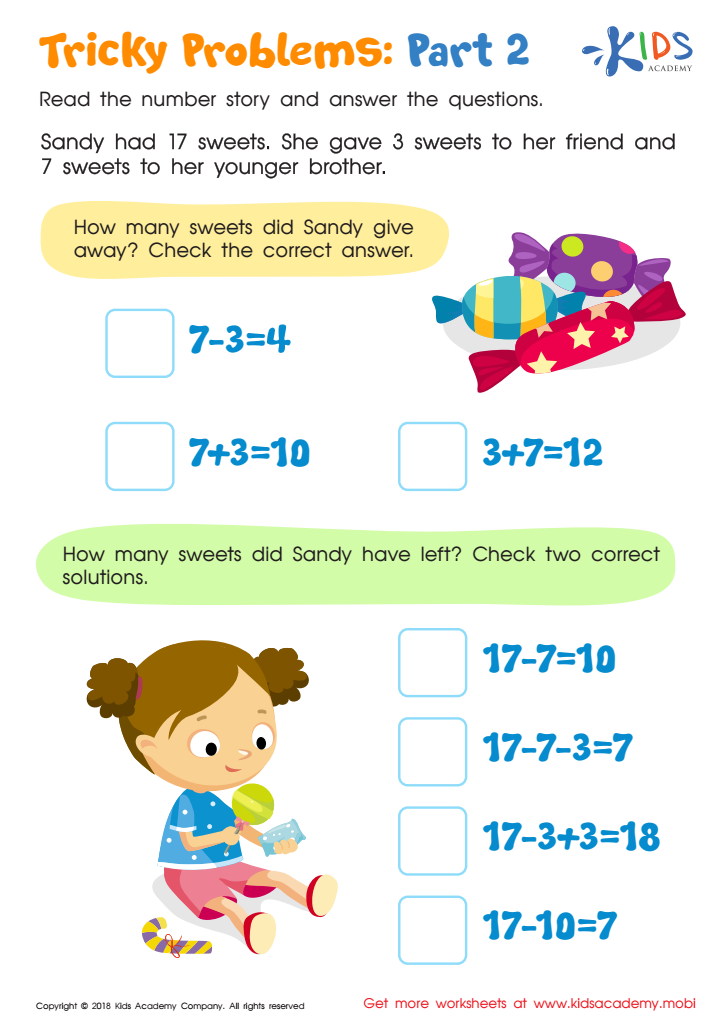
Tricky Problems Worksheet: Part 2
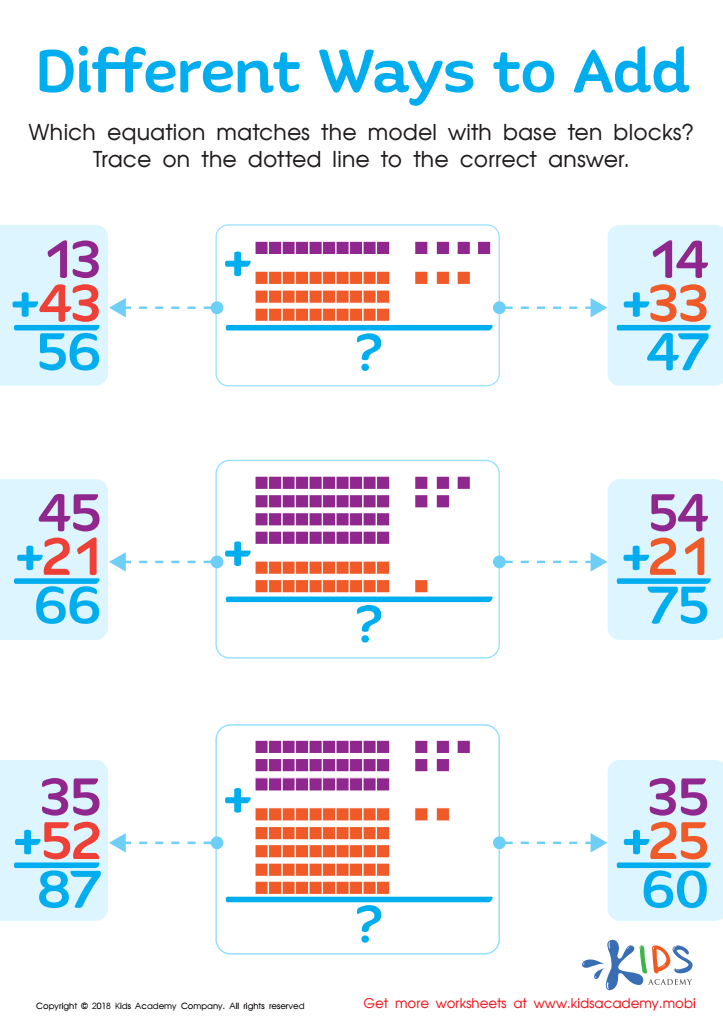
Different Ways to Add Worksheet








Parents and teachers should prioritize mental math practice for children aged 5-9 because it lays a crucial foundation for their overall mathematical development and cognitive abilities. Mental math involves performing calculations in one's mind without external aids, which enhances problem-solving skills and boosts numerical fluency. At this age, children's brains are exceptionally receptive to new concepts and learn most effectively through frequent practice and engagement.
Mental math practice builds confidence as children begin to see numerical relationships and patterns, making everyday calculations and more complex math problems less intimidating. This confidence can translate into a greater enthusiasm for learning and academic achievement across various subjects. Additionally, mental math strengthens working memory and concentration by requiring children to hold and manipulate information mentally, skills essential for academic success.
Fostering a positive attitude towards math at an early stage arms children with critical life skills such as logical reasoning, analytical thinking, and quick decision-making. By integrating mental math activities into a child’s routine through fun and interactive games or problem-solving exercises, both parents and teachers can help students develop a solid mathematical foundation, ultimately supporting their long-term educational journey and everyday life management skills.








