
Understanding times tables Normal Multiplication Worksheets for Ages 5-9
3 filtered results
Difficulty Level
Grade
Age
-
From - To
Subject
Activity
Standards
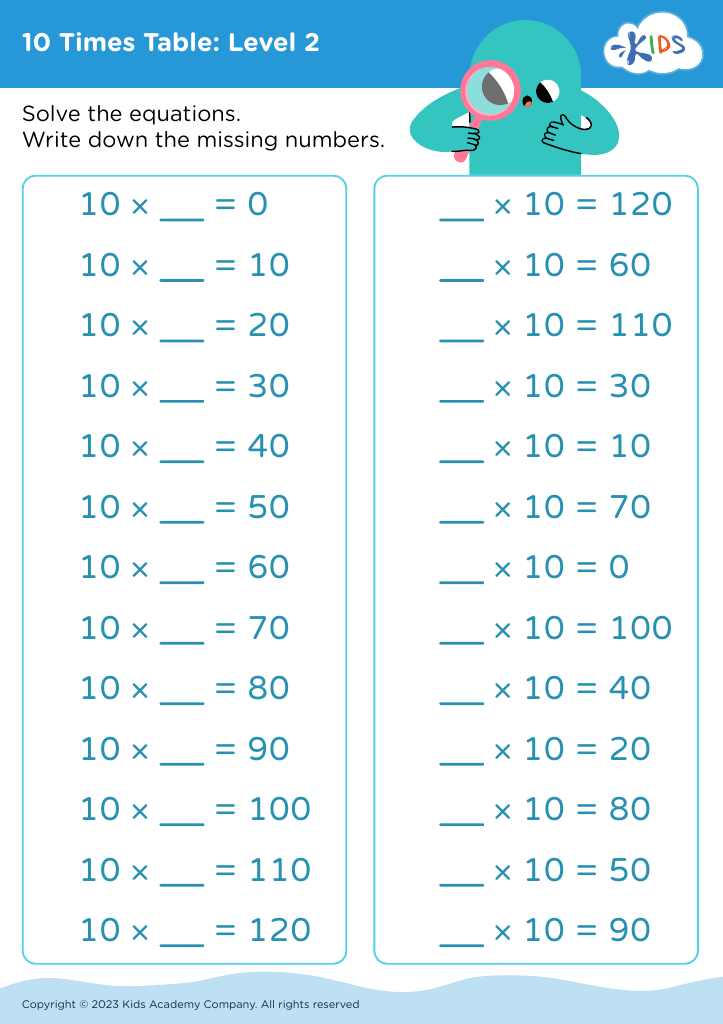
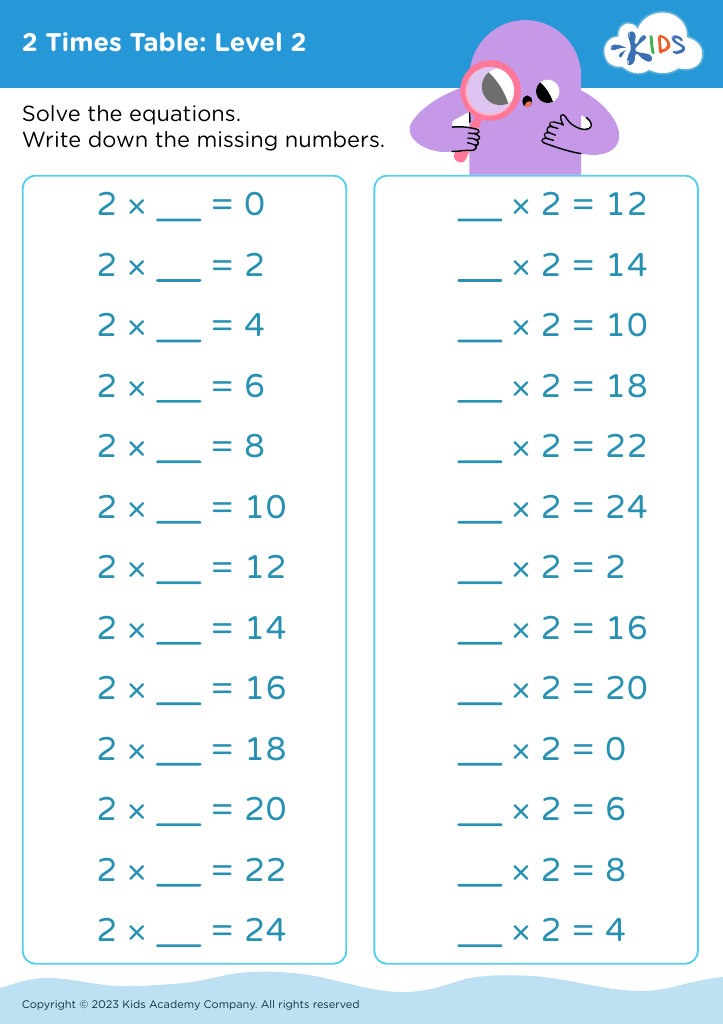
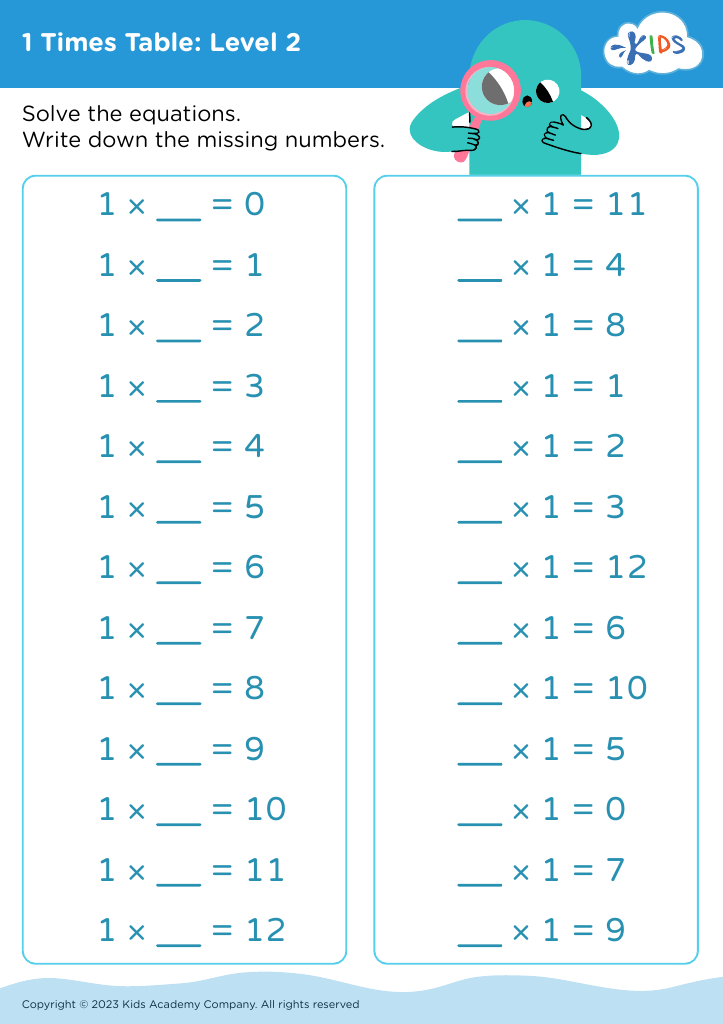
Discover engaging times tables multiplication worksheets designed for children aged 5-9 on our webpage. These printable resources are tailored to help young learners grasp basic multiplication concepts securely. With a variety of exercises and activities, the worksheets make mastering times tables fun and easy. Each sheet is crafted to build confidence and encourage independent practice, essential for developing strong mathematical foundations. Ideal for both classroom use and home study, these multiplication worksheets support critical learning skills and enhance numerical fluency in an enjoyable, effective way. Unlock your child’s potential with our expertly crafted educational materials!
Favorites
With answer key
Interactive
Join Kids Academy for Free
Who is primarily going to use this learning content?








Understanding times tables and normal multiplication for children aged 5-9 is foundational for various reasons. First, it helps in building numerical fluency; children gain confidence in handling numbers quickly and accurately. This efficiency is crucial not just for more advanced mathematics, but for day-to-day activities such as shopping or time management.
Secondly, mastering multiplication tables supports logical thinking and problem-solving skills. It allows children to see patterns and relationships between numbers, which is essential for higher mathematical concepts and various real-world problems.
Additionally, times tables are a critical component in many educational frameworks and standardized tests. Early proficiency ensures that children are not left behind as the curriculum progresses to more complex topics like division, fractions, and algebra.
Furthermore, understanding multiplication aids in developing a positive attitude towards learning math. Success in these fundamental skills builds self-esteem and reduces math anxiety, making children more likely to engage with other challenging subjects with a growth mindset.
Parents and teachers who focus on making multiplication both fun and understandable provide children with essential tools for lifelong learning and practical competence. Investing time in this area at a young age lays the groundwork for academic success and practical life skills.








