
Fine Motor Skills Normal Sorting Worksheets for Ages 5-9
3 filtered results
Difficulty Level
Grade
Age
-
From - To
Subject
Activity
Standards
Enhance your child's fine motor skills with our diverse collection of Sorting Worksheets designed for ages 5-9. These engaging, educational worksheets are crafted to help children develop hand-eye coordination, dexterity, and spatial awareness while enjoying fun sorting activities. Whether sorting by size, shape, color, or category, each activity is tailored to align with early learning standards, ensuring kids build essential foundational skills. The colorful, captivating designs make learning enjoyable and effective. Perfect for classroom use or at-home practice, these worksheets are a valuable resource for teachers and parents dedicated to supporting their child's developmental journey.
Favorites
With answer key
Interactive
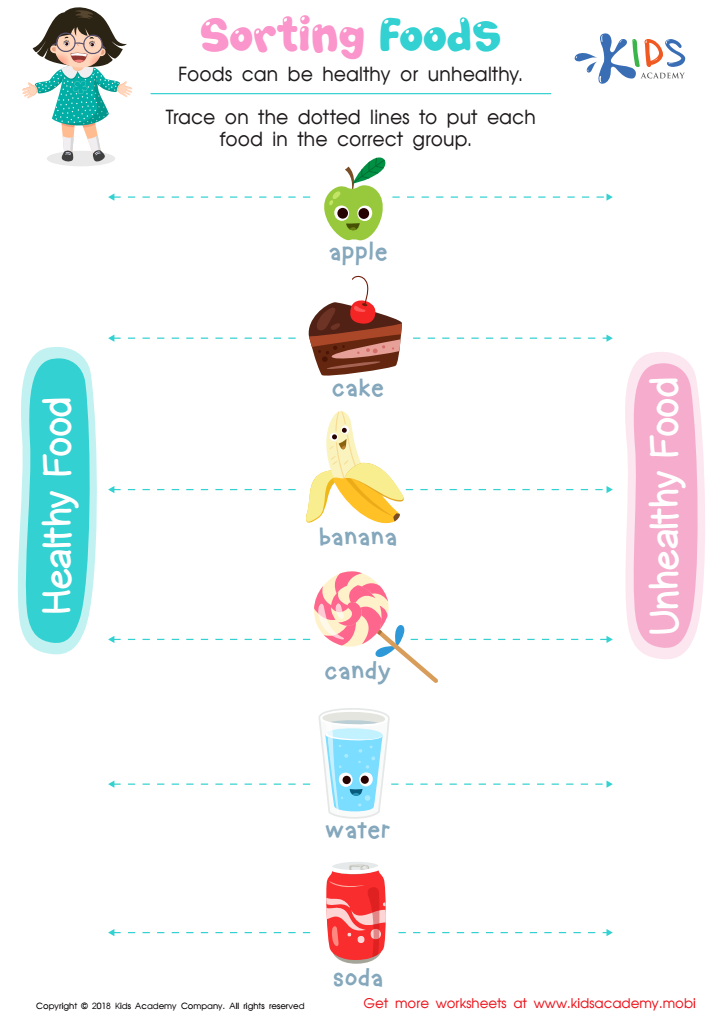
Sorting Food Worksheet
This delightful worksheet boosts critical thinking and fine motor skills. Kids use prior knowledge and pictures to sort foods into healthy and unhealthy groups. Tracing lines support accurate sorting and matching. Enjoy fun and free learning!
 Assign to My Students
Sorting Food Worksheet
Worksheet
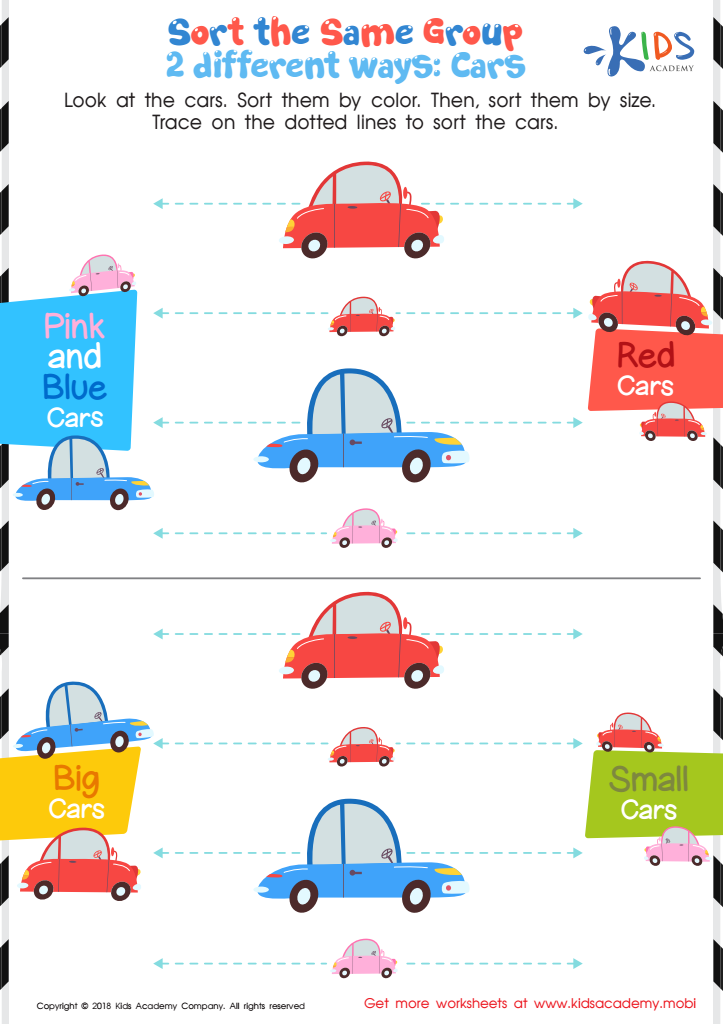
Sort the Same Group 2 Different Ways: Cars Worksheet
Look at the pictures with your child. Can they identify the objects? Ask them to sort the cars first by color and then size. Assist them to trace the dotted lines to sort the cars by color and size. This worksheet lets you easily assess your child's color and size organization skills.
Sort the Same Group 2 Different Ways: Cars Worksheet
Worksheet
Join Kids Academy for Free
Who is primarily going to use this learning content?








Fine motor skills are essential in the early development of children, and fine motor skills normal sorting for ages 5-9 plays a pivotal role in fostering these abilities. Fine motor skills involve the coordination of small muscles, particularly in the hands and fingers, which are crucial for performing everyday tasks. Between the ages of 5-9, children are in a critical period for developing these skills, which directly impact their academic performance and daily life activities.
Sorting tasks help enhance hand-eye coordination, dexterity, and precision—key components of fine motor skills. For instance, activities like sorting beads by color or size require children to manipulate small objects, refining their grip strength and control. These skills contribute to improved handwriting, as well as the ability to use scissors, tie shoelaces, and fasten buttons—abilities that foster independence and self-confidence.
Furthermore, engaging in sorting activities promotes cognitive development, including attention to detail, problem-solving, and categorization. This not only aligns with their academic growth in subjects like math and science, where sorting and organizing data are fundamental, but also reinforces their understanding of relationship and differences among objects.
Parents and teachers should care about these activities, as they lay the groundwork for more complex motor and cognitive abilities, ensuring children develop the necessary skills to succeed in their educational journey and daily routines.








