
Fine Motor Skills Normal Building Vocabulary Worksheets for Ages 5-9
8 filtered results
Difficulty Level
Grade
Age
-
From - To
Subject
Activity
Standards
Develop your child's fine motor skills and vocabulary with our expertly designed worksheets for ages 5-9. These engaging activities help kids enhance their hand-eye coordination, dexterity, and strength while building a robust vocabulary. Perfect for young learners, our worksheets combine fun illustrations with educational exercises, making learning a delightful experience. Tailored to support early development, each worksheet focuses on hands-on tasks like tracing, cutting, and writing. Enhance your child's reading and writing abilities through targeted practice that supports both motor and cognitive growth. Start nurturing your child's fine motor skills and vocabulary development today!
Favorites
With answer key
Interactive
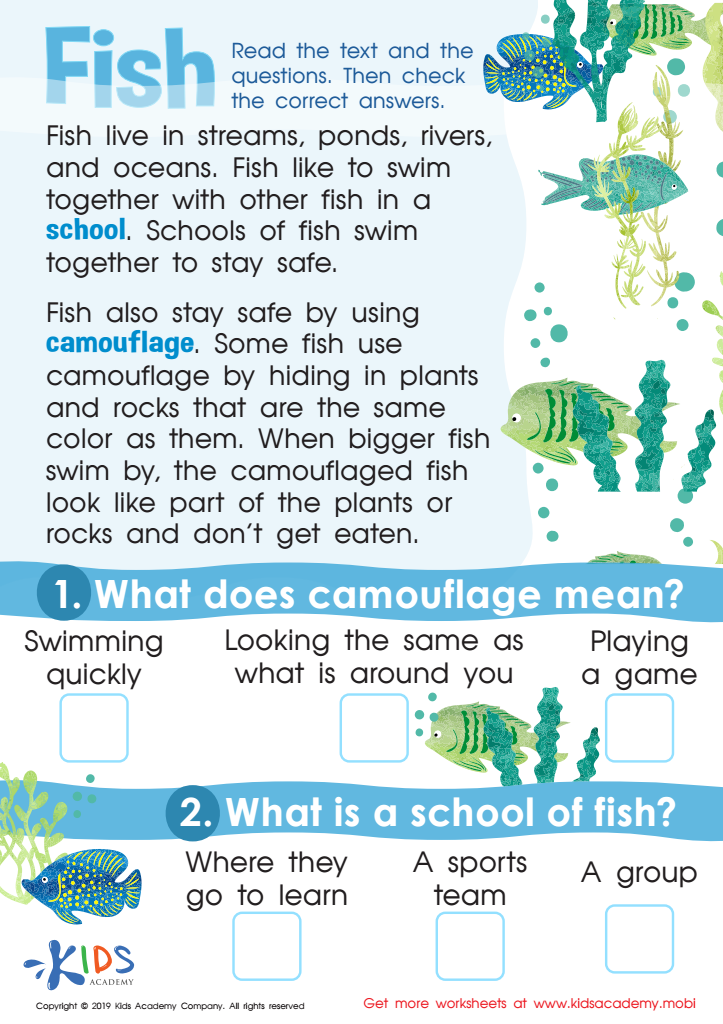
Fish Worksheet
Kids love learning about the creatures that live in water! This free PDF worksheet covers fish, teaching kids larger vocabulary and contextual reading comprehension. Questions prompt them to choose the right answer from multiple choices, just like in a classroom. It's a fun way to boost their reading skills and comprehension without them even realizing it!
 Assign to My Students
Fish Worksheet
Worksheet











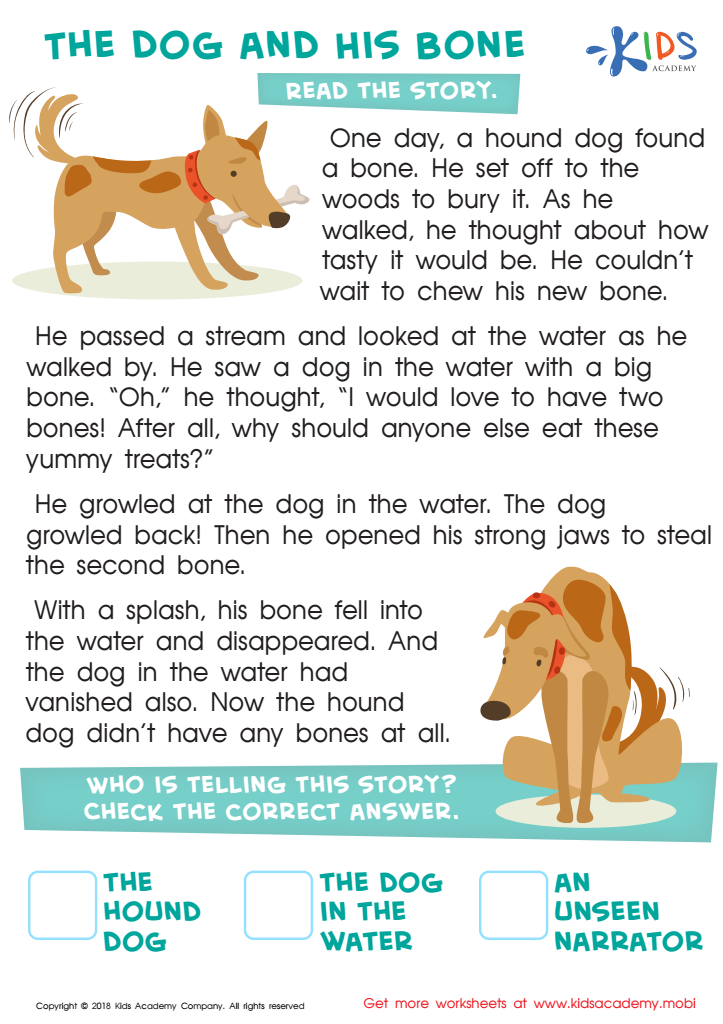
The Dog and His Bone Worksheet
Read the story of The Dog and His Bone to your kids, making sure they take in the details. Ask them the questions in this worksheet and help them check the answers. Encourage them to think carefully.
The Dog and His Bone Worksheet
Worksheet
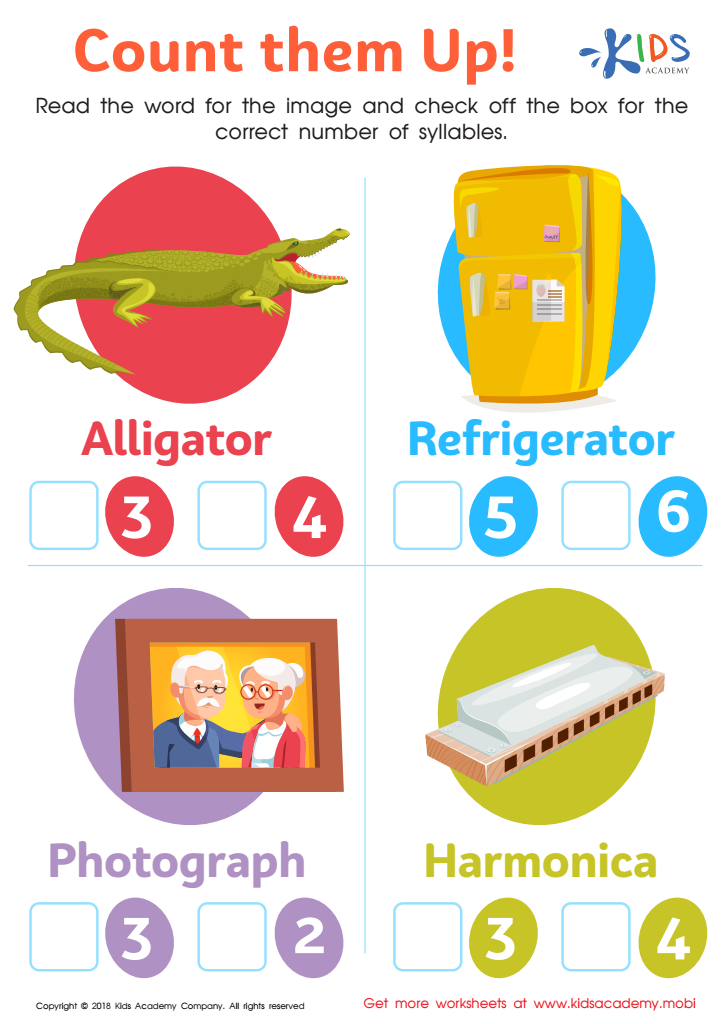
Count Them Up Worksheet
This worksheet has four colorful pictures. Ask your students to identify and name each image, then count the syllables in the word. Make them repeat the word after you, and check off the box with the correct number of syllables. Mastering the art of counting goes beyond numbers. Get your students counting syllables with this activity!
Count Them Up Worksheet
Worksheet
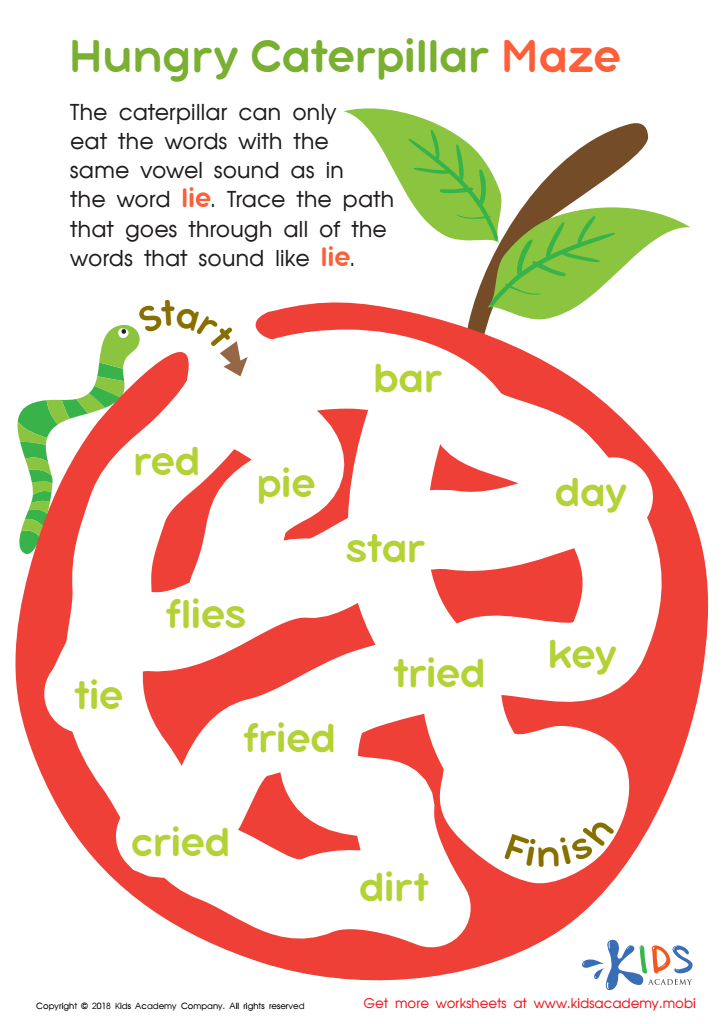
Hungry Caterpillar Maze Worksheet
Remind the kids that caterpillars turn into butterflies! This worksheet helps them practice their vowel sounds. They must trace the path of words that sound like ‘lie’ to help the caterpillar reach the finish line. It's a fun way to learn and explore!
Hungry Caterpillar Maze Worksheet
Worksheet
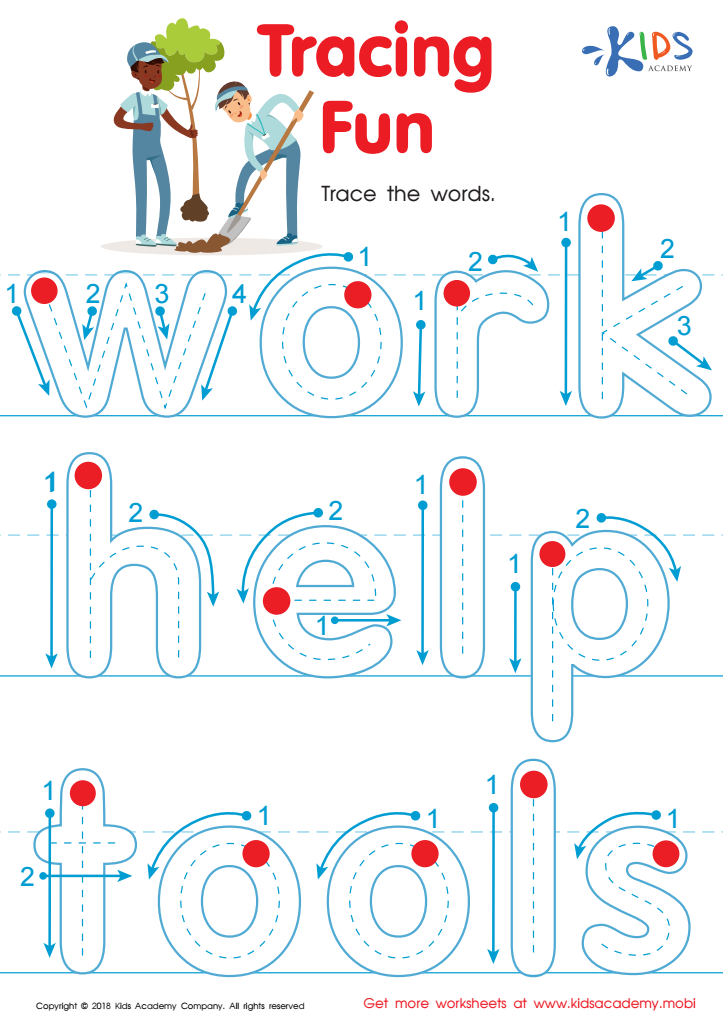
Tracing Fun Worksheet
Believe it or not, good handwriting helps with reading! Starting at the top left and writing legibly builds reading skills. This free worksheet helps little learners practice basic sight words. Red dots show them where to start and the words provide reinforcement without them realising. An enjoyable way to boost their reading and writing.
Tracing Fun Worksheet
Worksheet
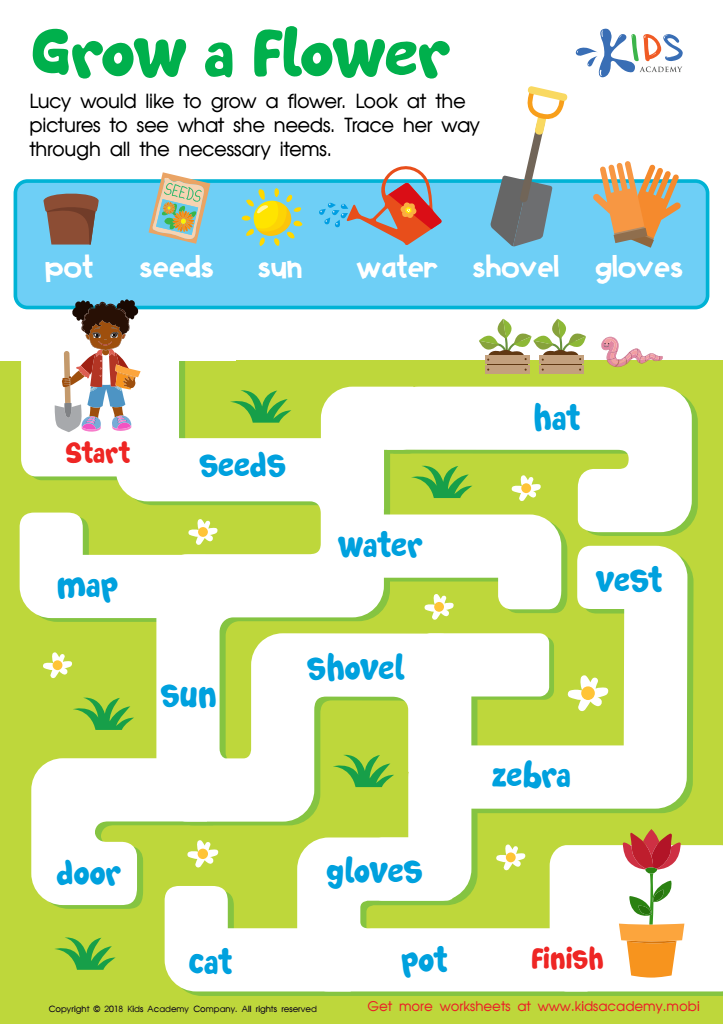
Grow a Flower Worksheet
Download this worksheet to teach your kids how to grow a flower with Lucy. Ask them to look at the pictures and trace the necessary steps. Help them go through the process of growing a beautiful flower with Lucy!
Grow a Flower Worksheet
Worksheet
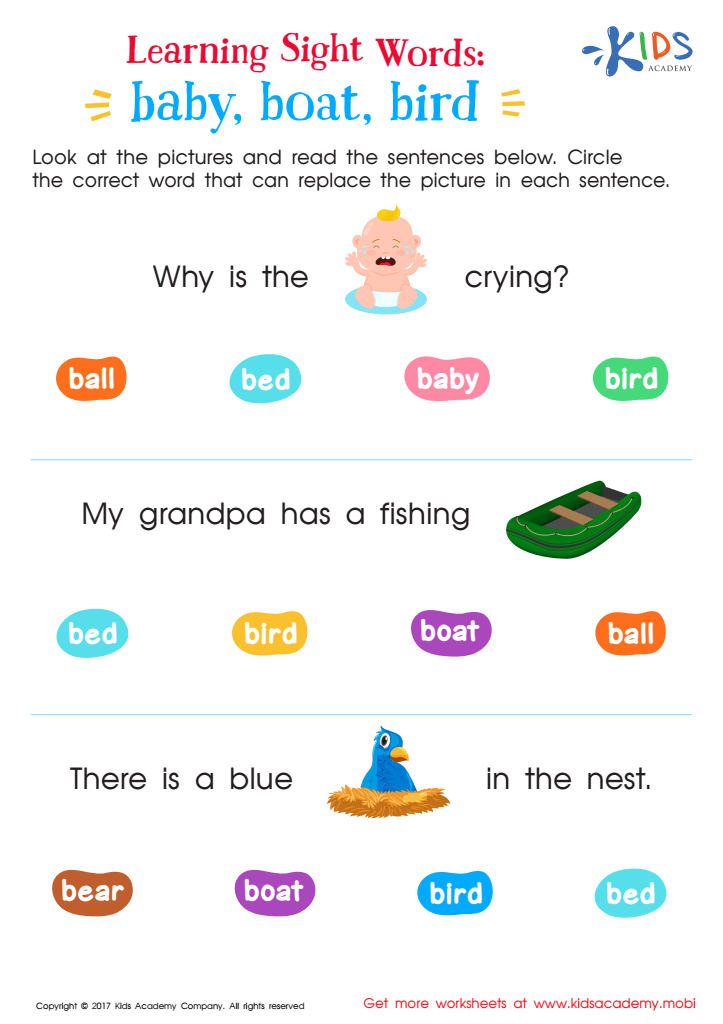
Baby, Boat, Bird Worksheet Sight Words Worksheet
Sight words are an essential part of fluency; help kids build it by writing and reading them. This worksheet is a great way to start.
Baby, Boat, Bird Worksheet Sight Words Worksheet
Worksheet
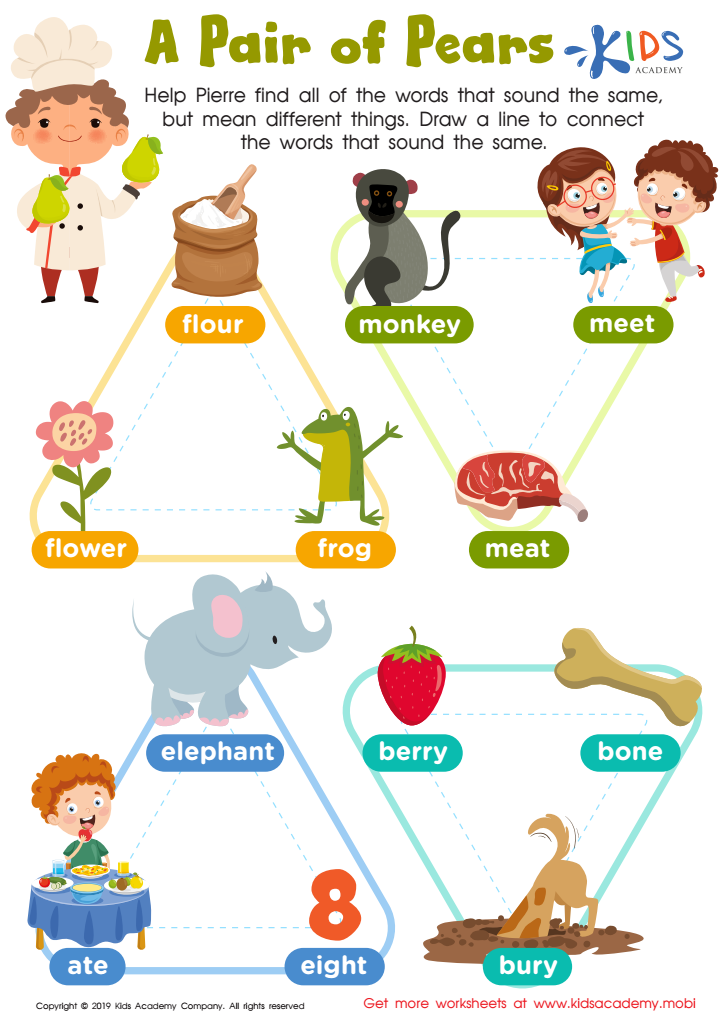
Pair Pears Worksheet
Young readers can have difficulty knowing when to use the right homophone. This free worksheet helps them use familiar imagery to understand better by connecting words that sound similar but are spelled and mean different things. Students will trace the lines to form a picture and have a reference image to differentiate between the different homophones.
Pair Pears Worksheet
Worksheet
Join Kids Academy for Free
Who is primarily going to use this learning content?






.jpg)

Fine motor skills and vocabulary development are pivotal for children aged 5-9, shaping their academic success and daily life functionality.
Fine motor skills, comprising hand-eye coordination and dexterous hand movements, are essential for activities like writing, buttoning clothes, and using utensils. Mastery in these skills promotes independence and facilitates smoother learning experiences. For example, children adept at holding pencils and manipulating small objects can perform classroom tasks more efficiently, boosting their confidence and enthusiasm for learning. Early intervention in developing fine motor skills can prevent frustration and learning delays later.
Equally important is the cultivation of a robust vocabulary. This age range is critical for rapid language expansion. A rich vocabulary bolsters reading comprehension, written expression, and verbal communication, foundational for academic achievement in all subjects. Moreover, it enhances social interactions and emotional intelligence. Children with a strong vocabulary can express themselves more clearly, resolve conflicts amicably, and understand others' perspectives, fostering better peer relationships.
Teachers and parents play vital roles in nurturing these competences through engaging activities, like reading together, playing with building blocks, or engaging in arts and crafts. Investing effort in these areas fosters well-rounded development, setting children on a path to academic success and personal growth.








