
Vocabulary development Normal Building Vocabulary Worksheets for Ages 5-9
10 filtered results
Difficulty Level
Grade
Age
-
From - To
Subject
Activity
Standards
Enhance your child's language skills with our expertly crafted Vocabulary Development Worksheets designed for children aged 5-9. These worksheets ensure a fun and engaging way to build a strong foundation in vocabulary through interactive and age-appropriate activities. Each worksheet is tailored to help young learners understand new words, improve reading comprehension, and develop effective communication skills. Perfect for at-home education or supplemental classroom use, our resources make vocabulary building enjoyable and accessible. Foster your child's love for language and watch their confidence grow with Kids Academy’s comprehensive selection of vocabulary development tools.
Favorites
With answer key
Interactive
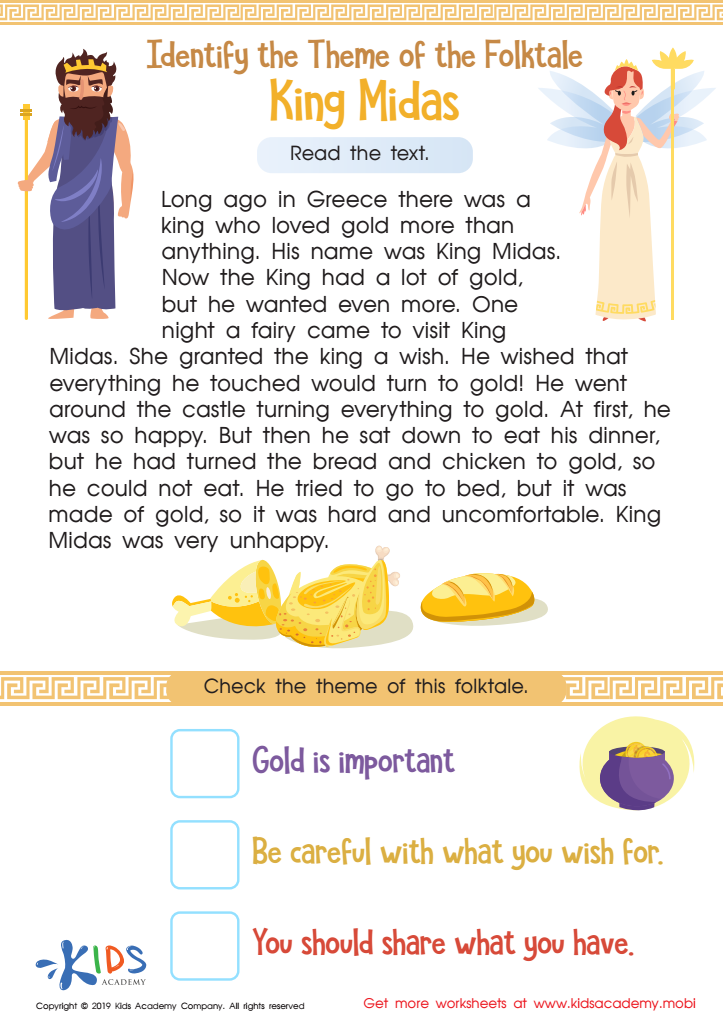
King Midas Worksheet
Read the ancient Greek history of King Midas to your kids. If they're into Greek gods and mythology, they'll be excited to complete the exercise. Read the text carefully, and if needed, twice. Help your kids locate the story's theme at the bottom of the page. 80 words.
 Assign to My Students
King Midas Worksheet
Worksheet











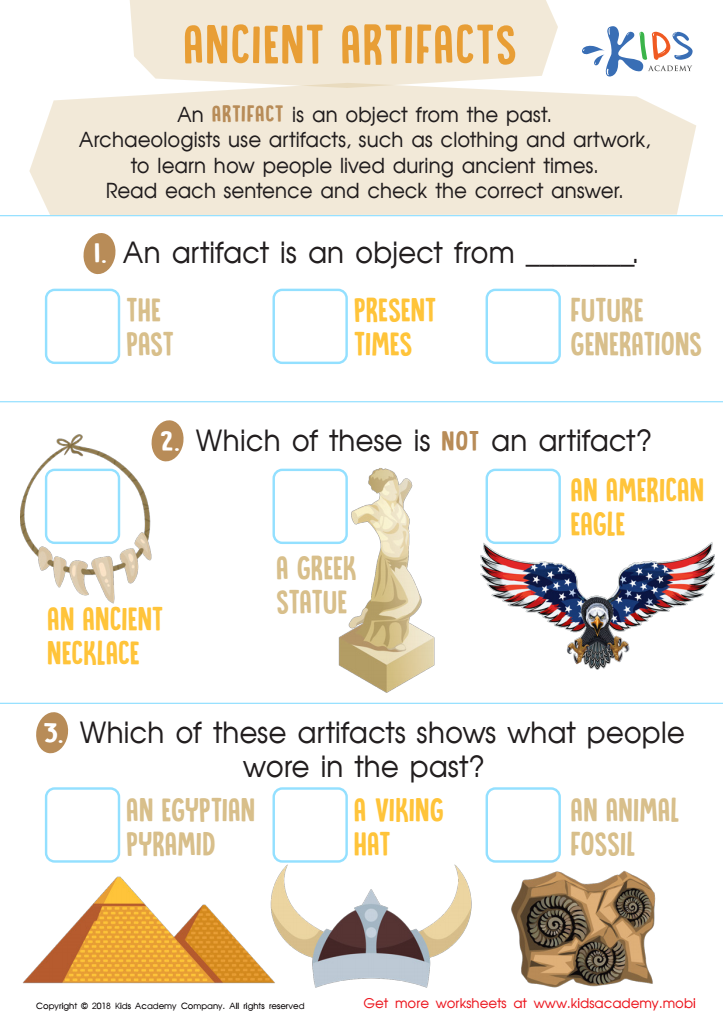
Ancient Artifacts Worksheet
This free worksheet helps kids understand ancient artifacts, from statues to necklaces to fossils. They'll read comprehension questions and select answers from multiple choice options, with pictures to help them grasp the concept. It's a great way for children to learn about artifacts and what they may look like.
Ancient Artifacts Worksheet
Worksheet
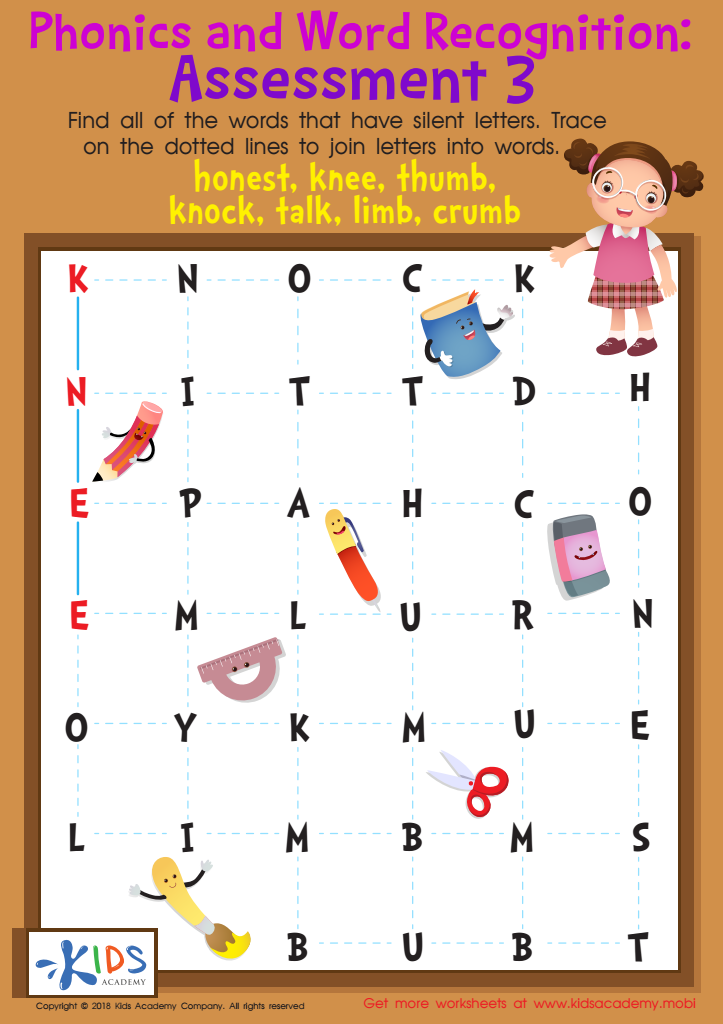
Phonics and Word Recognition: Assessment 3 Worksheet
Silent letters can be tricky for kids learning to read and write. Show them how they work with words like 'knee' and 'dumb'. Then, challenge them to come up with their own. Give them a worksheet with silent letters and trace the lines to join the letters into words.
Phonics and Word Recognition: Assessment 3 Worksheet
Worksheet
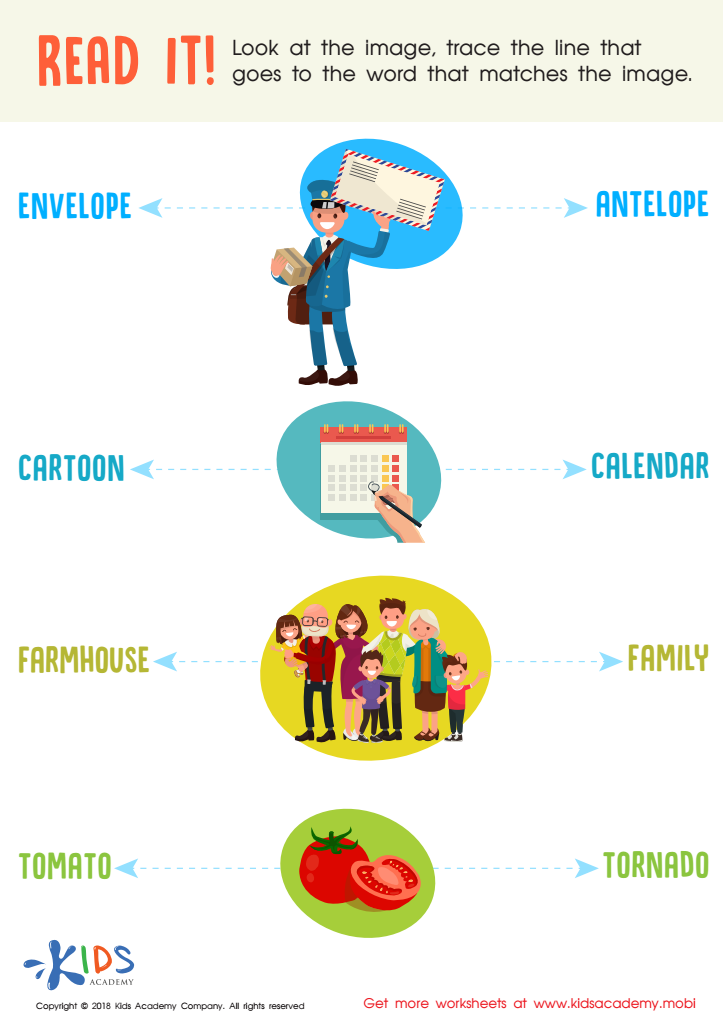
Read It! Worksheet
Point to each image on this worksheet, asking your child what it is. Read the 2 options then help your child trace the line to the correct word. It'll keep them engaged and provide visual stimulation.
Read It! Worksheet
Worksheet
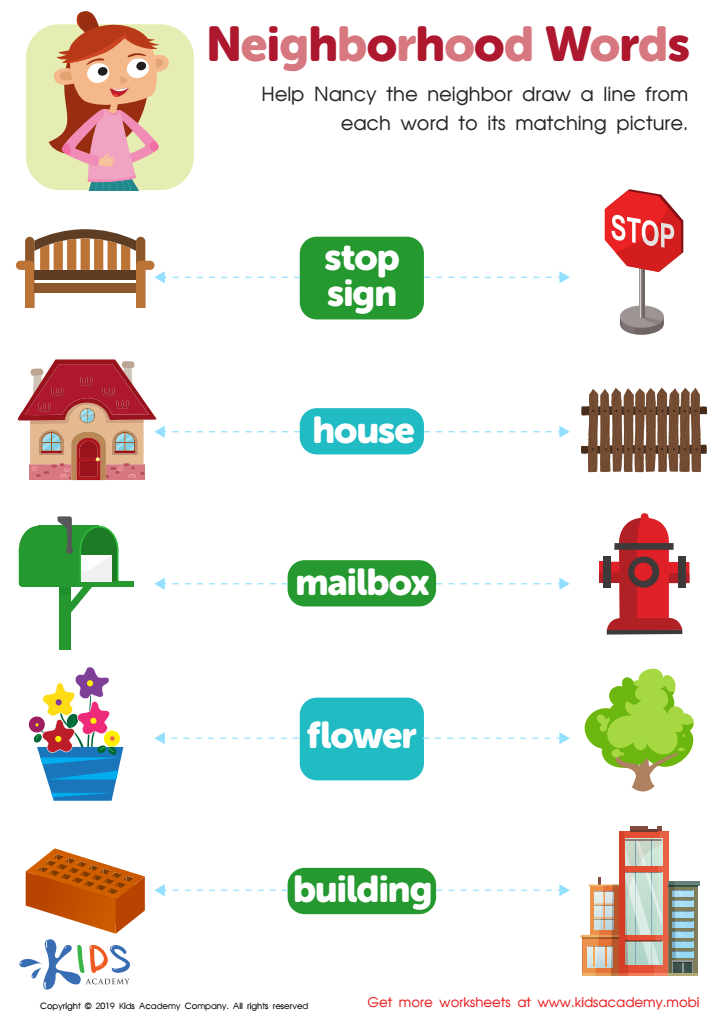
Neighborhood Words Worksheet
Help preschoolers develop life skills and familiarize them with words and concepts with this worksheet! It'll also boost their fine motor skills as they trace lines to match pictures with the words. They'll learn new words and feel more confident in their reading.
Neighborhood Words Worksheet
Worksheet
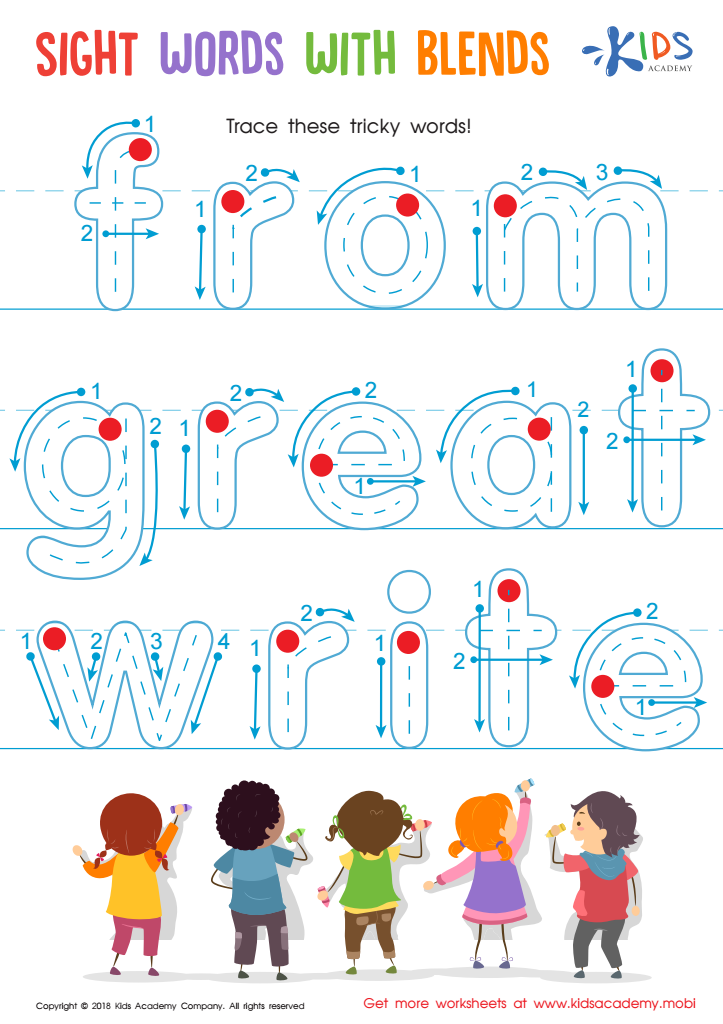
Sight Words with Blends Worksheet
This free PDF lets your children trace and write sight words with tricky blends. The guide numbers help them start from the top, building fine motor skills and enhancing sight word vocab. It's a great way to give your kids a solid foundation for reading!
Sight Words with Blends Worksheet
Worksheet
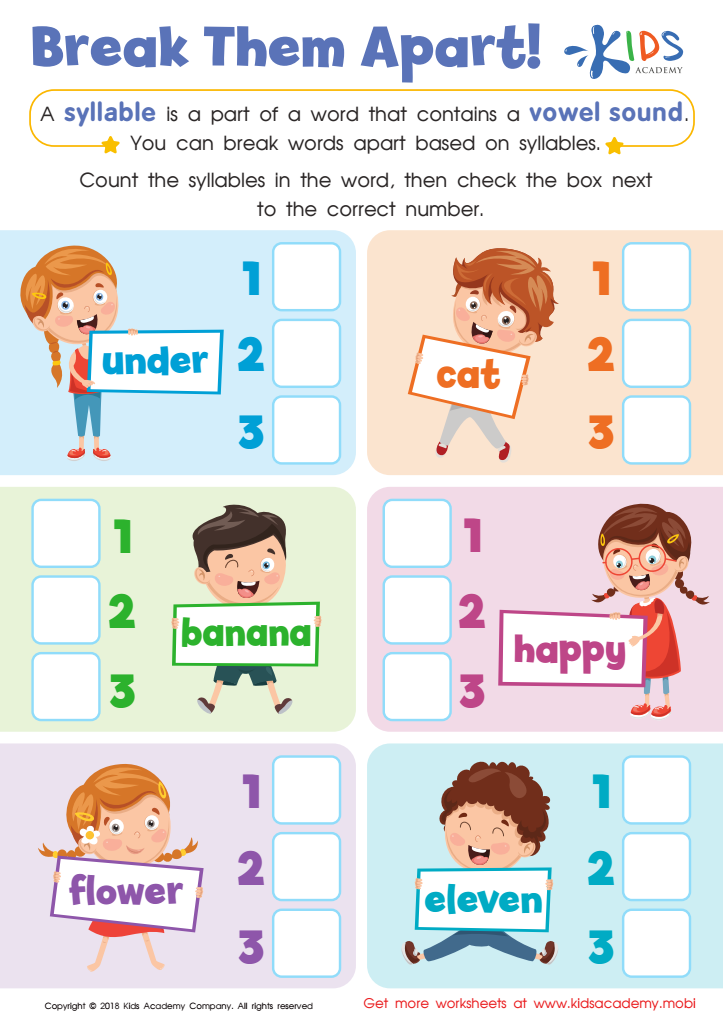
Reading: Break Them Apart Worksheet
See if students understand syllables with this fun worksheet. It teaches them that a syllable is a word part with a vowel sound. Kids read each word and choose how many parts it has. Doing this often helps them decode new words and gain confidence.
Reading: Break Them Apart Worksheet
Worksheet
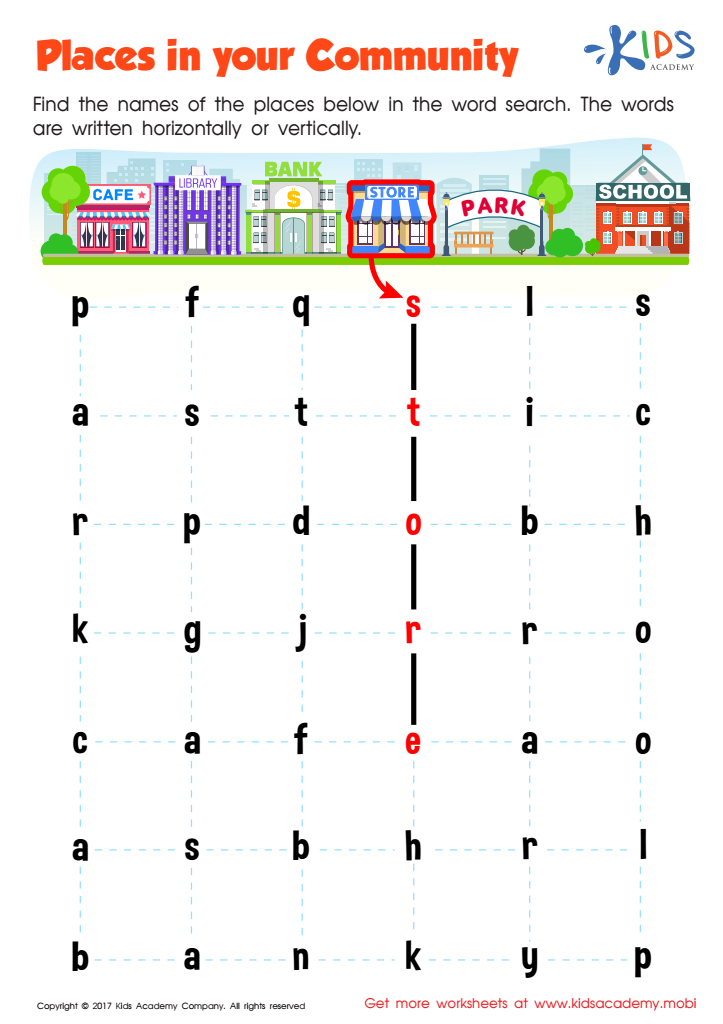
Places in Your Community Worksheet
Find and circle words related to common places in your community, like library, fire station, and more. Practicing vocabulary and spelling, your child will gain a better understanding of their community.
Places in Your Community Worksheet
Worksheet
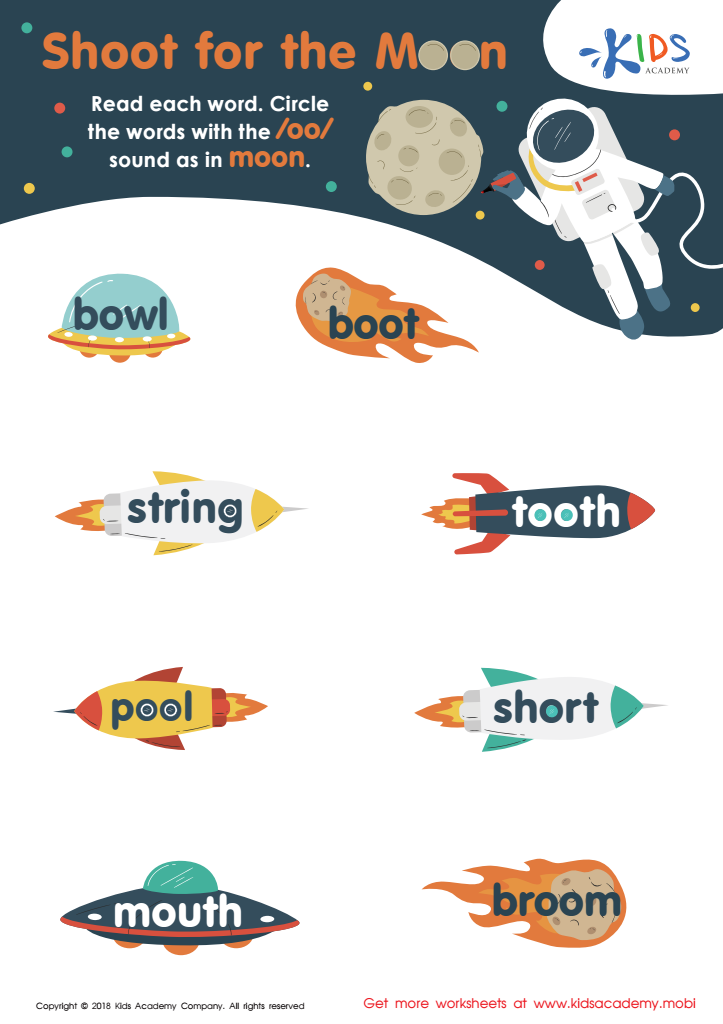
Reading: Shoot for the Moon Worksheet
Ask your kids if they can name any common words with the /oo/ sound. Read each word with them and help them pronounce it. Then, have them circle the words that have the /oo/ sound as in moon.
Reading: Shoot for the Moon Worksheet
Worksheet
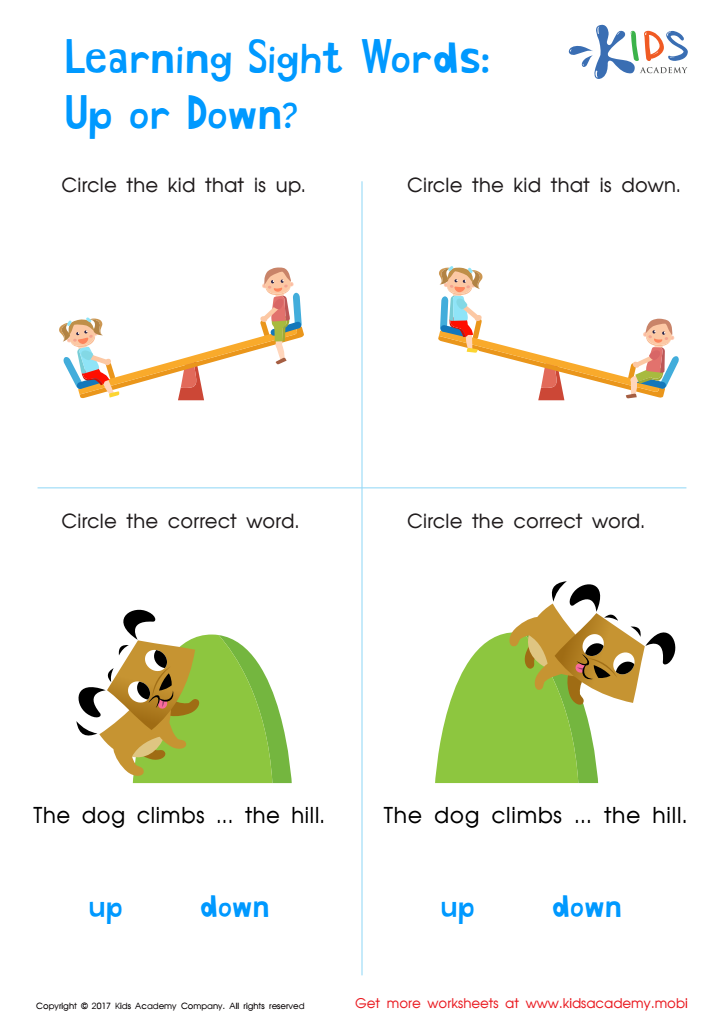
Up or Down Printable Sight Words Worksheet
Help your child identify up and down in print with this sight words worksheet. It has simple sentences, vibrant images and easy-to-read language that allow your little learner to practice these essential sight words. Perfect for early readers!
Help your early reader identify and read up and down with this sight words worksheet. It provides simple sentences, clear language and vibrant images to help them practice these essential sight words. Perfect for toddlers!
Up or Down Printable Sight Words Worksheet
Worksheet
Join Kids Academy for Free
Who is primarily going to use this learning content?






.jpg)

Vocabulary development between the ages of 5 and 9 is a fundamental aspect of early childhood education that parents and teachers should prioritize. During these formative years, children are like sponges, absorbing new words and language patterns that significantly impact their cognitive, social, and emotional growth. A rich vocabulary not only enhances their ability to communicate effectively but also supports their reading comprehension and academic success across various subjects.
A well-developed vocabulary allows children to express their thoughts, ideas, and emotions more clearly and confidently. This, in turn, fosters better relationships with peers and adults, aiding in their social development. Furthermore, as children encounter new words through conversation, reading, and play, they develop critical thinking and problem-solving skills.
Teachers and parents play a crucial role in this process by providing a language-rich environment filled with diverse and engaging reading materials and interactive conversations. Activities like reading aloud, storytelling, and engaging in thought-provoking discussions can significantly boost vocabulary acquisition. Additionally, addressing and encouraging curiosity about new words can help children develop a love for learning and exploration.
Ultimately, investing time and effort in vocabulary development sets a strong foundation for lifelong learning, equipping children with the tools they need for future academic achievements and effective communication. By prioritizing this aspect of development, parents and teachers can significantly influence a child's overall educational journey and personal growth.








