Contextual understanding Normal Reading Worksheets for Ages 5-9
6 filtered results
-
From - To
Enhance your child's reading skills with our engaging Contextual Understanding Normal Reading Worksheets, designed for ages 5-9. These worksheets focus on developing essential comprehension abilities by encouraging young learners to derive meaning from different contexts. With a variety of fun and interactive exercises, children will practice recognizing key vocabulary, making inferences, and understanding the relationship between words and their meanings. This resource supports foundational reading strategies, empowering kids to become confident readers. Perfect for teachers and parents alike, our worksheets will create an enjoyable learning experience while fostering a love for reading that lasts a lifetime! Explore our diverse collection today!
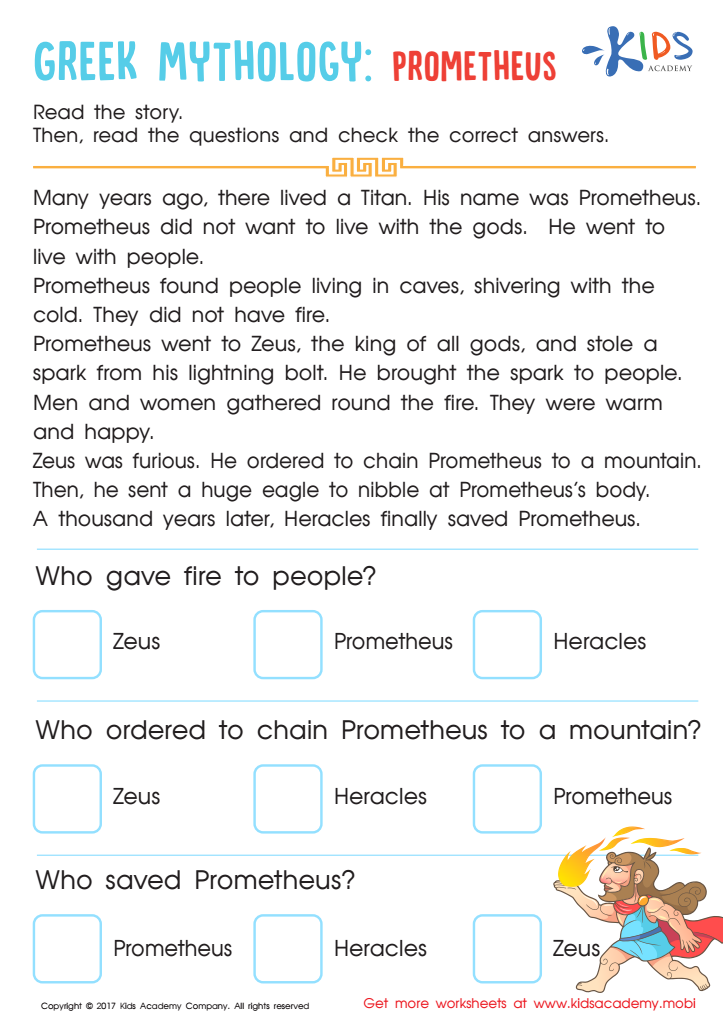
Prometheus Story Worksheet
 Assign to My Students
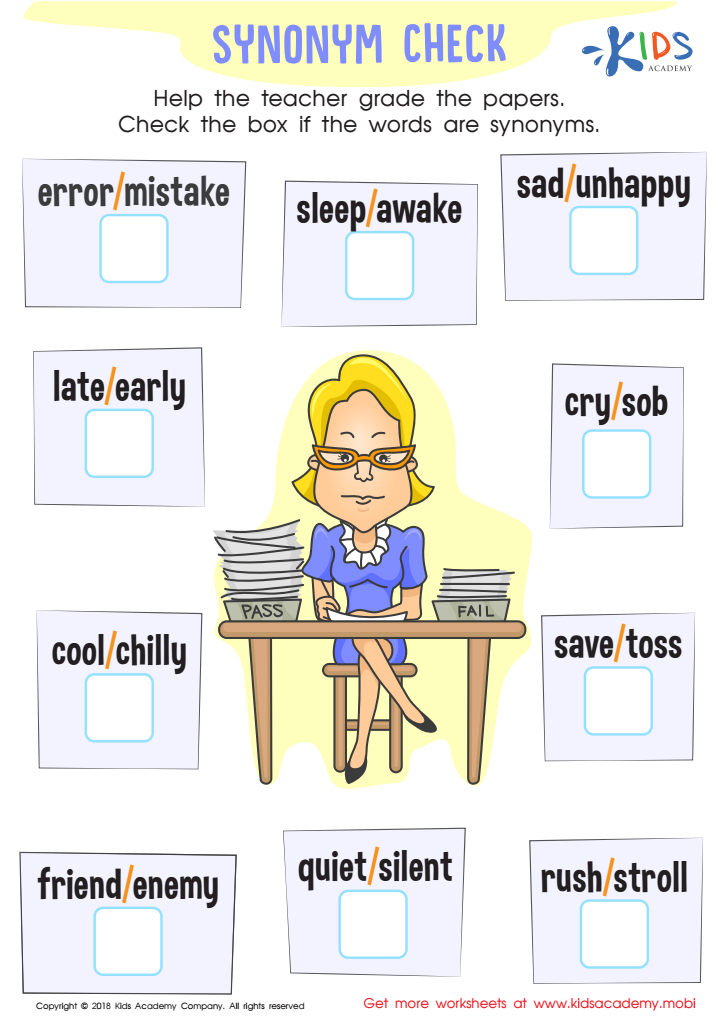
Synonym Check Worksheet
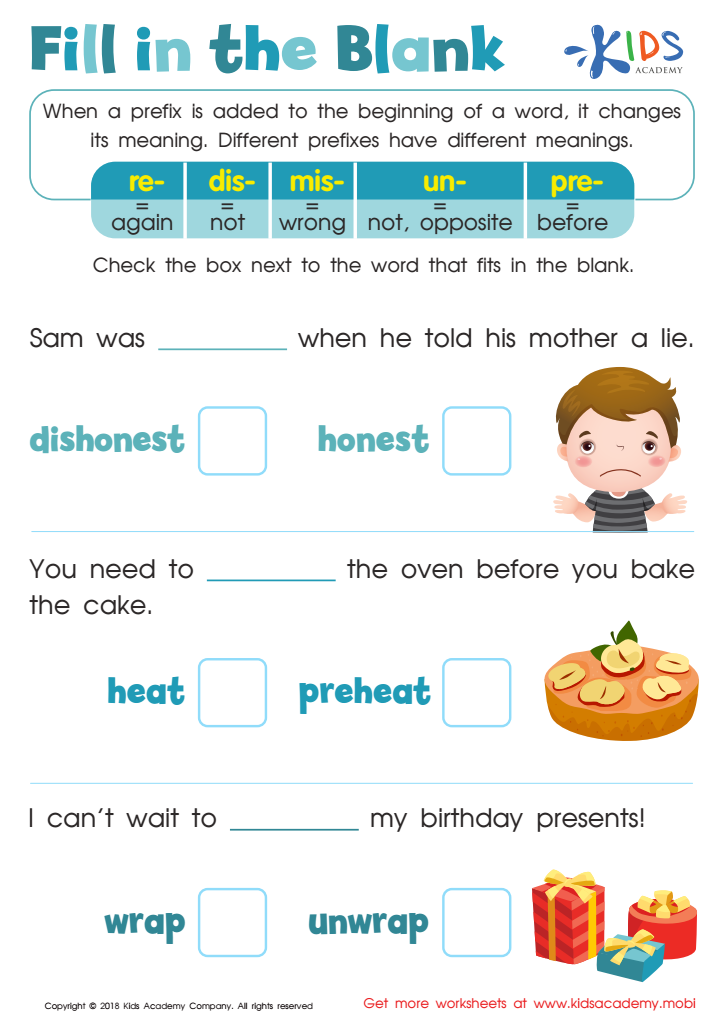
Reading: Fill in the Blank Worksheet
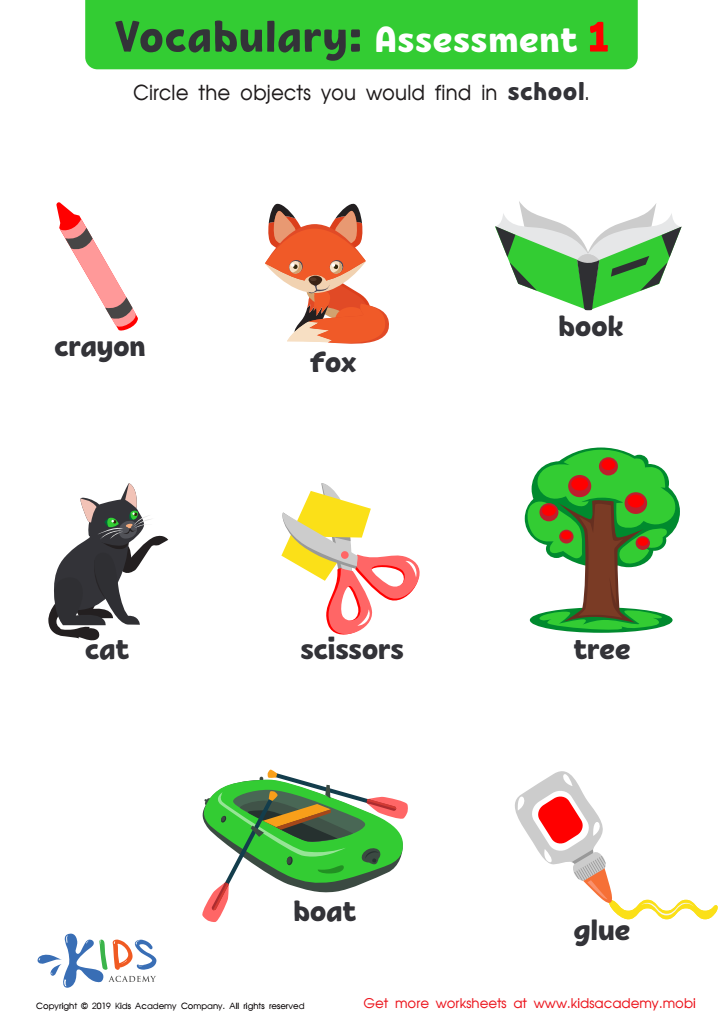
Vocabulary: Assessment 1 Worksheet
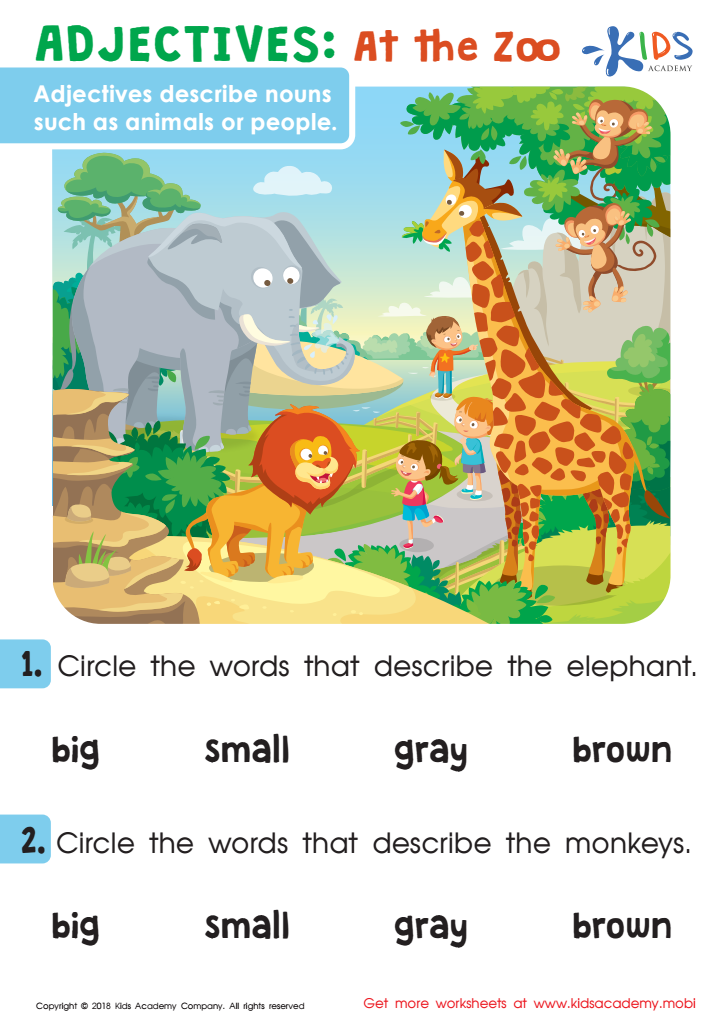
Adjectives: At The Zoo Worksheet
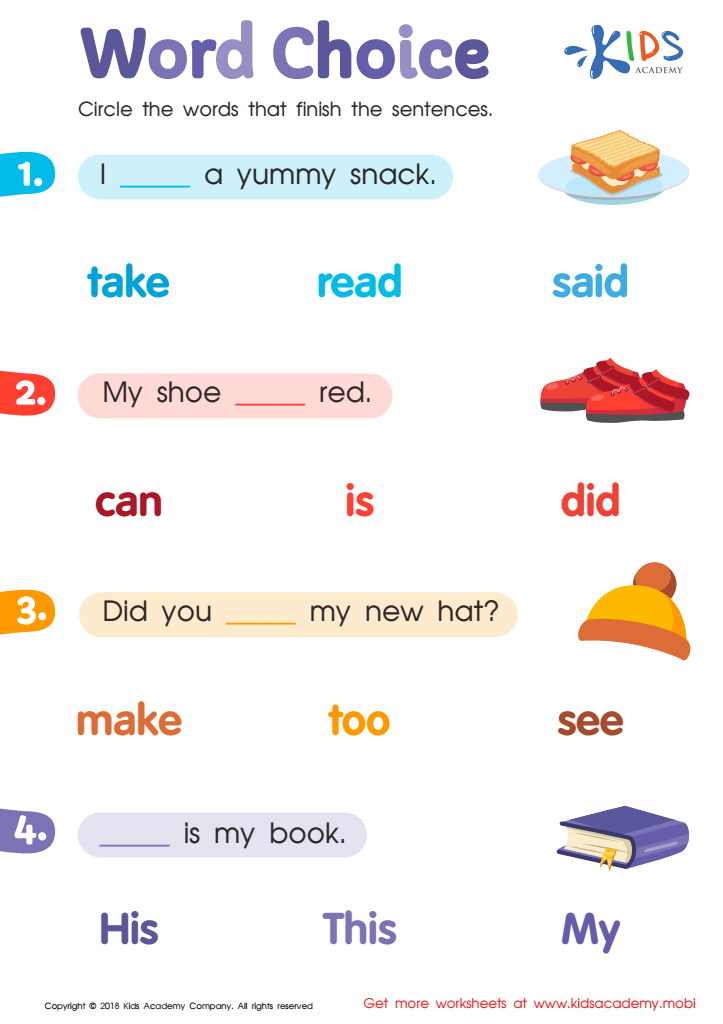
Word Choice Worksheet








Contextual understanding in reading for children aged 5 to 9 is crucial for their overall literacy development and cognitive growth. This ability allows young readers to grasp meaning from the surrounding text, discarding the misinterpretation often rooted in isolated reading. When children fully understand the context of a story—characters, settings, and plots—they enhance their ability to make inferences, predictions, and connections between their experiences and the material, thus fostering a richer comprehension and enjoyment of literature.
Equipping children with strong contextual understanding enables them to become more critical thinkers. They learn how to not only decode words but also analyze and reflect on content, important skills that are foundational for academic success across subjects. Furthermore, books offer themes and messages that help develop empathy and emotional intelligence; understanding the context allows children to engage with these lessons more profoundly.
For parents and teachers, prioritizing contextual understanding means fostering inquisitive readers who can navigate complex ideas as they grow. This approach also lays the groundwork for lifelong learning habits, nurturing a love for reading and learning that will serve children well beyond the primary grades. Thus, supporting contextual understanding is an investment in a child’s future academic and personal success.








