Moral understanding Normal Reading Worksheets for Ages 5-9
5 filtered results
-
From - To
Introducing our "Moral Understanding Normal Reading Worksheets for Ages 5-9" – the perfect resource for fostering ethical development and literacy in young learners. Designed with engaging stories and age-appropriate questions, these worksheets help children comprehend key moral concepts such as honesty, kindness, and responsibility. Each worksheet incorporates relatable scenarios that prompt critical thinking and discussion, encouraging students to reflect on their values and make thoughtful decisions. Ideal for classroom and home use, our worksheets not only enhance reading skills but also nurture a strong moral foundation, helping children grow into compassionate and conscientious individuals. Start your child's moral journey today!
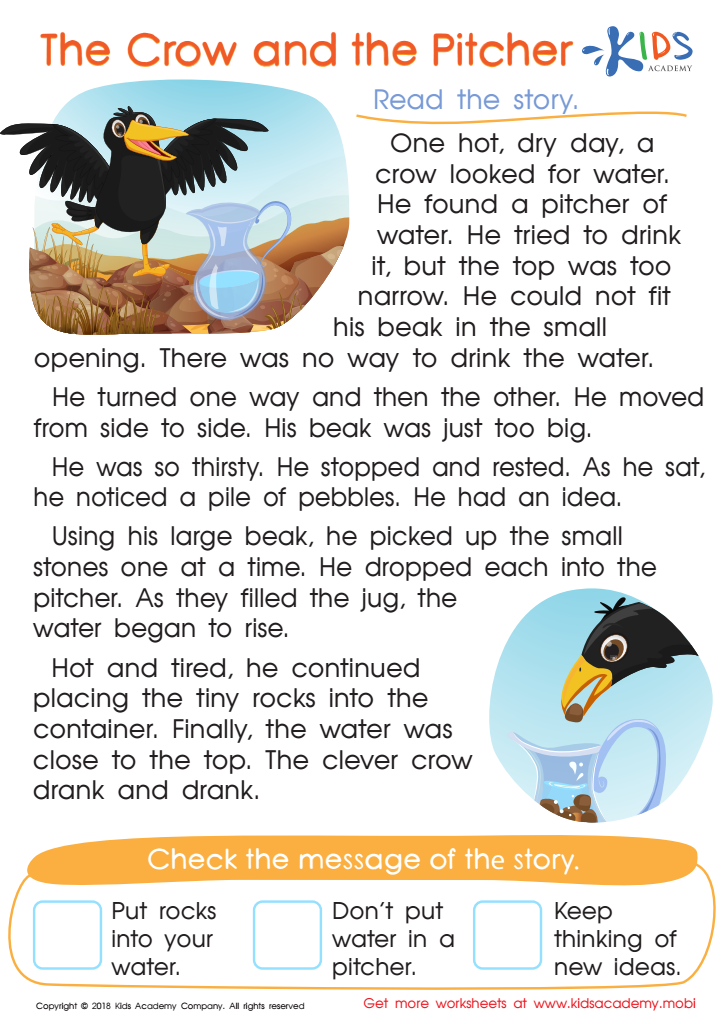
The Crow and the Pitcher Worksheet
 Assign to My Students
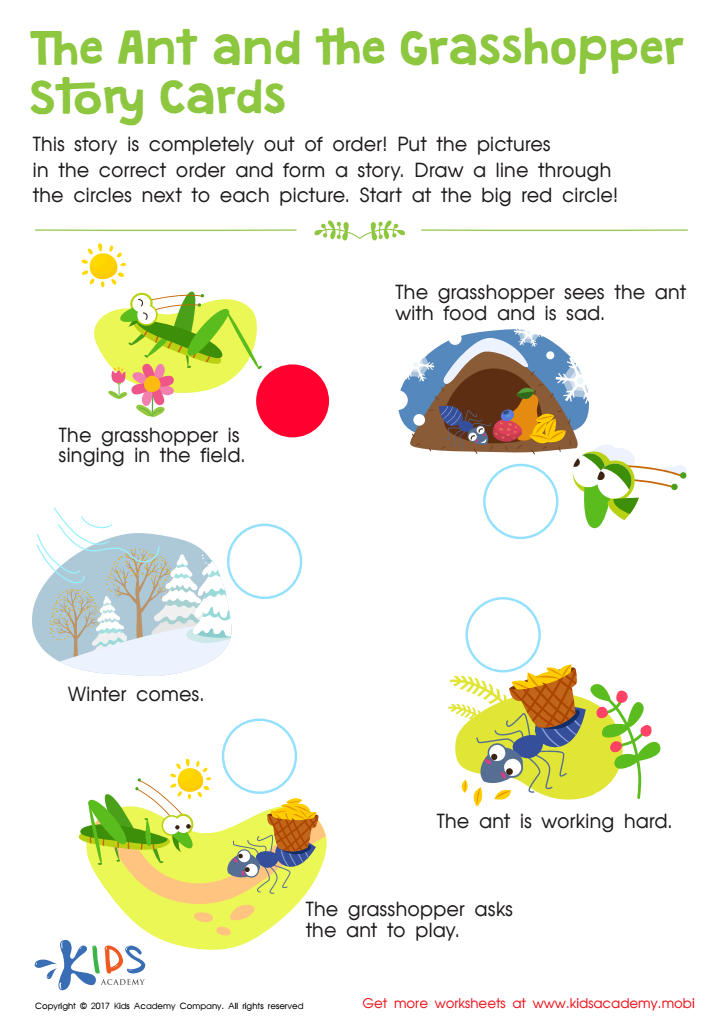
The Ant and The Grasshopper Worksheet
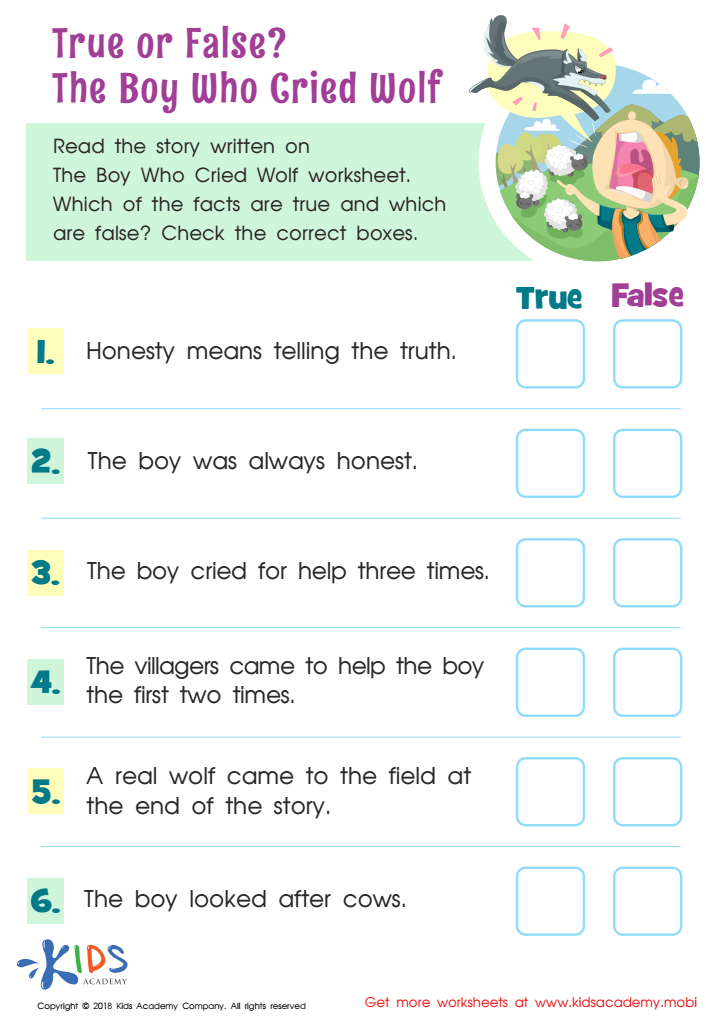
True or False? The Boy Who Cried Wolf Worksheet
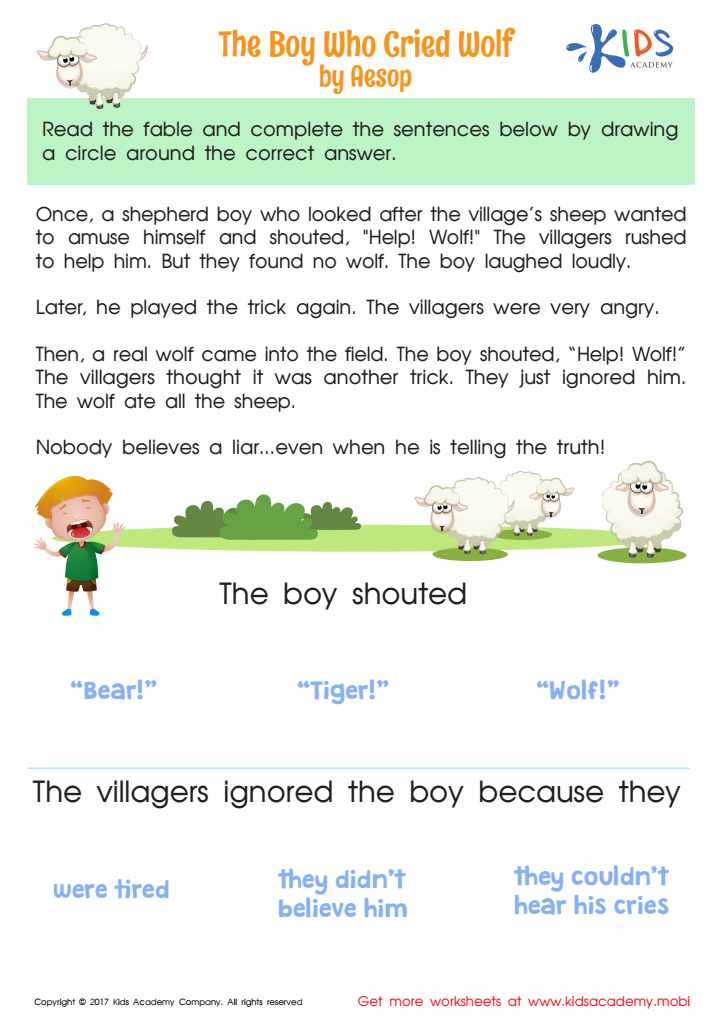
The Boy Who Cried Wolf Worksheet
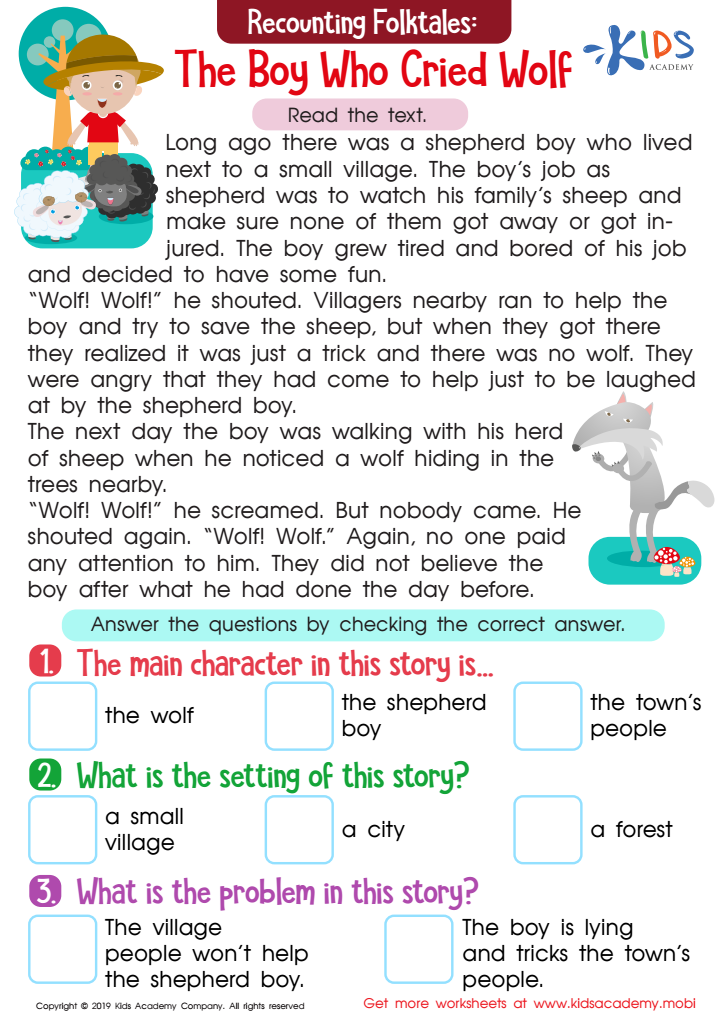
The Boy Who Cried Wolf Part 1 Worksheet




.jpg)


Moral understanding and normal reading for children aged 5-9 are crucial components in their early development, and parents or teachers should greatly care about them for several reasons. First, moral understanding forms the bedrock of a child’s character. It encompasses the ability to discern right from wrong, develop empathy, and foster a sense of justice and fairness. These skills are not just vital for interpersonal relationships but are essential for becoming responsible and ethical adults.
Normal reading at this age is equally important as it serves as a gateway to lifelong learning. Reading proficiency directly impacts a child's academic success across all subjects. Children who read well are more likely to perform better in school, have broader vocabularies, and exhibit greater cognitive development. Normal reading also encourages imagination, critical thinking, and a love for knowledge and discovery.
Additionally, the stories and lessons children encounter in books often include moral dilemmas and scenarios that can help reinforce ethical teachings. For instance, tales of sharing, kindness, or perseverance provide practical examples of moral behavior.
Moreover, early years are sensitive periods for brain development. By nurturing both moral and reading skills, teachers and parents can ensure balanced growth in cognitive, social, and emotional domains. Cultivating these competencies helps build a strong, holistic foundation, propelling children toward fulfilling and meaningful lives.








