Rhyming skills Normal Reading Worksheets for Ages 5-9
3 filtered results
-
From - To
Enhance your child's reading abilities with our Rhyming Skills Normal Reading Worksheets, designed for ages 5-9. These engaging worksheets, available at Kids Academy, help young learners to develop phonemic awareness and improve their reading fluency through fun and interactive rhyming exercises. By recognizing and creating rhyming word pairs, children bolster their vocabulary and reading comprehension. Each activity is crafted to suit early grade learning, making reading practice enjoyable and effective. Perfect for home or classroom use, these worksheets will pave the way for a strong reading foundation. Download now to begin your child’s journey to reading success!
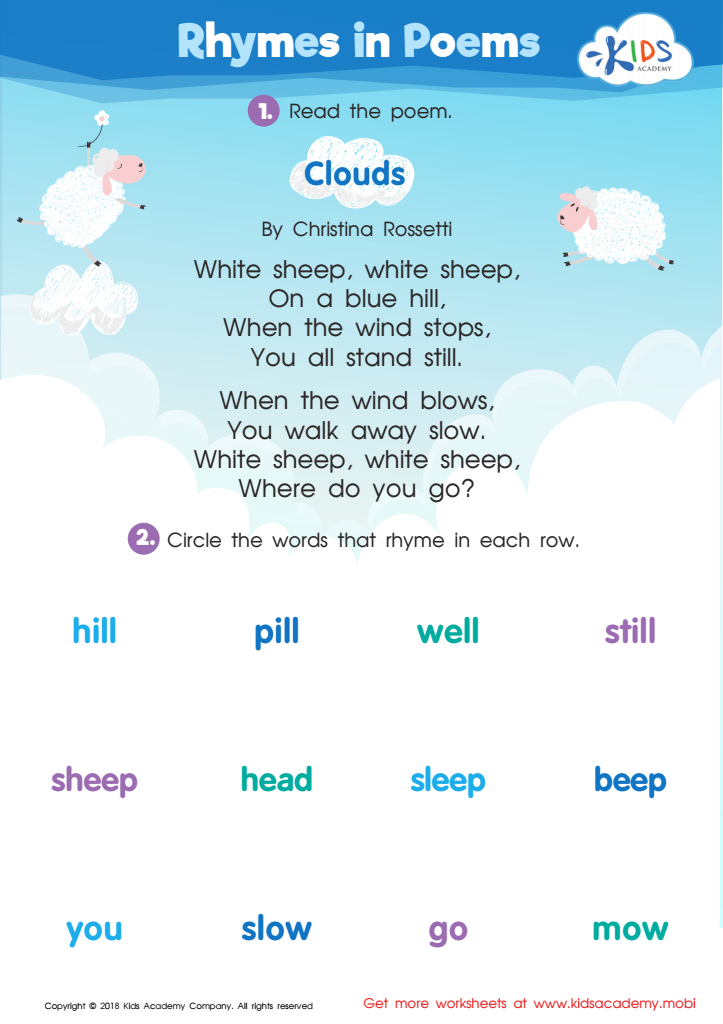
Rhymes in Poems Worksheet
 Assign to My Students
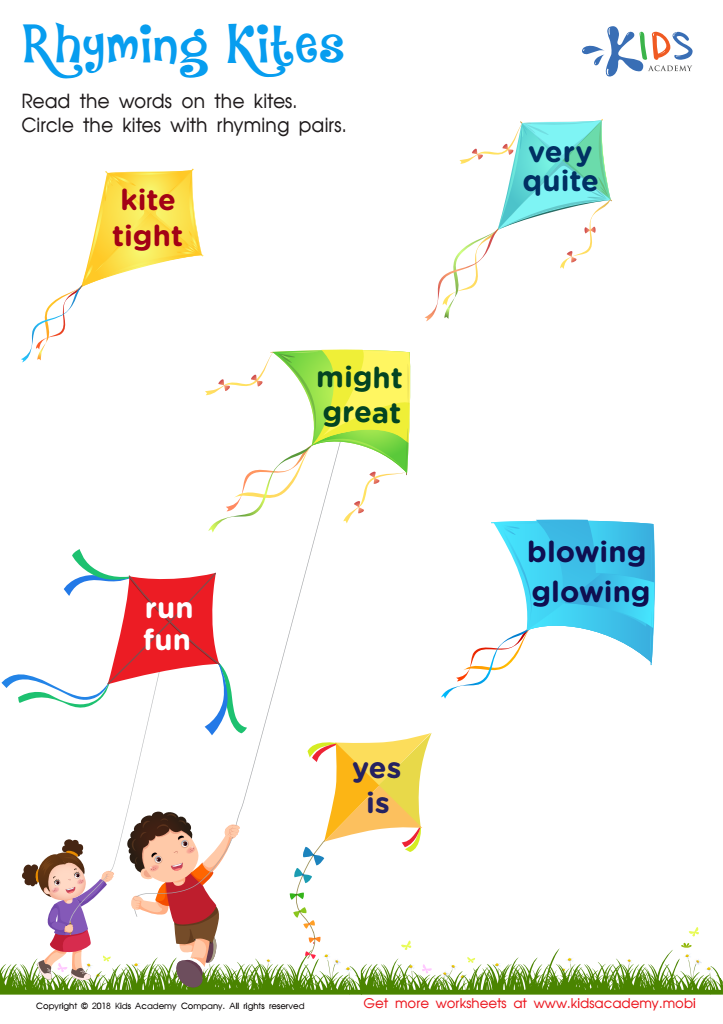
Rhyming Kites Worksheet
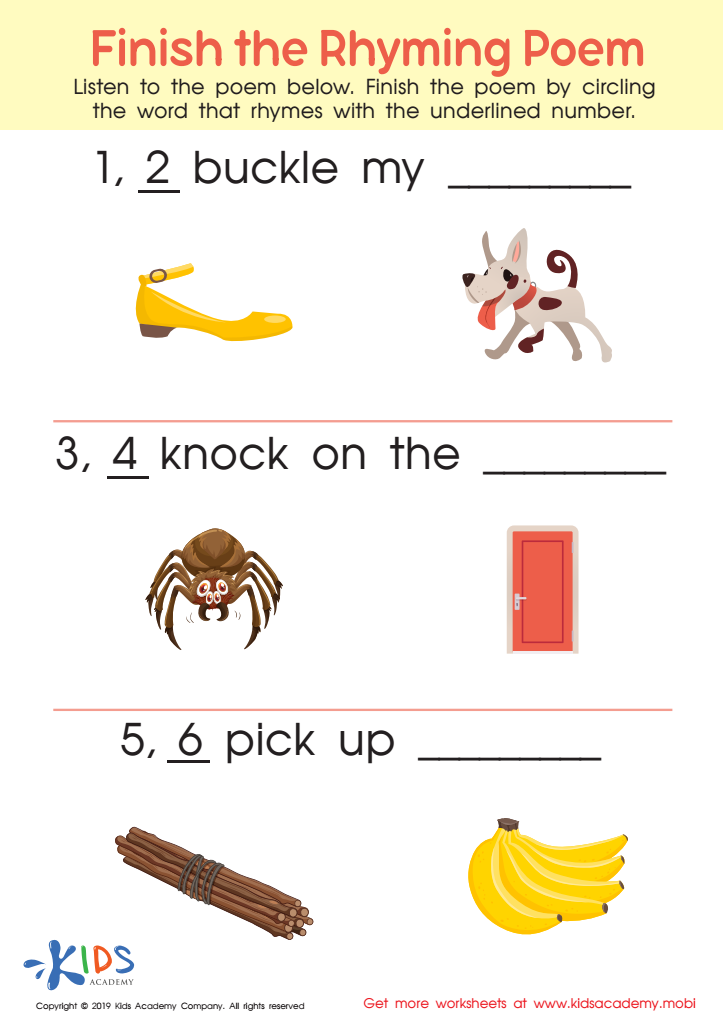
Finish Rhyming Poem Worksheet








Rhyming skills are foundational to early reading development, making them crucial for children ages 5-9. First, rhyming helps children understand the relationships between sounds within words. This phonemic awareness aids in decoding skills necessary for reading new words. When children can identify rhymes, they better grasp how sounds form patterns, which is essential for reading fluency and accuracy.
Moreover, rhyming enhances vocabulary acquisition. Exposure to rhyming words allows children to anticipate and recognize new words by their similar sounds and structures. For example, knowing the word "cat" can help children read "hat," "bat," and "rat" more easily. This pattern recognition boosts their confidence and encourages persistent reading attempts.
Rhyming also supports memory recall. Songs, poems, and stories with rhyming words are memorable and engaging, helping kids retain information longer. This recall is vital for developing comprehension skills.
Additionally, rhyming in stories or songs nurtures a love for reading. Enjoyable and playful exposure to rhymes makes reading a fun activity, creating positive associations that encourage a lifelong reading habit.
Overall, both parents and teachers should prioritize rhyming in early education due to its significant role in phonemic awareness, vocabulary building, memory enhancement, and fostering a love for reading, setting the foundation for future academic success.








