Sequencing Skills Normal Reading Worksheets for Ages 5-9
4 filtered results
-
From - To
Enhance your child's reading proficiency with our Sequencing Skills Normal Reading Worksheets, specially designed for ages 5 to 9. These engaging worksheets help young learners master the art of sequencing, an essential skill for comprehending stories and building logical thinking. Featuring colorful illustrations and age-appropriate tasks, our worksheets guide children in ordering events and understanding story structure. Ideal for both classroom and home environments, these activities will make reading fun while reinforcing literacy concepts. Foster a love for reading and boost confidence with our carefully crafted Sequencing Skills worksheets, perfect for helping little ones explore the world of stories!
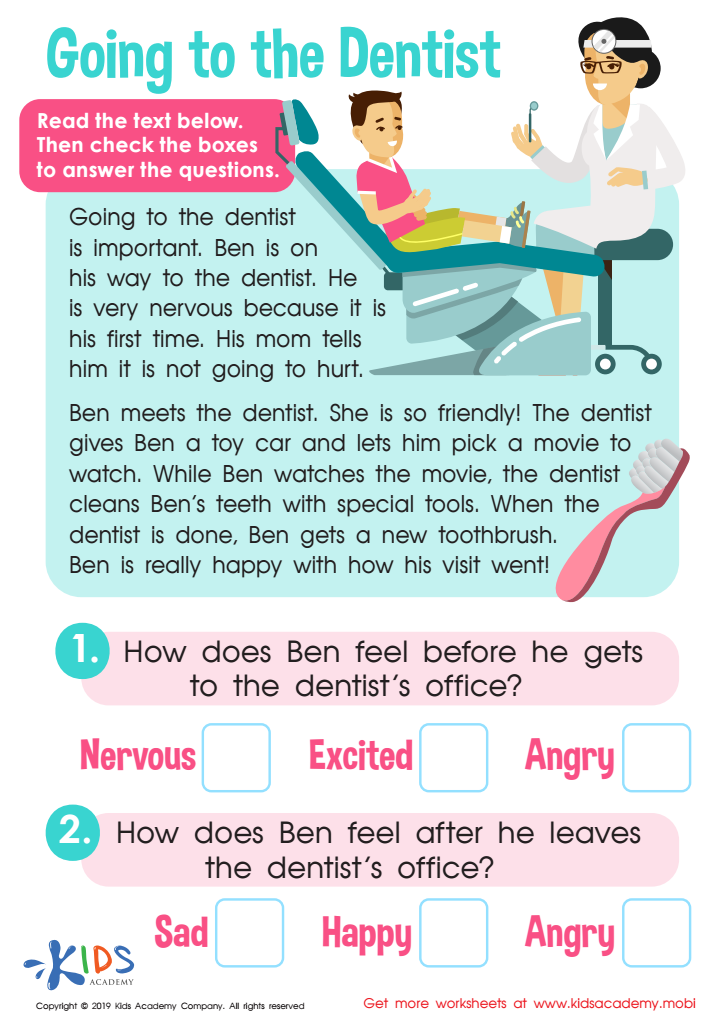
Going to the Dentist Worksheet
 Assign to My Students
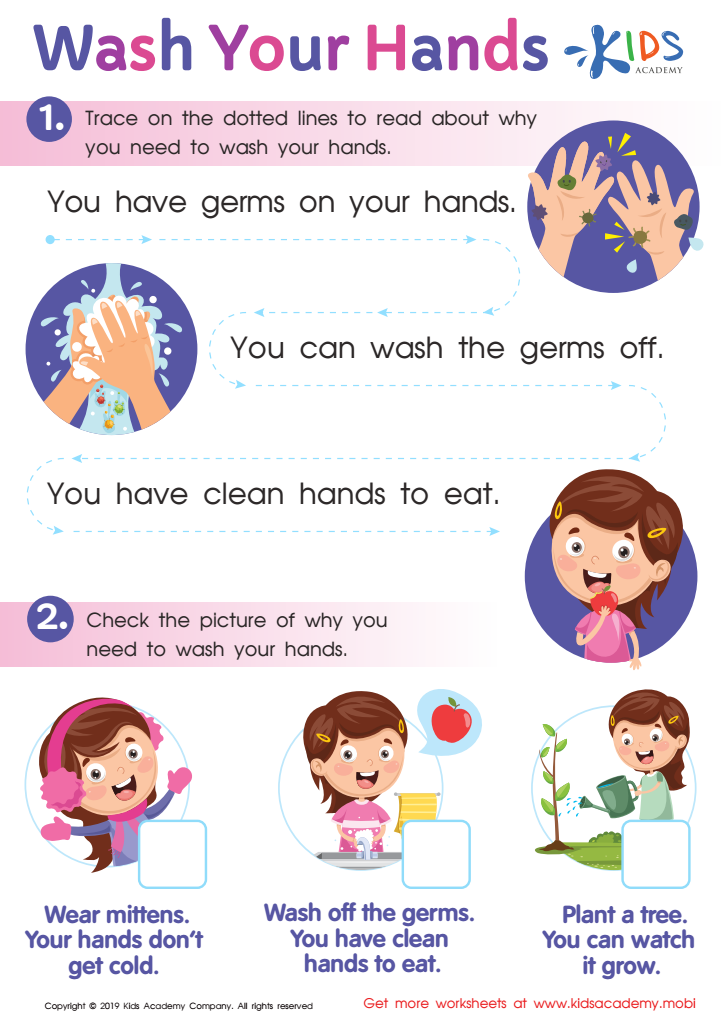
Wash Your Hands Worksheet
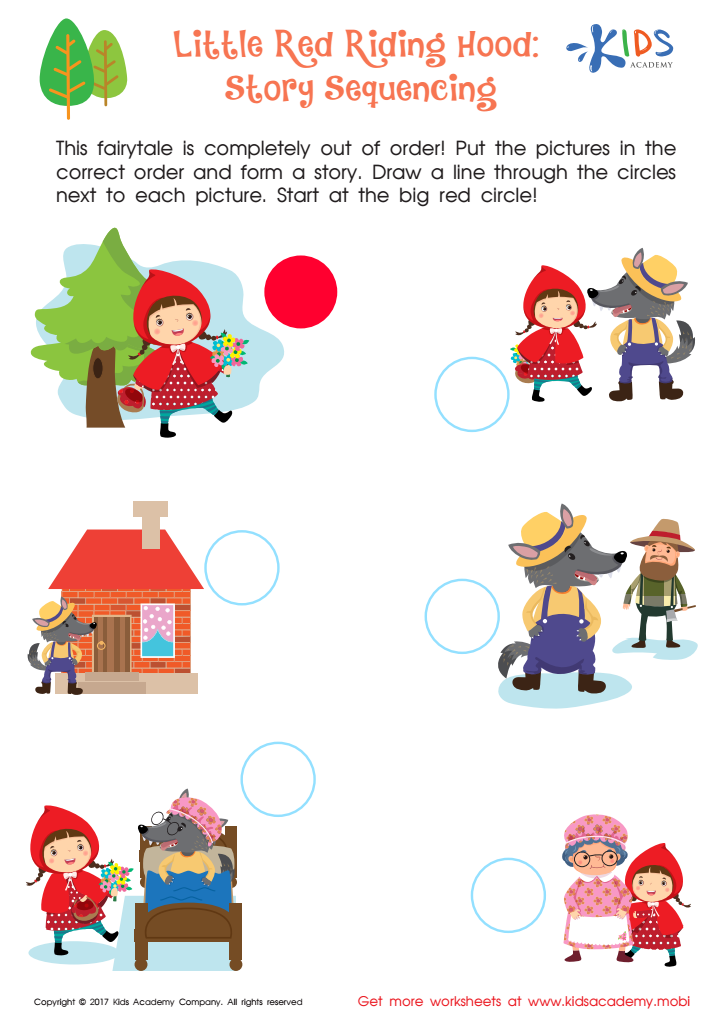
Story Sequencing Printable
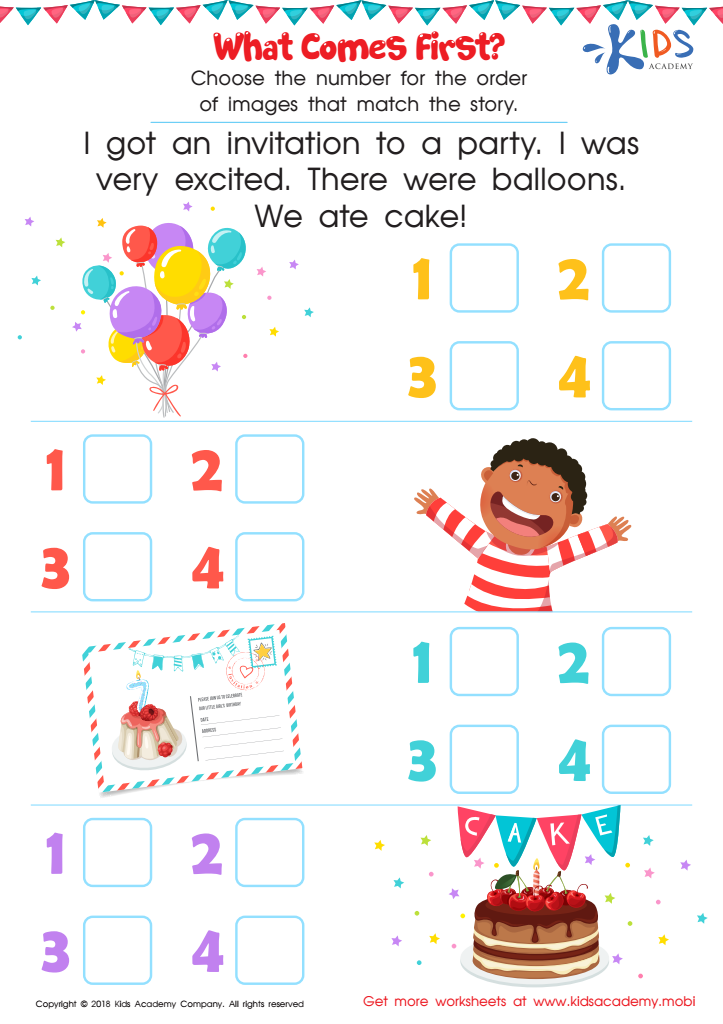
What Comes First Worksheet








Sequencing skills are vital for children aged 5-9 as they form the foundation for reading comprehension and overall literacy development. These skills involve the ability to arrange events in the order they occur, understand story structures, and draw connections between different parts of a narrative. For parents and teachers, fostering sequencing skills not only enhances children's reading abilities but also boosts their critical thinking and cognitive development.
Effective sequencing enables children to grasp the main ideas of a story, make predictions, and recall details accurately. This understanding is crucial for their success in both academic and social settings, helping them engage with peers during storytelling or discussions in class. Furthermore, strong sequencing skills contribute to more profound analytical skills as children learn to break down texts into logical parts and identify cause-and-effect relationships.
By emphasizing sequencing in early education, parents and teachers empower children to become confident readers and communicators. Interactive activities—such as creating storyboards, using picture cards, or discussing daily routines—also make the learning process engaging while reinforcing these essential skills. Ultimately, prioritizing sequencing skills fosters a love for reading and supports lifelong learning—not just in literacy, but across all subject areas.








