Word identification Normal Reading Worksheets for Ages 5-9
5 filtered results
-
From - To
Enhance your child's reading skills with our engaging Word Identification Normal Reading Worksheets, specially designed for ages 5 to 9. These worksheets provide a fun and interactive way for young learners to improve their vocabulary, reading comprehension, and word recognition. Featuring colorful illustrations and age-appropriate challenges, these resources will keep your child motivated while developing essential literacy skills. Perfect for home use or as a classroom supplement, our worksheets promote learning through play, fostering a love for reading from an early age. Discover the joy of reading together and watch your child's confidence soar with our comprehensive word identification activities!
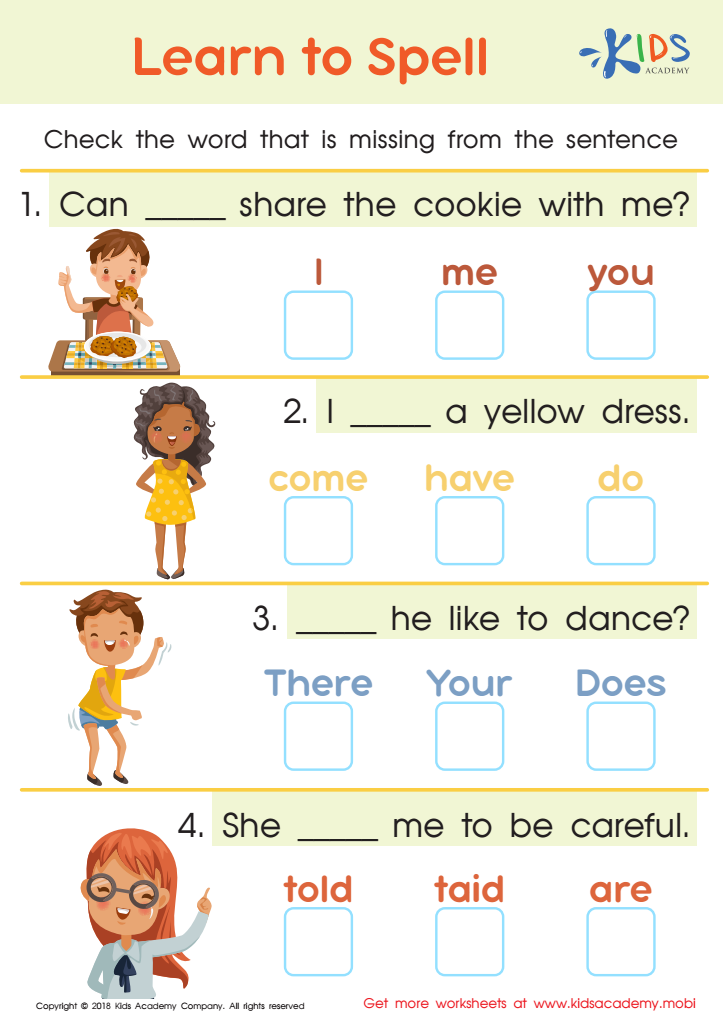
Learn to Spell Worksheet
 Assign to My Students
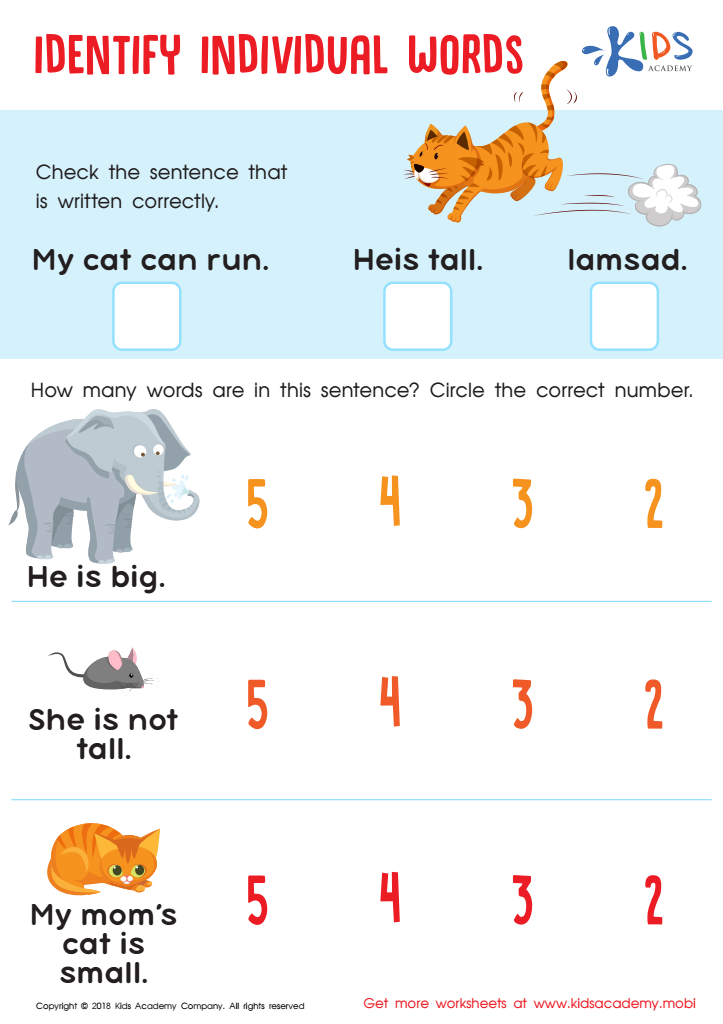
Identify Individual Words Worksheet
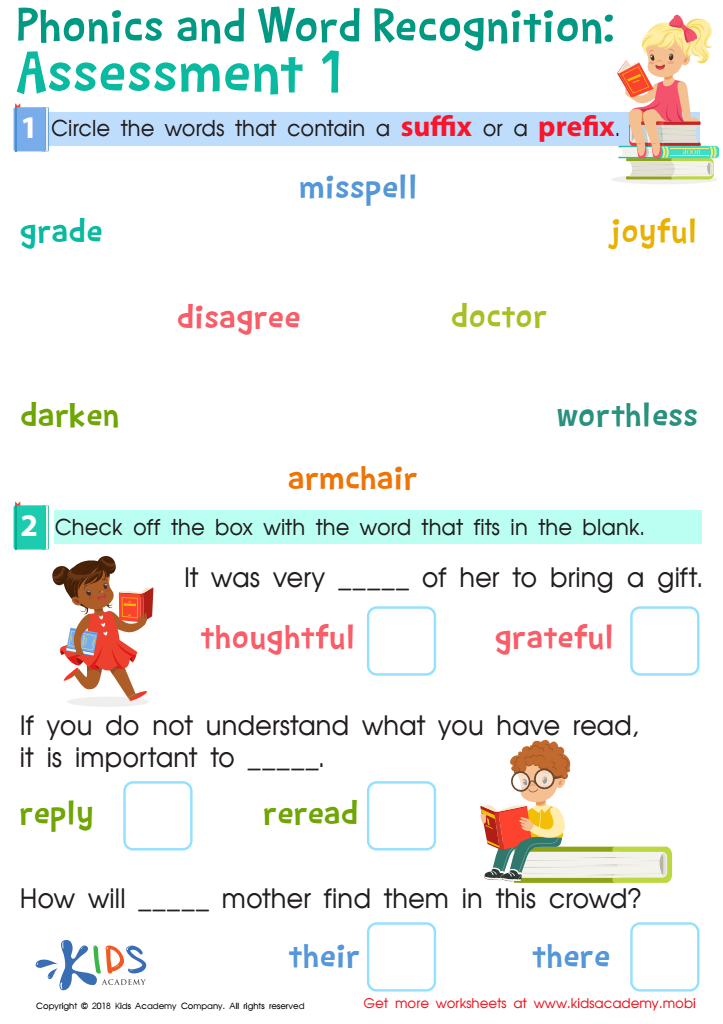
Phonics and Word Recognition: Assessment 1 Worksheet
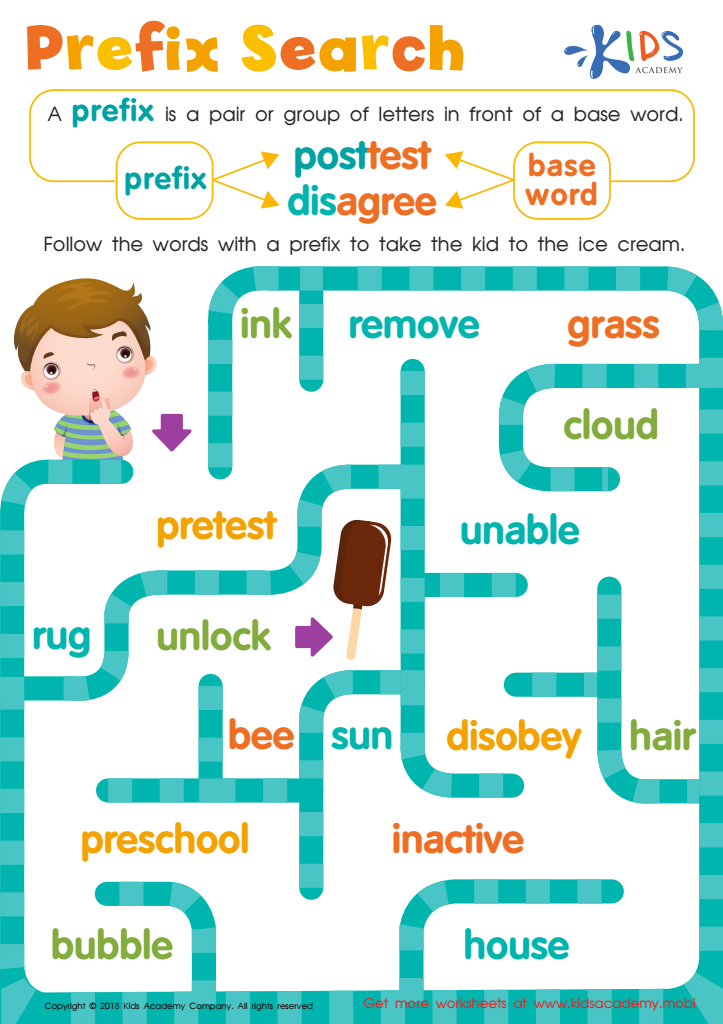
Reading: Prefix Search Worksheet
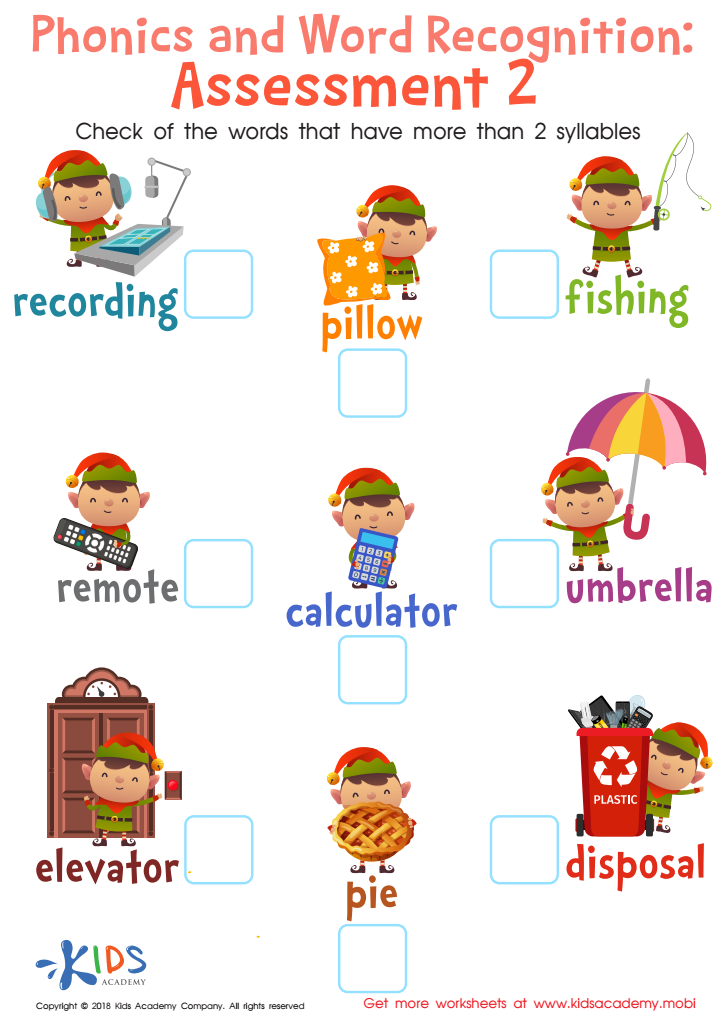
Phonics and Word Recognition: Assessment 2 Worksheet




.jpg)



Word identification is a crucial skill for children aged 5-9 as it lays the foundation for fluent reading and overall literacy. As future readers, students at this stage are developing the ability to recognize words quickly and accurately—a skill that directly impacts their comprehension and enjoyment of reading. Parents and teachers should prioritize word identification because it enhances children's confidence and motivation to read. When children can easily identify words, they are more likely to engage with texts and explore a wider variety of literature.
Additionally, effective word identification helps children decode unfamiliar words, facilitating a deeper understanding of the language and its usage. This skill is particularly important during formative years when children are building their vocabulary and cognitive skills. Parents and teachers can foster better reading habits by creating an environment that supports practice and encouragement in word recognition, such as integrating games and reading aloud.
Furthermore, strong word identification skills have long-term academic benefits. Children who excel in this area are more likely to perform better in school, as their abilities to follow written instructions and engage in discussions about texts will strengthen. By supporting children in developing these skills, parents and teachers set them on a path towards lifelong literacy success.








