Sequencing events Normal Reading Comprehension Worksheets for Ages 5-9
3 filtered results
-
From - To
Our "Sequencing Events: Normal Reading Comprehension Worksheets for Ages 5-9" are designed to enhance young readers' understanding of story structure. These engaging, age-appropriate worksheets help children practice organizing events in a logical sequence, a crucial skill for reading proficiency. Featuring fun stories and vibrant illustrations, each worksheet makes learning enjoyable while reinforcing comprehension skills. Perfect for home or classroom use, our worksheets support the development of critical thinking and boost confidence in reading. Dive into a collection that nurtures young minds and fosters a lifelong love for reading through expertly crafted sequencing activities.
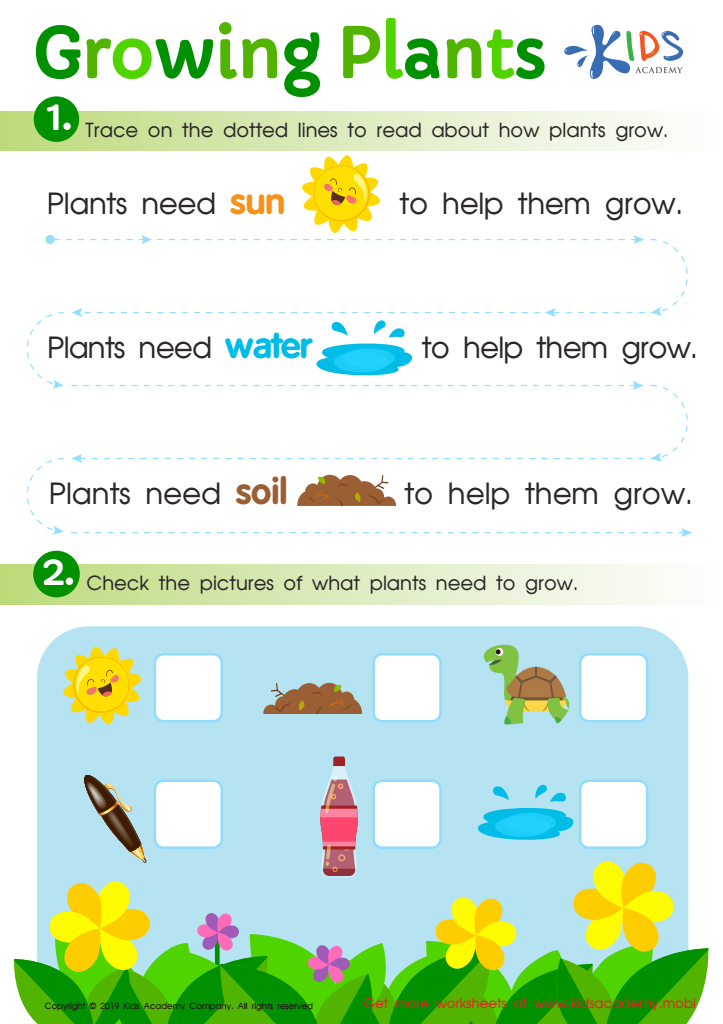
Growing Plants Worksheet
 Assign to My Students
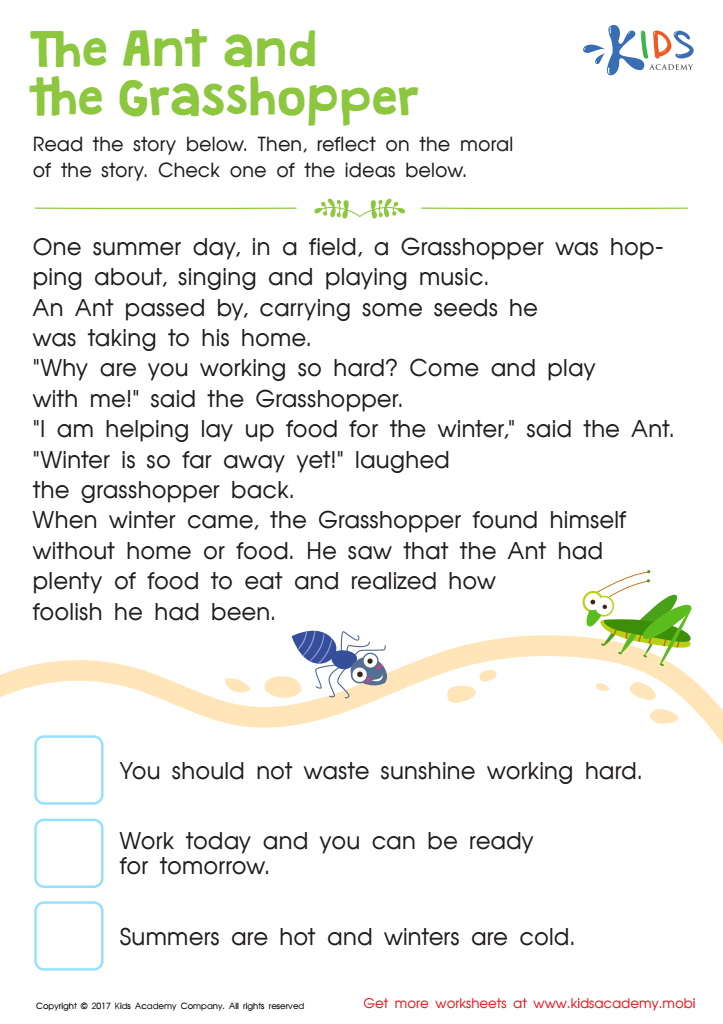
The Ant and The Grasshopper Printable
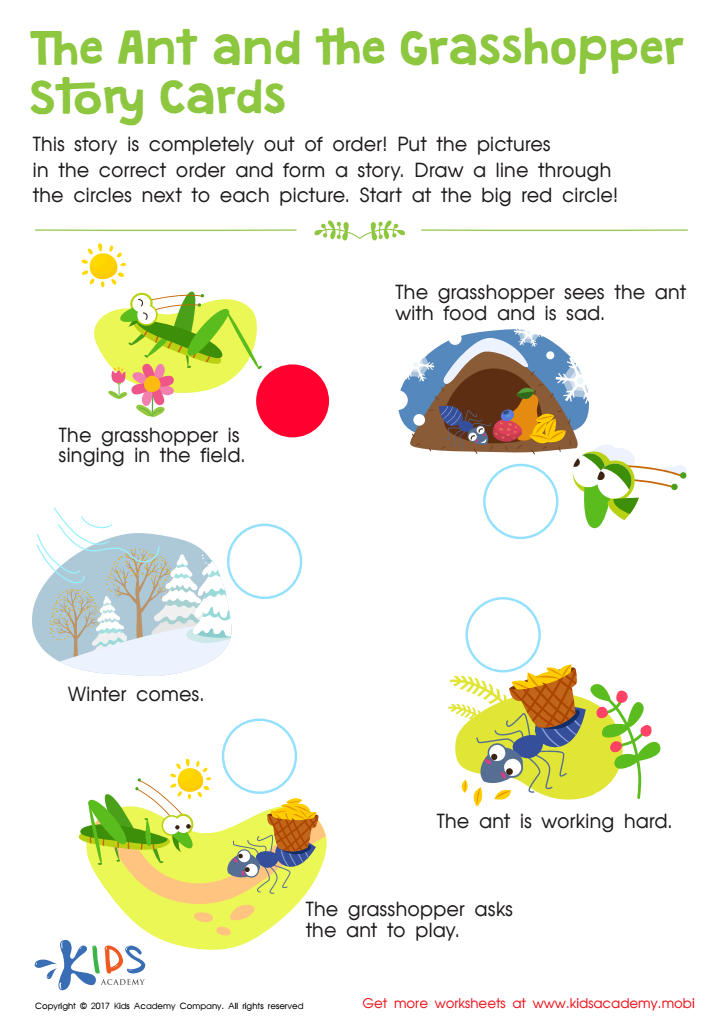
The Ant and The Grasshopper Worksheet







Sequencing events is a fundamental skill in reading comprehension, especially for children aged 5-9. Understanding the order of events helps young readers make sense of stories and enhances their ability to retell them accurately. This skill not only bolsters academic performance but also supports critical thinking and problem-solving abilities. When children grasp the sequence of events, they can better predict outcomes and understand the cause-effect relationships within a narrative, which also applies to real-life situations.
For parents and teachers, emphasizing sequencing can significantly contribute to a child's overall literacy development. It aids in memory retention, as children who can recall the order of events are more likely to remember detailed information. This lays a solid foundation for future learning, where comprehending complex texts becomes an integral part of their education.
Furthermore, sequencing helps in fostering organizational skills and attention to detail. These are crucial competencies that go beyond the classroom, aiding children in planning, executing tasks systematically, and even in social interactions where understanding chronological order enhances effective communication.
By nurturing sequencing skills, parents and teachers equip children with analytical tools that serve as building blocks for long-term academic success and cognitive development, hence highlighting its importance in early education.








