Logical Reasoning Normal Reading Fiction Worksheets for Ages 5-9
5 filtered results
-
From - To
Discover our engaging "Logical Reasoning Normal Reading Fiction Worksheets for Ages 5-9," designed to enhance young learners' critical thinking while enjoying captivating stories. These worksheets integrate fun fiction narratives with essential logical reasoning skills, helping students develop comprehension, analytical thinking, and deduction. Tailored for early grade teachers and parents, our resources promote interactive learning through thought-provoking questions and activities that inspire creativity and understanding. Ideal for classroom use or at-home practice, these worksheets foster a love for reading while empowering children to think critically about the stories they encounter. Get ready for a fun-filled learning experience!
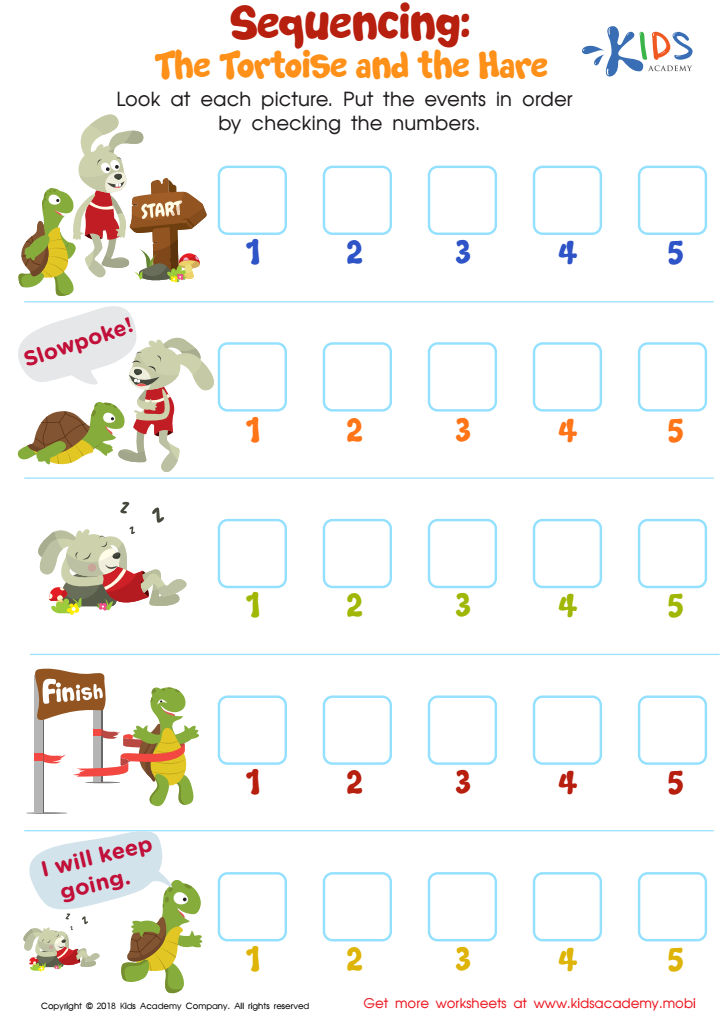
Sequencing: The Tortoise and the Hare Worksheet
 Assign to My Students
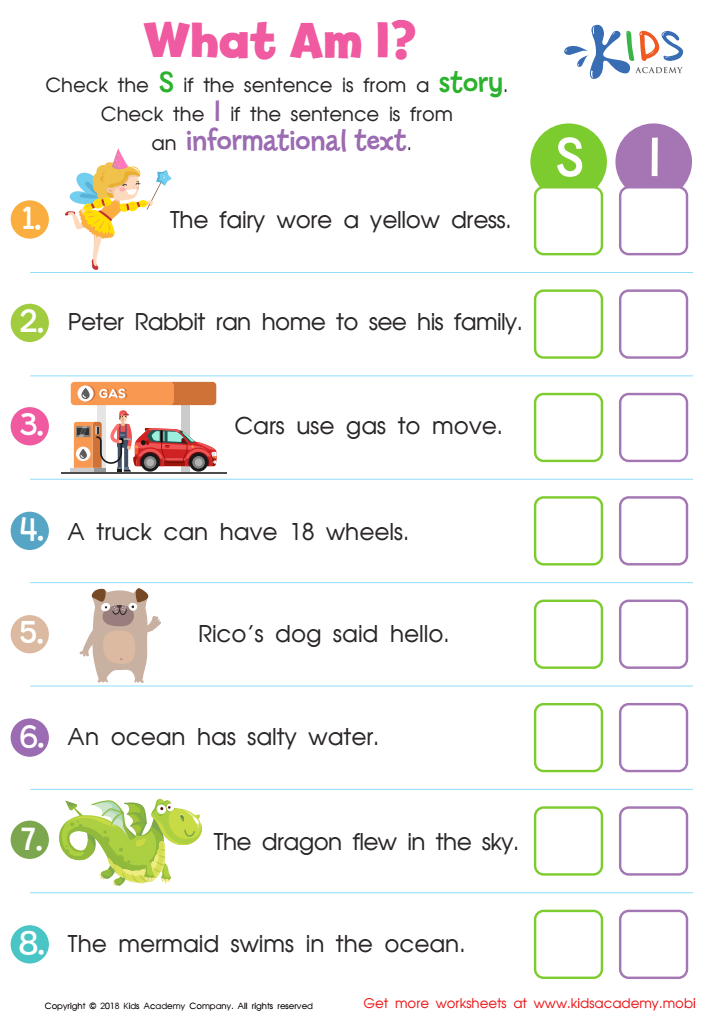
What Am I? Worksheet
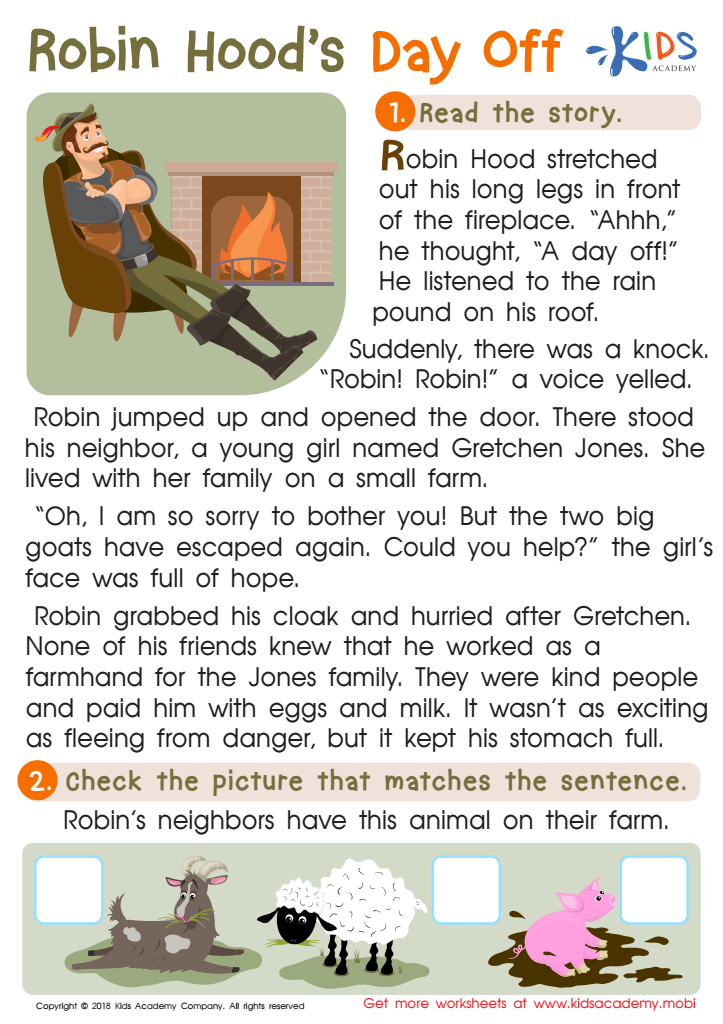
Robin Hood's Day Off Worksheet
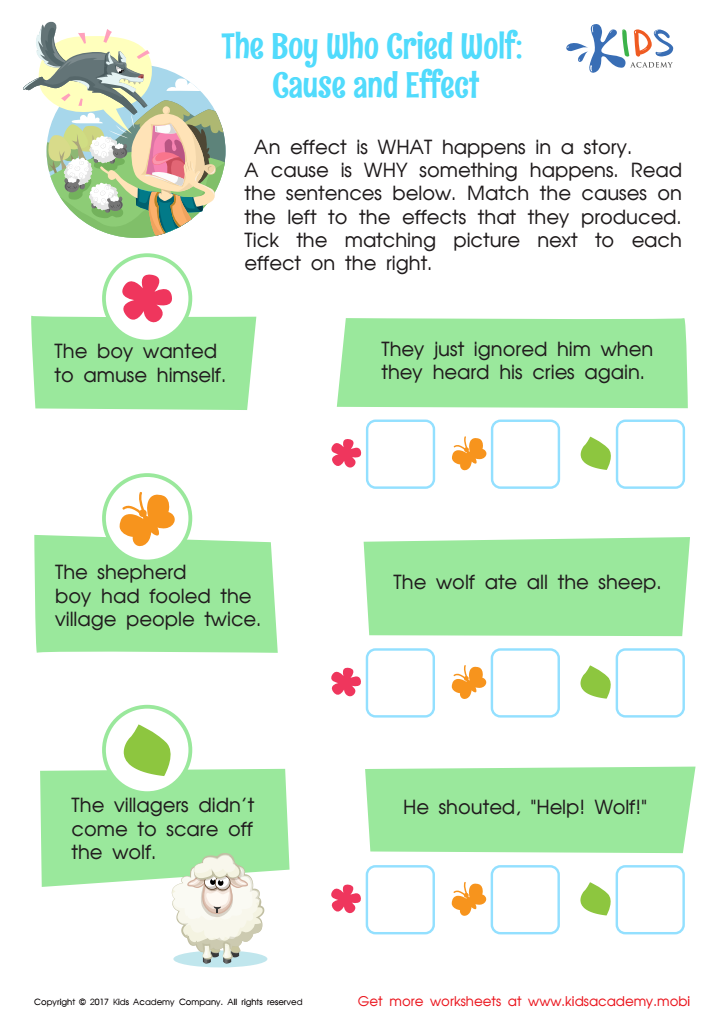
The Boy Who Cried Wolf: Cause and Effect Worksheet
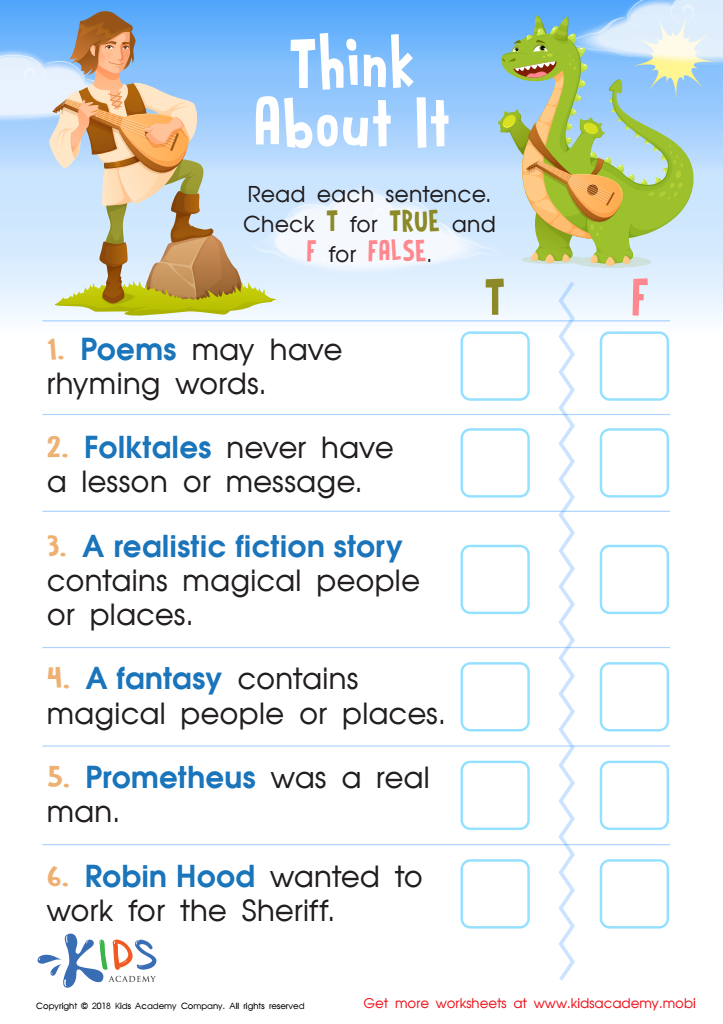
Think About It: Assessment Worksheet








Parents and teachers should prioritize Logical Reasoning Normal Reading Fiction for children aged 5-9 because it plays a crucial role in cognitive development and literacy skills. This genre not only captivates young readers with engaging narratives but also fosters essential problem-solving abilities. As children immerse themselves in stories that challenge their reasoning, they learn to make connections, draw inferences, and understand cause-and-effect relationships.
Exposure to logical reasoning through fiction enhances critical thinking, a skill foundational for academic success. It helps children articulate their thoughts, evaluate different perspectives, and better understand themselves and the world around them. Additionally, reading fiction cultivates empathy as young readers connect with characters, which is vital for social development.
Incorporating logical reasoning elements in reading helps educators align with curriculum standards aimed at maximizing children’s comprehension and analytical skills. It prepares them for future challenges in learning, ensuring they can approach complex ideas with confidence.
Furthermore, monitoring children's progress in this area allows parents and educators to tailor reading selections that align with individual interests and abilities, making literacy both a fun and enriching experience. Ultimately, prioritizing Logical Reasoning Normal Reading Fiction instills a lifelong love for reading and learning in children.







