Logical thinking Normal Reading Fiction Worksheets for Ages 5-9
3 filtered results
-
From - To
Enhance your child's reading and comprehension skills with our engaging "Logical Thinking Normal Reading Fiction Worksheets" designed for ages 5-9. These worksheets encourage young learners to think critically and make connections within stories. Featuring relatable characters and exciting plots, each activity promotes logical reasoning by asking children to analyze scenarios, predict outcomes, and solve simple problems. Our carefully crafted resources help build the foundation for strong reading comprehension while nurturing a love for fiction. Perfect for both classroom settings and at-home learning, these worksheets are an ideal way to develop essential thinking skills in a fun and engaging manner. Start your adventure today!

The Dog and His Bone Worksheet
 Assign to My Students
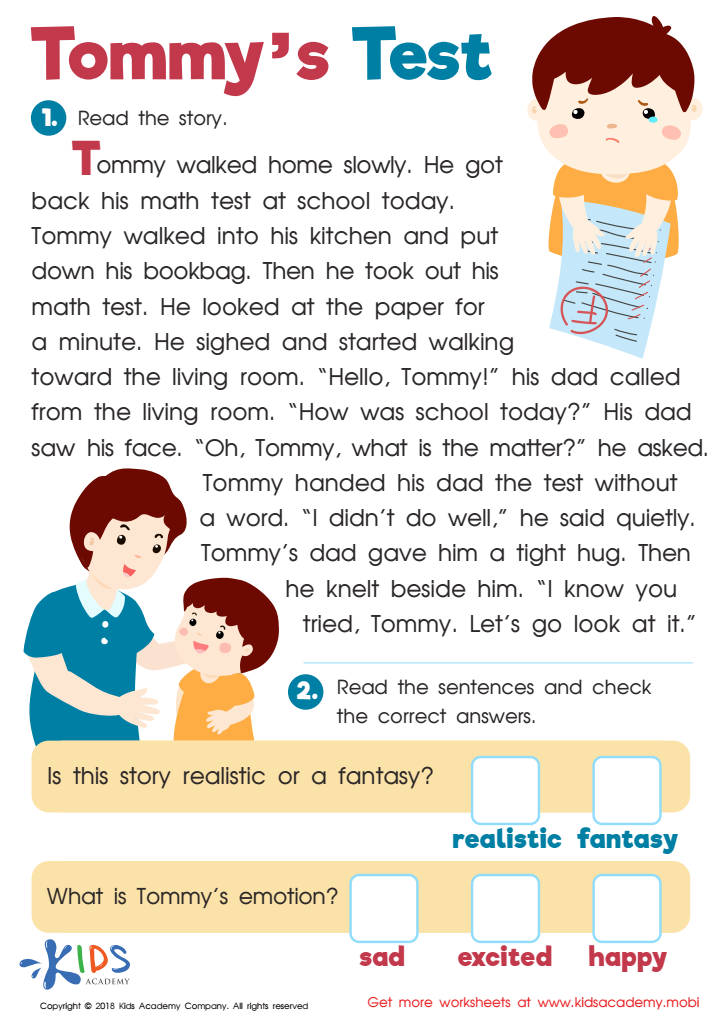
Tommys Test Worksheet
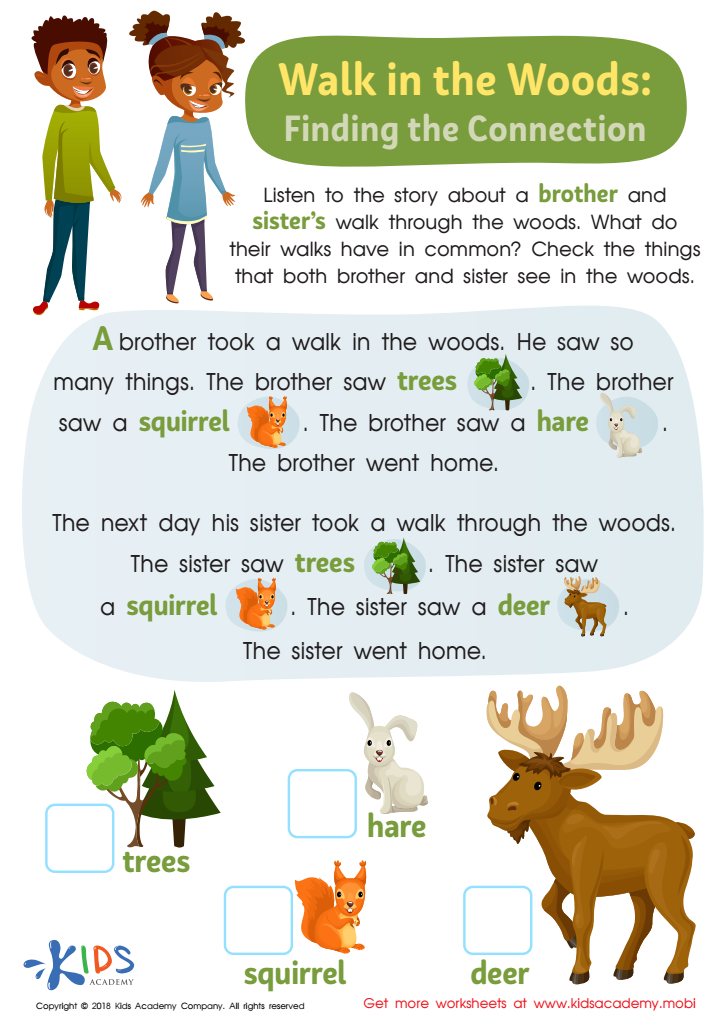
Walk In the Woods: Finding Connections Worksheet








Parents and teachers should prioritize logical thinking through reading fiction for children ages 5-9 because this stage in development is crucial for building foundational cognitive skills. Engaging with stories not only entertains but also fosters critical thinking and problem-solving abilities. Fiction offers scenarios that allow children to explore cause and effect, make predictions, and draw conclusions based on the characters’ decisions.
Moreover, when children encounter diverse narratives and different perspectives, they enhance their empathy and understanding, key components of social-emotional learning. Fictional stories often present moral dilemmas, encouraging children to think critically about right and wrong and the consequences of various actions.
Furthermore, reading fiction helps develop language skills such as vocabulary and grammar, which are vital for effective communication. Logical thinking is also reinforced as children learn to sequence events, identify main ideas, and summarize plots. By fostering these skills through engaging stories, parents and teachers can nurture well-rounded individuals prepared for challenging scenarios both in and out of the classroom.
Ultimately, logical thinking intertwined with enjoyment in reading fiction not only supports academic success but also shapes critical life skills, essential for the children’s long-term growth and development.







