Understanding perspectives Normal Reading Fiction Worksheets for Ages 5-9
3 filtered results
-
From - To
Discover our "Understanding Perspectives Normal Reading Fiction Worksheets" designed for children aged 5-9. These engaging and interactive worksheets help young readers explore different viewpoints within stories, enhancing their comprehension and empathy. Through creative exercises, kids will learn to identify characters' feelings, motivations, and reactions, promoting critical thinking and social-emotional skills. Each worksheet is colorful and age-appropriate, making learning fun and effective. Perfect for classroom use or at-home practice, these resources will inspire your child’s love for reading while developing essential literary skills. Dive into the world of fiction and expand your youthful reader’s mind with our thoughtfully crafted activities!
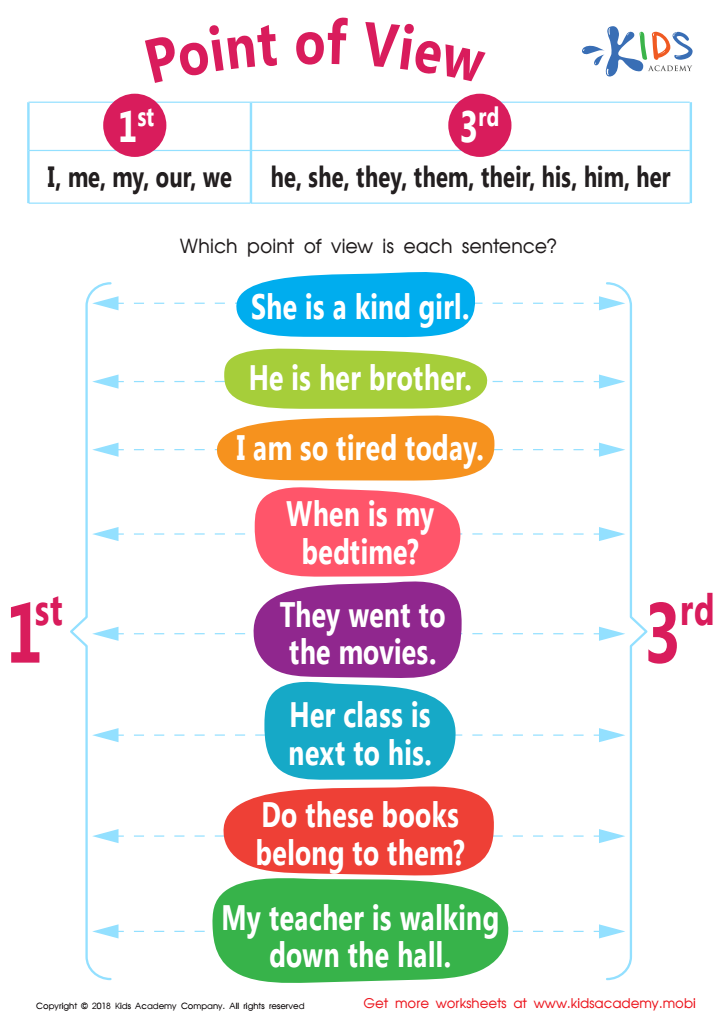
Point of View Worksheet
 Assign to My Students
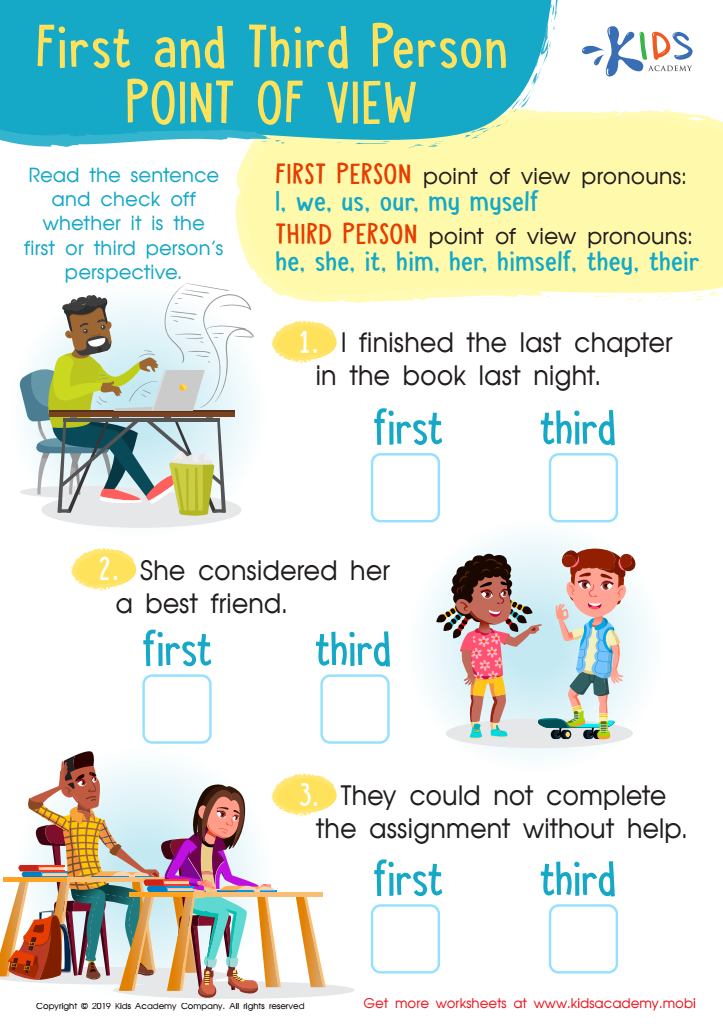
First and Third Person Point of View Worksheet
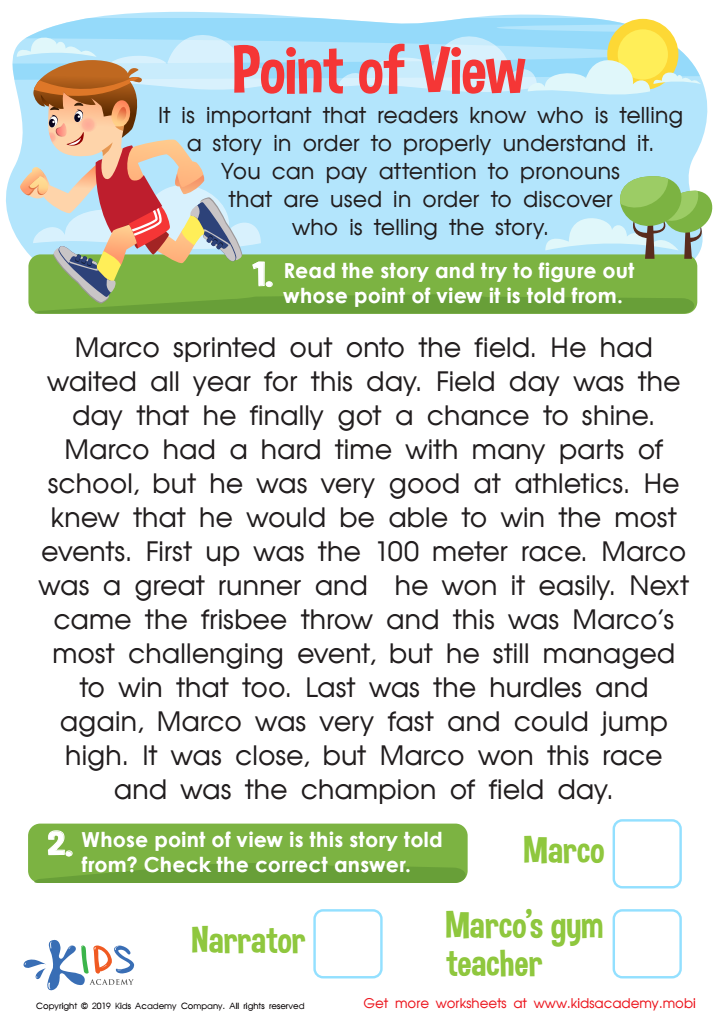
Point of View Worksheet







Understanding perspectives in reading is crucial for children aged 5-9 as it fosters empathy and critical thinking. At this developmental stage, children are learning to interpret stories and recognize that characters have feelings and viewpoints different from their own. When parents and teachers emphasize perspective in reading fiction, they help children develop social-emotional skills, which are essential for teamwork and conflict resolution.
Engaging with various characters and their situations enables children to become more compassionate individuals, as they start to relate to the experiences of others. Understanding differing perspectives also enhances comprehension skills; when children can navigate who is speaking and their motivations, they can better analyze plot and character development.
Additionally, diving into different perspectives sparks imagination and creativity, encouraging children to think beyond their experiences and consider diverse possibilities in storytelling. It makes reading more enjoyable and meaningful, preparing young readers for a world filled with diverse opinions and backgrounds.
By nurturing an interest in various viewpoints through fiction, parents and teachers cultivate not only more literate readers but also well-rounded individuals who can navigate and appreciate life's complexities with kindness and open-mindedness.







