Visual interpretation Normal Reading Fiction Worksheets for Ages 5-9
5 filtered results
-
From - To
Discover our engaging Visual Interpretation Normal Reading Fiction Worksheets designed for children aged 5-9! These worksheets help young readers enhance their comprehension and critical thinking skills by focusing on visual elements in stories. Through colorful illustrations and interactive activities, students will develop the ability to connect imagery with text, fostering a deeper understanding of narrative structures and themes. Ideal for classroom or at-home learning, our resources make reading a fun and enriching experience. Encourage creativity and imagination as children practice interpreting visuals alongside their reading. Download these worksheets today and watch your child's love for reading blossom!
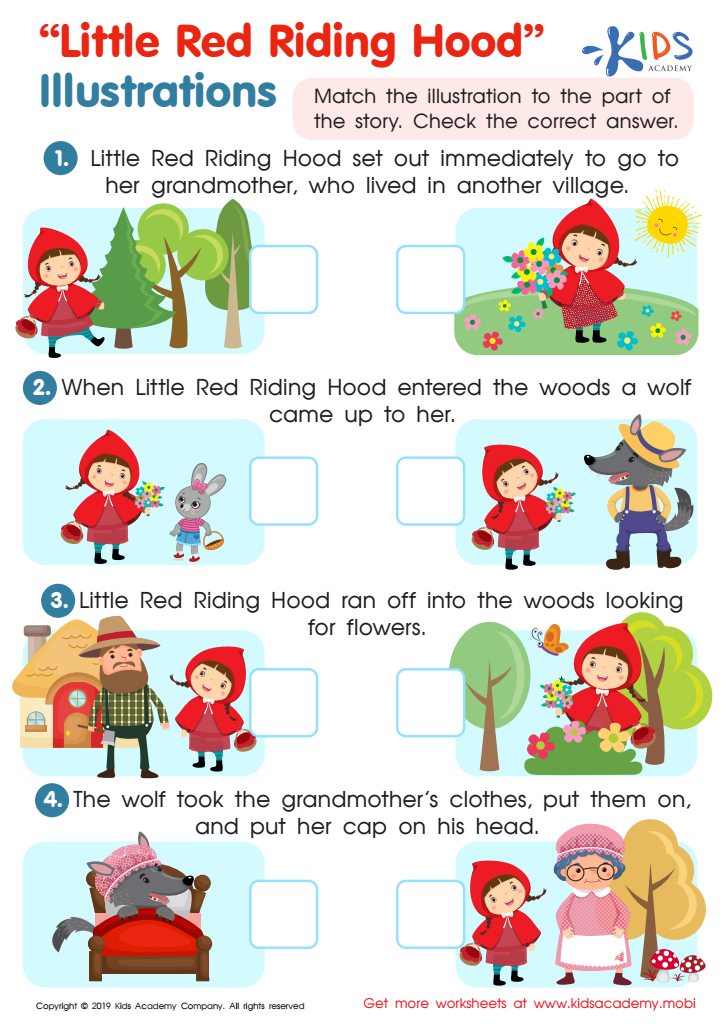
Little Red Riding Hood: Illustrations Worksheet
 Assign to My Students
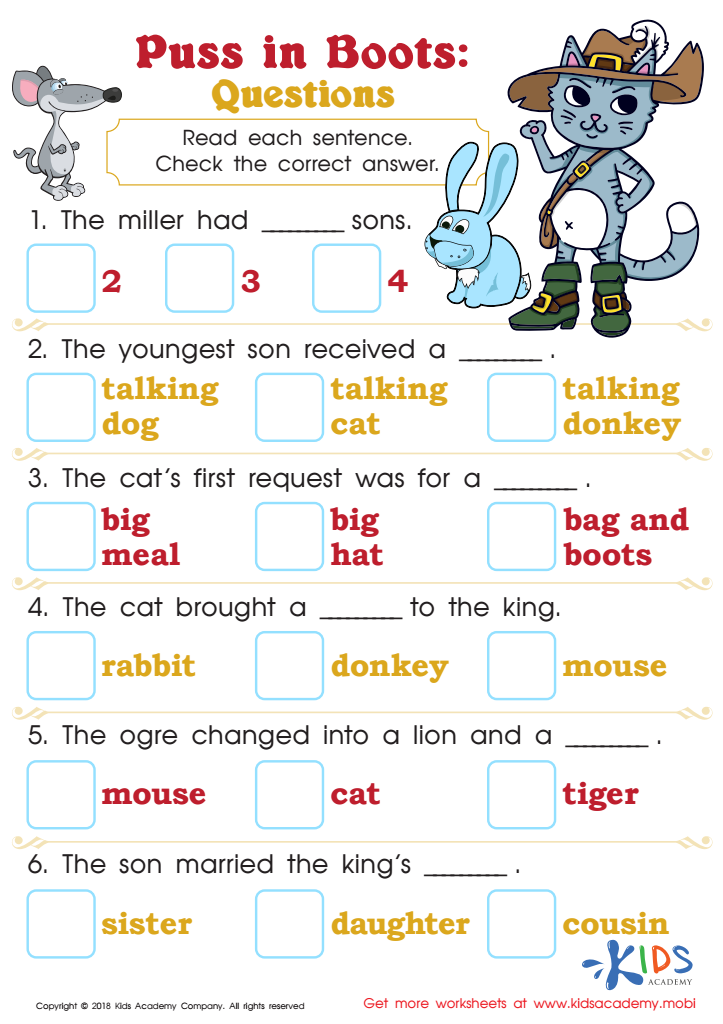
Puss in Boots: Questions Worksheet
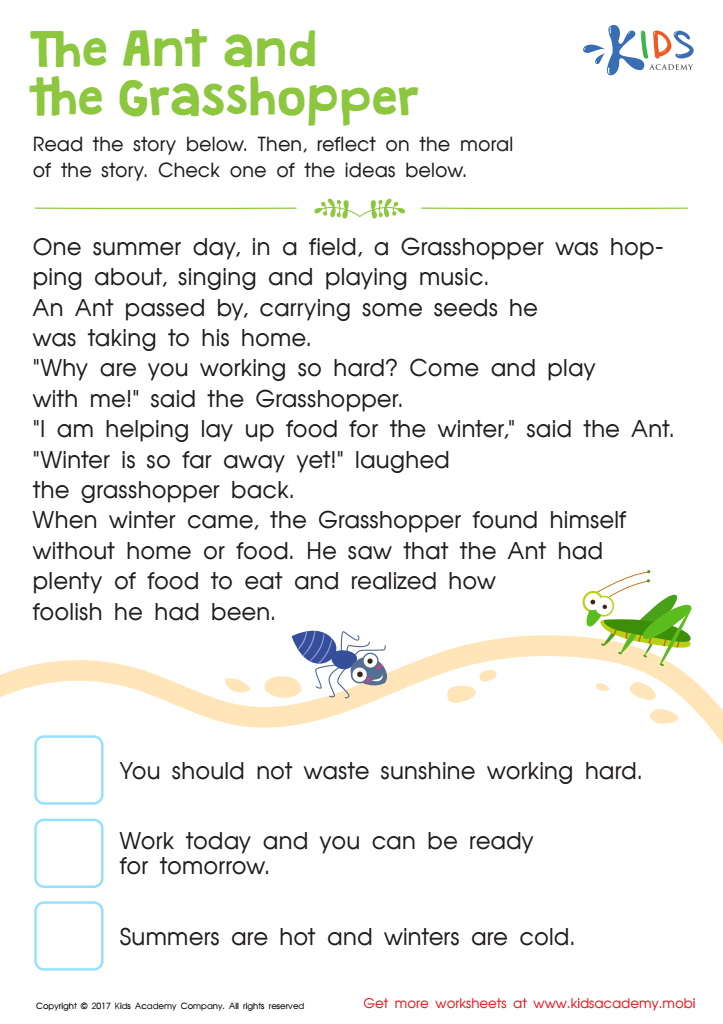
The Ant and The Grasshopper Printable
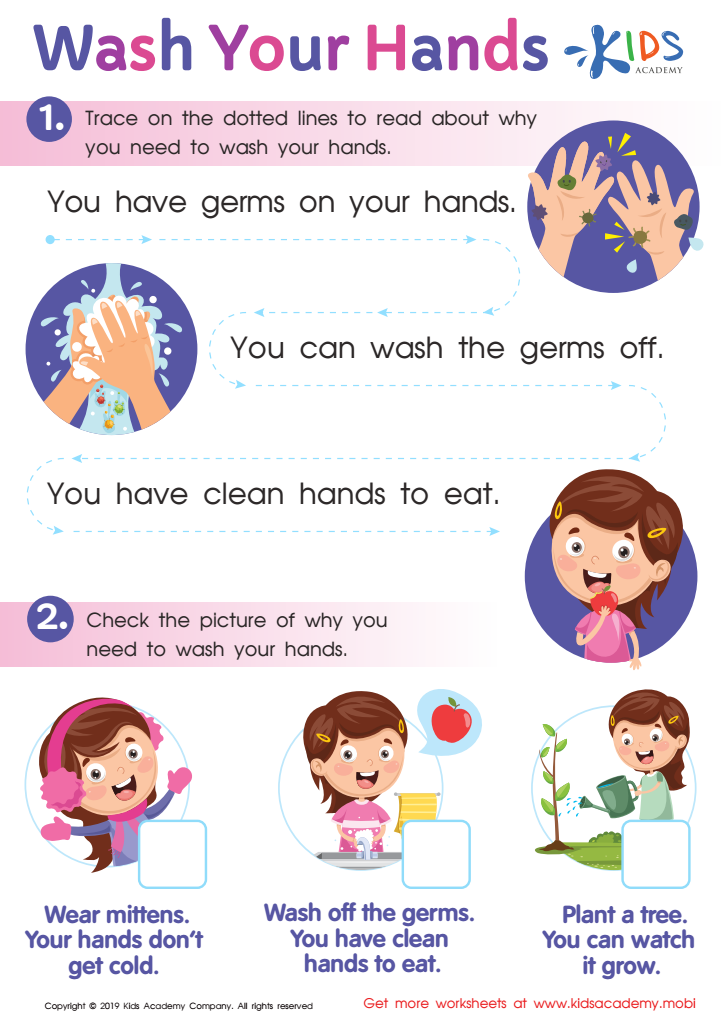
Wash Your Hands Worksheet
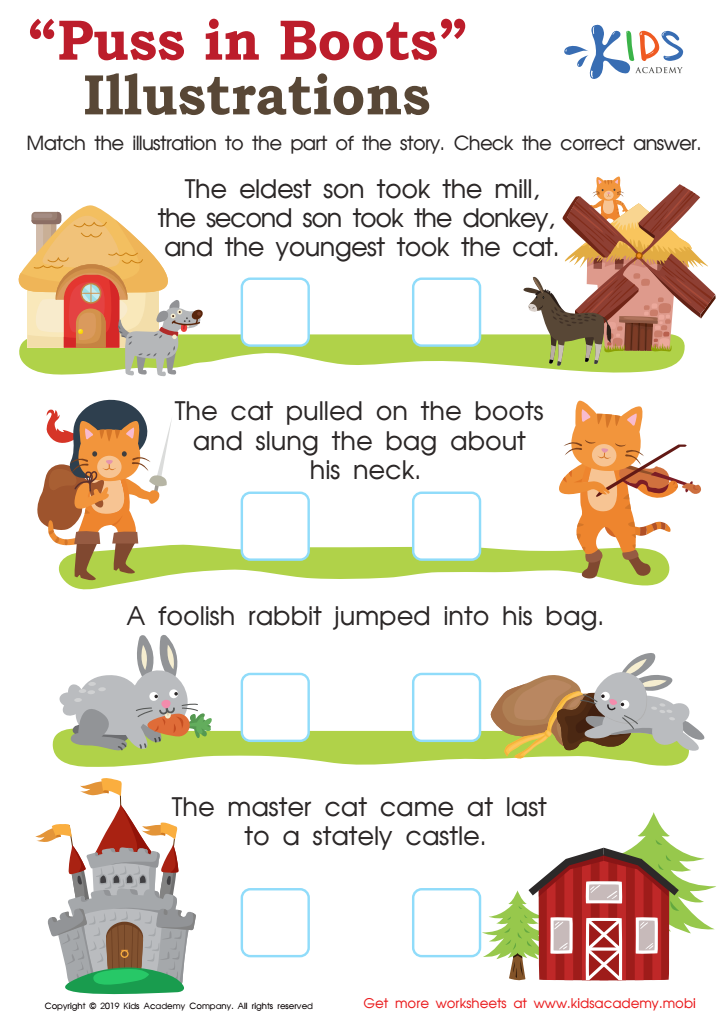
Puss in Boots Illustrations Worksheet


.jpg)




.jpg)
Parents and teachers should prioritize visual interpretation in normal reading fiction for children aged 5-9 as it significantly enhances comprehension and engagement. At this age, children are developing critical literacy skills, and visual elements—such as illustrations, diagrams, and layouts—play a vital role in helping them make connections between text and imagery. Research shows that incorporating visual interpretation helps young readers not only understand the storyline but also improve their ability to narrate and analyze the events within the text.
Visual aids ignite imagination and curiosity, making reading more enjoyable and less daunting for early learners. Engaging with visuals allows children to explore themes, characters, and settings in a more dynamic way, fostering a better grasp of context and meaning. Additionally, visual interpretation cultivates key skills such as critical thinking and problem-solving, as children learn to infer meanings and draw conclusions based on visual clues.
Moreover, integrating visuals in reading can cater to diverse learning styles, ensuring that all children, including visual learners, can connect with the material. By emphasizing visual interpretation, parents and teachers can create a rich and supportive reading environment that nurtures literacy development and a lifelong love for reading.







