Rhyming skills development Normal Rhyming Words Worksheets for Ages 5-9
3 filtered results
-
From - To
Enhance your child's language development with our engaging Normal Rhyming Words Worksheets, designed for kids ages 5-9. These printable resources focus on building essential rhyming skills through fun and interactive activities. Our worksheets encourage creativity and phonemic awareness by introducing a variety of rhyming words in a friendly, accessible format. Perfect for parents and educators, these resources provide opportunities for children to practice identifying, creating, and using rhymes. Foster a love for reading and boost vocabulary with our entertaining, educational activities that make learning enjoyable. Explore our collection and watch your child thrive in their rhyming skills!

Rhyming Words Rhyming Worksheet
 Assign to My Students
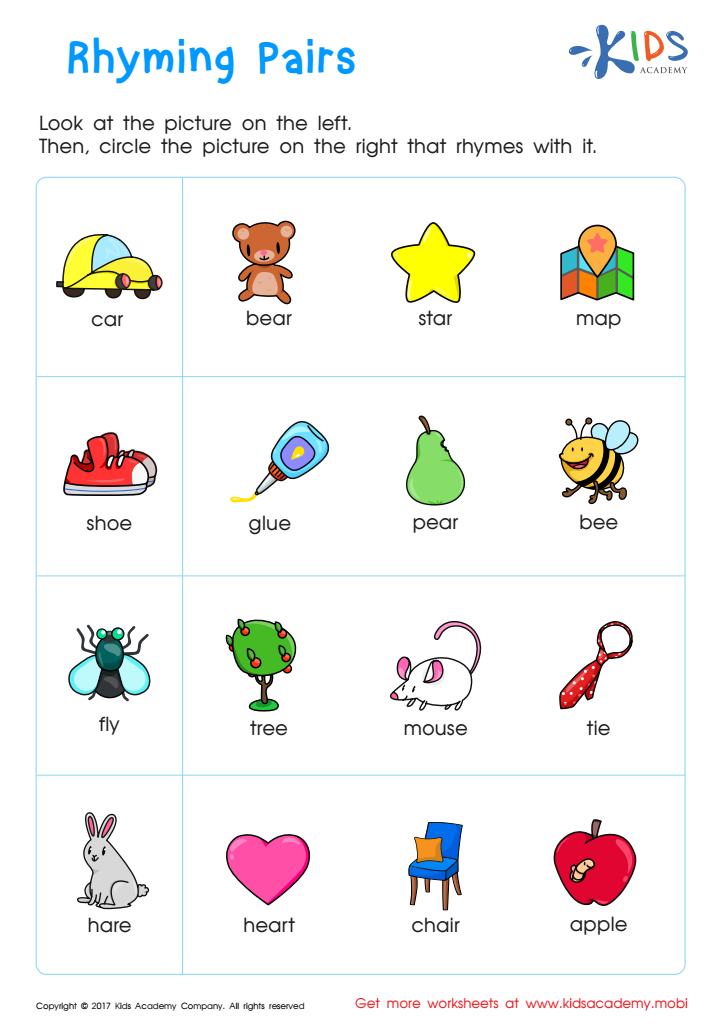

First Words: Picture Rhymes Worksheet



.jpg)




Rhyming skills development is crucial for children aged 5-9 because it serves as a foundational building block for literacy and language development. As children learn to recognize and produce rhyming words, they enhance their phonemic awareness—a key component in learning to read and write. This skill helps them identify and manipulate sounds in words, which is essential when decoding unfamiliar terms.
Moreover, rhyming facilitates vocabulary growth, allowing children to explore language in a fun and engaging way. It supports memory retention as children recall patterns and sounds, making learning more enjoyable through songs, poems, and rhymes. These activities also encourage linguistic play, fostering creativity and a love for language.
Rhyming is not just about sounds; it also benefits cognitive skills, such as categorization and syllable counting. When children engage in rhyming activities, they develop critical thinking abilities as they analyze and compare words.
Parents and teachers should prioritize rhyming skill development as it lays the groundwork for future reading success, boosts overall communication skills, and nurtures a child's ability to express themselves. Incorporating enjoyable rhyming games or songs can significantly enhance these skills and prepare children for academic and social interactions.








