Analytical skills Normal Science Worksheets for Ages 5-9
3 filtered results
-
From - To
Discover the fun and educational "Analytical Skills Normal Science Worksheets" designed for children ages 5-9. These captivating worksheets help young learners develop critical thinking and analytical skills through engaging science activities. With a focus on observation, problem-solving, and data interpretation, each worksheet offers a variety of challenges that inspire curiosity about the natural world. Whether your child is working on identifying patterns, making predictions, or drawing conclusions, these resources provide essential practice that lays a strong foundation for future learning. Perfect for both classroom and home use, our worksheets make science exploration enjoyable and interactive! Start your child's scientific journey today!
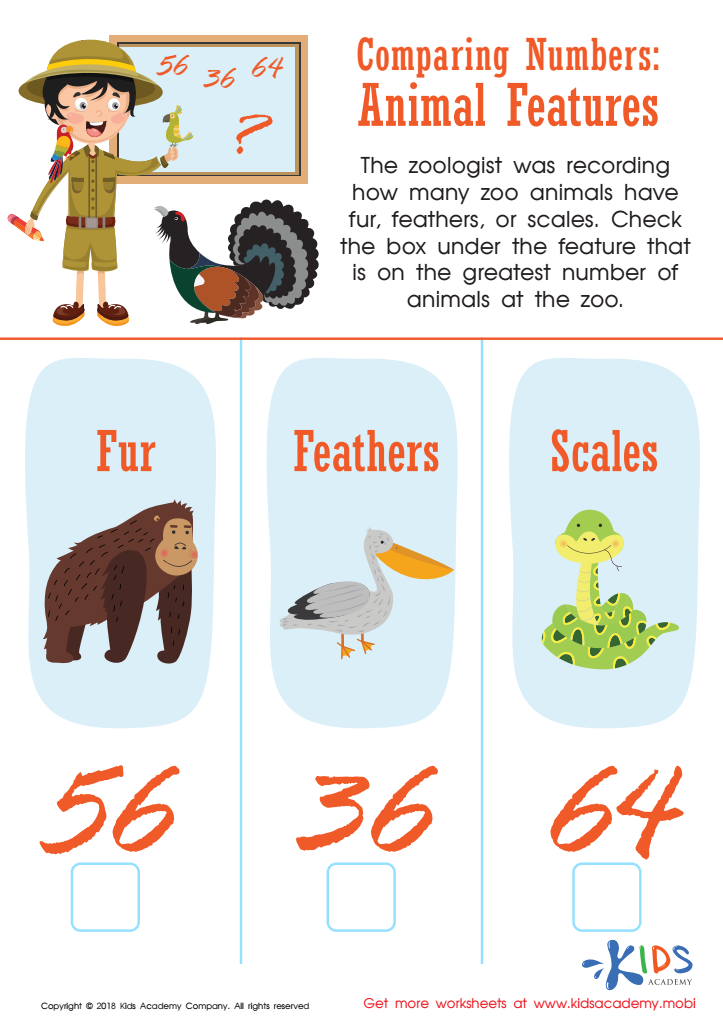
Animal Features Worksheet
 Assign to My Students
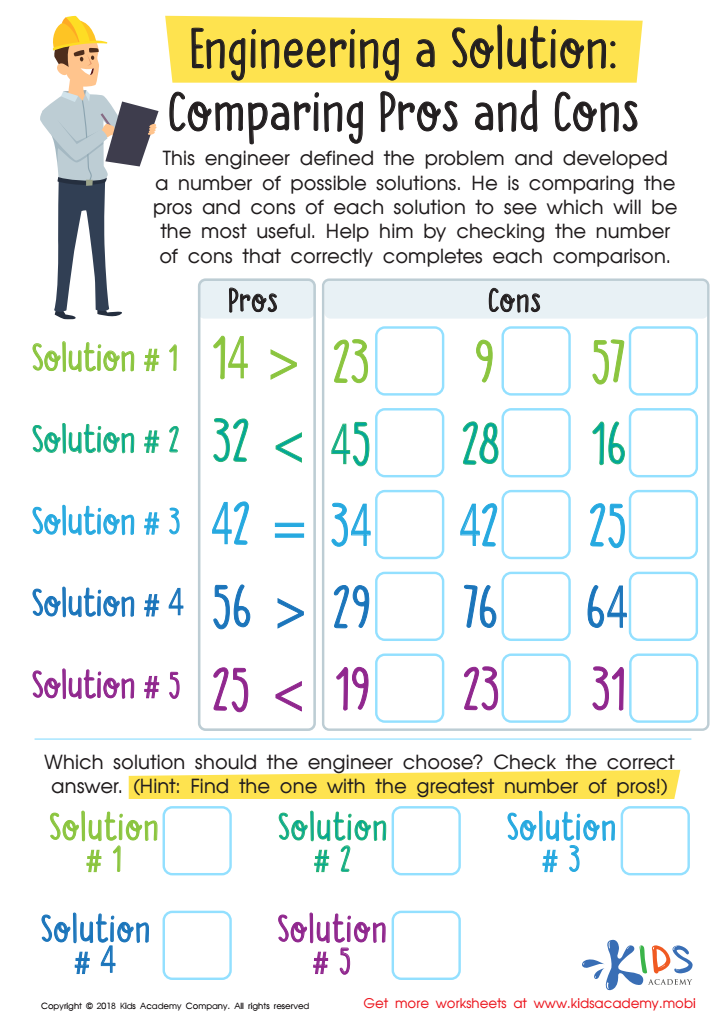
Engineering a Solution: Comparing Pros and Cons Worksheet
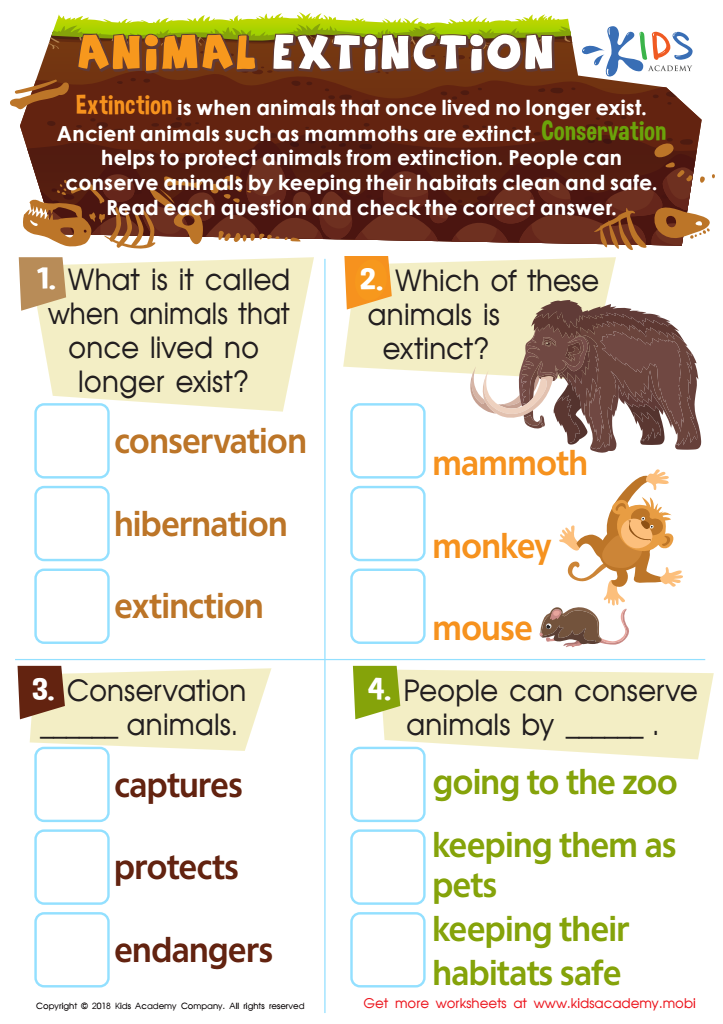
Animal Extinction Worksheet








Parents and teachers should prioritize analytical skills in young children, especially in the context of Normal Science, because these skills form the foundation for critical thinking and problem-solving abilities. At ages 5 to 9, children's cognitive abilities are rapidly developing, and fostering analytical skills during this stage can greatly enhance their learning experiences.
Analytical skills enable children to observe, categorize, compare, and draw conclusions based on evidence, which is central to scientific inquiry. Engaging with Normal Science—understanding basic scientific concepts and methods—encourages curiosity and motivates children to ask questions about the world around them. This kind of exploration promotes a scientific mindset, teaching them to think systematically and develop hypotheses based on their observations.
Moreover, analytical skills prepare children for future academic challenges, equipping them with the tools to tackle increasingly complex problems. Collaborative projects often incorporated in scientific learning also foster teamwork and communication skills. As children learn to analyze and interpret data or conduct experiments, they build confidence and become independent thinkers.
Ultimately, nurturing analytical skills in young learners opens the door to lifelong learning and discovery, setting them up for success in both their academic and personal lives.







