
Historical Knowledge Normal Science Worksheets for Ages 5-9
5 filtered results
Difficulty Level
Grade
Age
-
From - To
Subject
Activity
Standards
Introduce young minds to the wonders of history and science with our "Historical Knowledge Normal Science Worksheets for Ages 5-9"! These engaging and educational worksheets combine historical facts with exciting scientific concepts, designed specifically to captivate young learners. Perfect for kids aged 5-9, our worksheets foster critical thinking and curiosity through fun activities and exercises. Students will explore various historical events, famous figures, and scientific principles, all while developing essential learning skills. Make history and science come alive with our expertly crafted materials that provide a solid foundation for lifelong learning. Visit our webpage to explore more!
Favorites
With answer key
Interactive
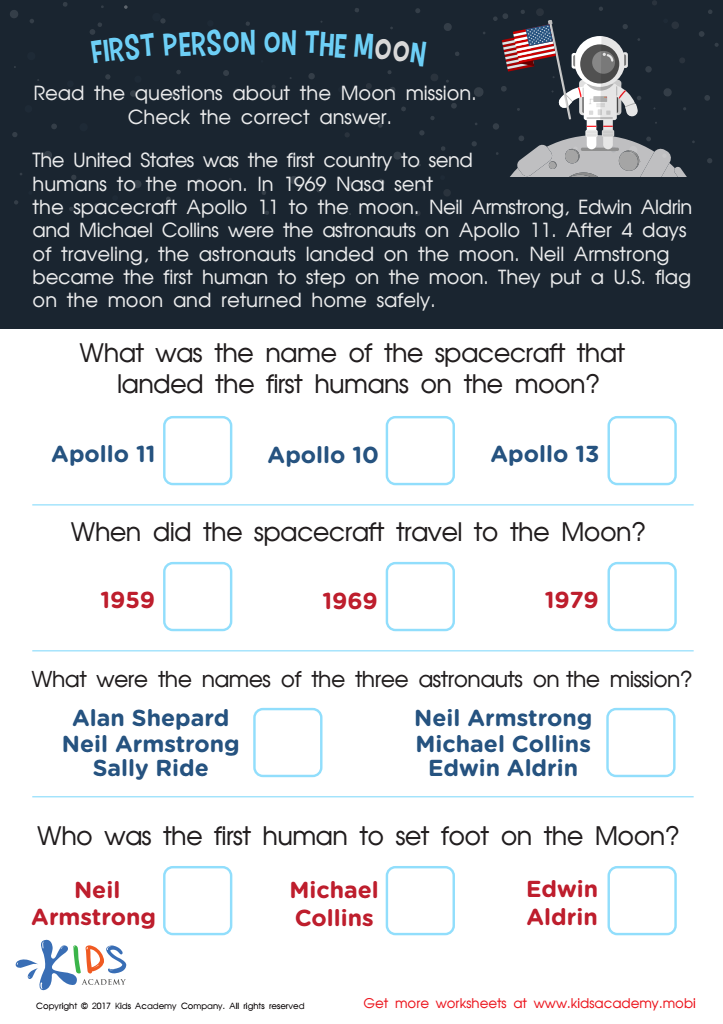
First Person on the Moon Worksheet
In 1969, Neil Armstrong made history by becoming the first person to step foot on the moon! With this fun worksheet, you can teach kids fascinating facts about the Apollo 11 mission. After reading, they can show off what they've learned with a quiz!
 Assign to My Students
First Person on the Moon Worksheet
Worksheet
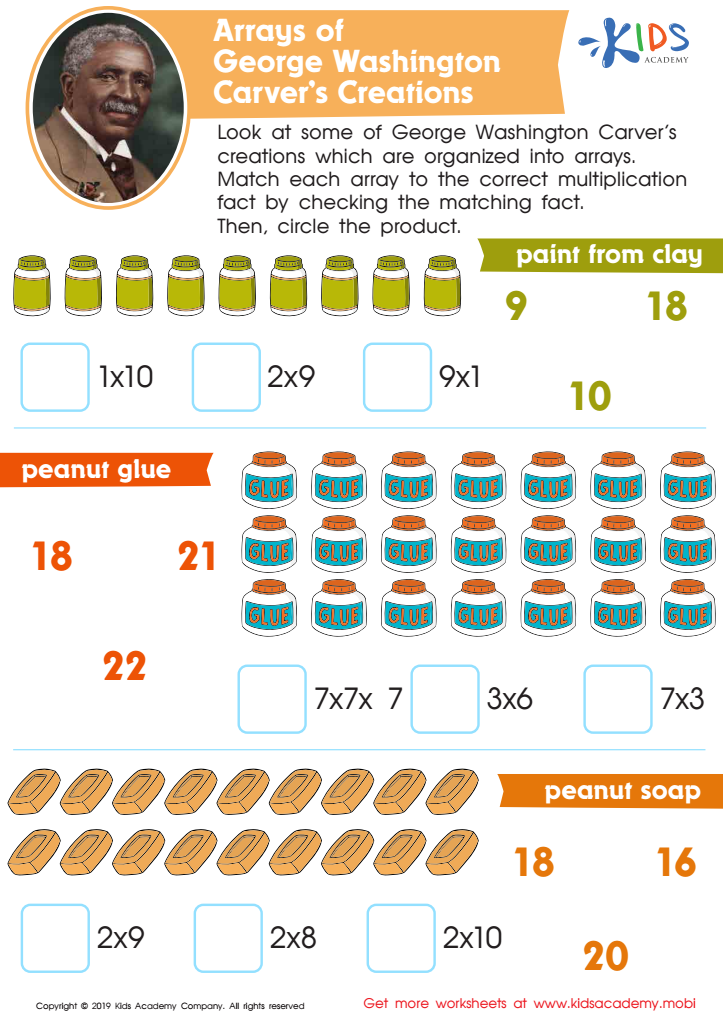
Arrays of George Washington Carver’s Creations Worksheet
Remind your child of what George Washington Carver created. Can they tell you? This worksheet has arrays with his creations. Match the array to the multiplication fact and help your child to circle the product.
Arrays of George Washington Carver’s Creations Worksheet
Worksheet
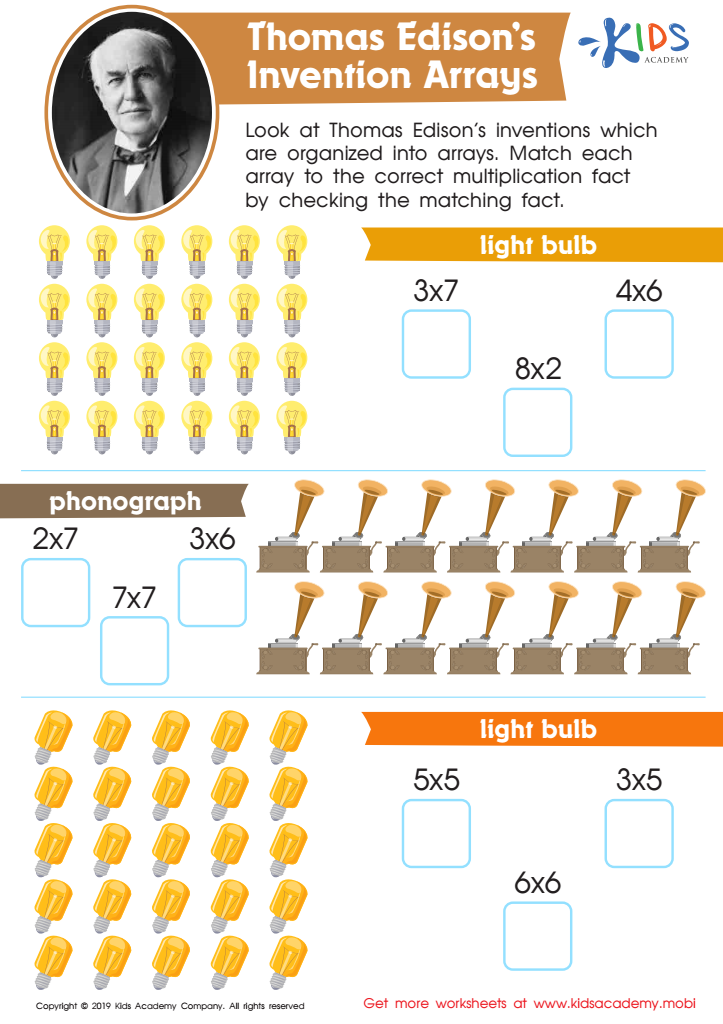
Thomas Edison’s Invention Arrays Worksheet
Test your students' knowledge on history by asking them what Thomas Edison invented. If they get the right answer, provide more information on other inventors. Check out this printout of Edison's light bulb inventions laid out in arrays. Get them to match each array to the correct multiplication fact.
Thomas Edison’s Invention Arrays Worksheet
Worksheet
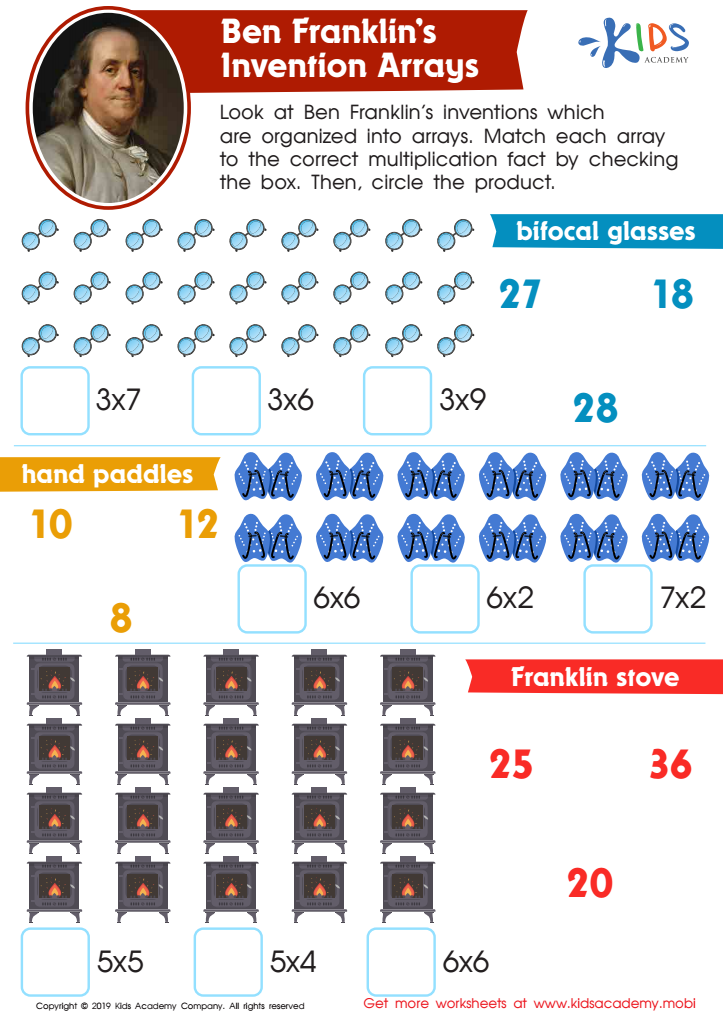
Ben Franklin’s Invention Arrays Worksheet
Have your child guess some of the inventors of the popular items we use today. For instance, the light bulb was invented by Thomas Edison. Look at Ben Franklin's inventions and help your kids match the arrays to the correct multiplication fact. Check the box and circle the product.
Ben Franklin’s Invention Arrays Worksheet
Worksheet
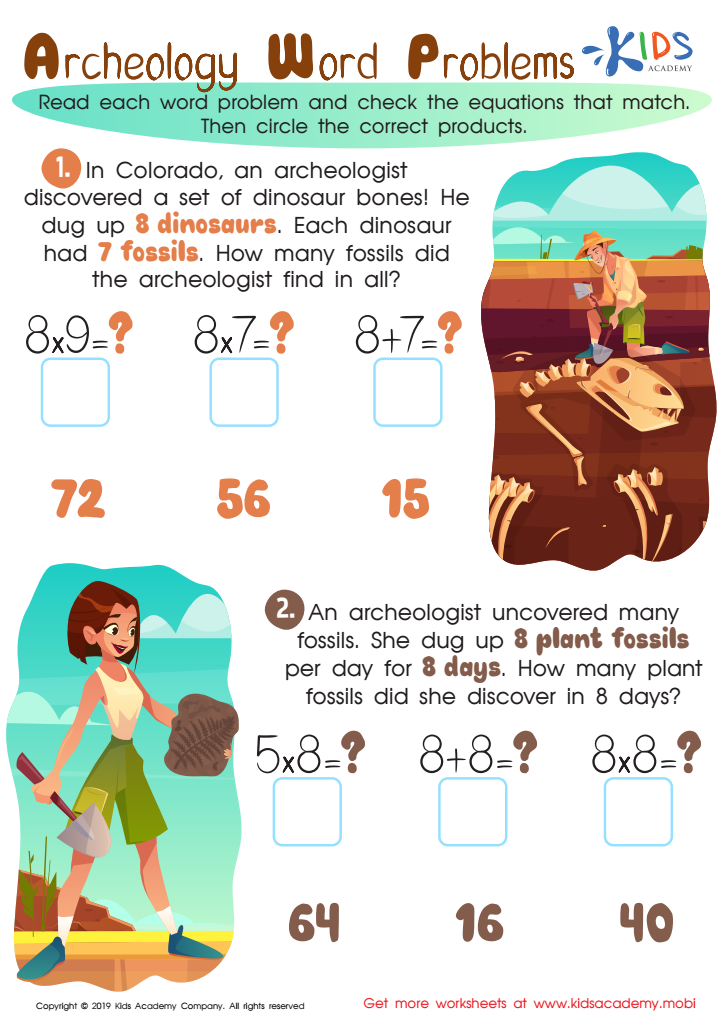
Archeology Word Problems Worksheet
Encourage your child to explore their career options! Show them an archeologist's job with this worksheet - featuring a picture of a dinosaur bone discovery. Read the accompanying text, then solve the word problems. Help your kids circle the correct answers to better understand this profession.
Archeology Word Problems Worksheet
Worksheet
Join Kids Academy for Free
Who is primarily going to use this learning content?







Parents and teachers should recognize the importance of historical knowledge for children aged 5-9 because it lays the foundation for well-rounded and informed future citizens. At this tender age, children are incredibly curious and receptive to new ideas. Introducing them to historical knowledge helps cultivate critical thinking skills as they learn to differentiate between past and present. Understanding history also provides context for the world around them, fostering a sense of identity and belonging.
Through stories of significant events and figures, children begin to grasp concepts of time, cause and effect, and moral lessons. For instance, stories of cooperation during historical events can teach them the value of teamwork, while tales of overcoming adversity can inspire resilience and courage. Additionally, learning about diverse cultures and historical perspectives is crucial for nurturing empathy and respect for others.
Teachers and parents who integrate historical learning into their early education plans also boost children's literacy and comprehension skills. Historical content often requires make children to engage with texts, ask questions, and discuss narratives in a way that enhances their language abilities.
In summary, equipping young minds with historical knowledge enriches their intellectual, moral, and social development, setting them up for a thoughtful and competent future.







