Visual Perception Skills Normal Science Worksheets for Ages 5-9
4 filtered results
-
From - To
Introduce your child to the fascinating world of visual perception with our "Visual Perception Skills Normal Science Worksheets for Ages 5-9". Perfectly tailored for young learners, these fun and engaging worksheets help develop essential visual perception skills, including pattern recognition, spatial awareness, and logical thinking. Each exercise is designed to captivate your child's interest while laying a strong foundation for future scientific learning. By incorporating engaging illustrations and easy-to-follow instructions, our worksheets ensure a delightful learning experience. Visit our page to access a variety of effective tools aimed at enhancing your child's cognitive development and scientific curiosity.
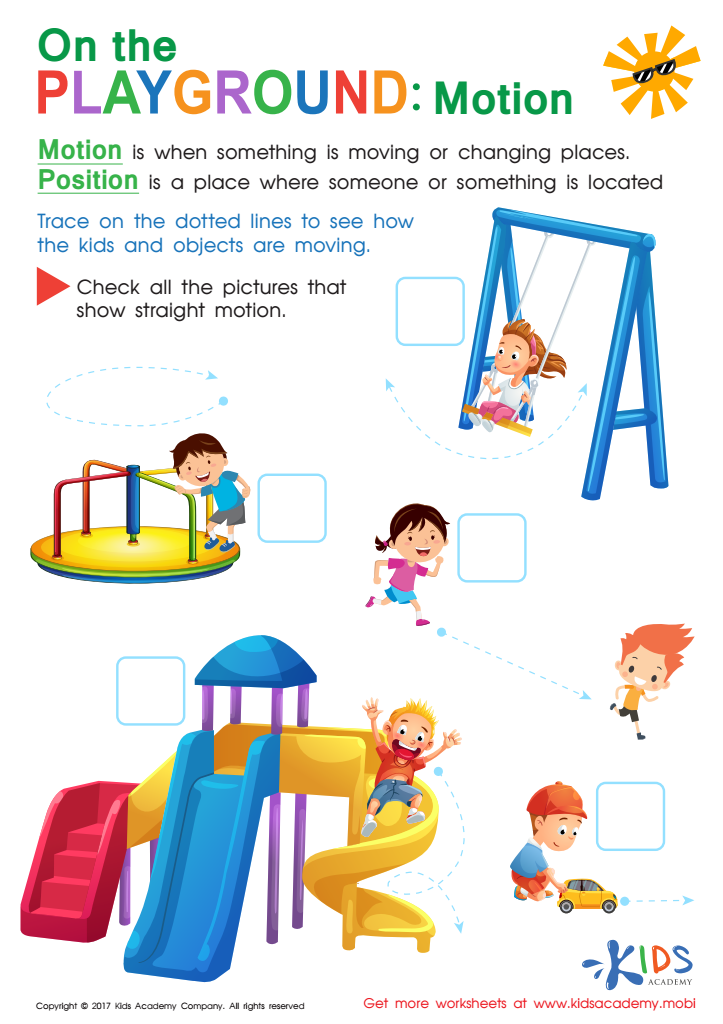
Position and Motion Worksheet
 Assign to My Students
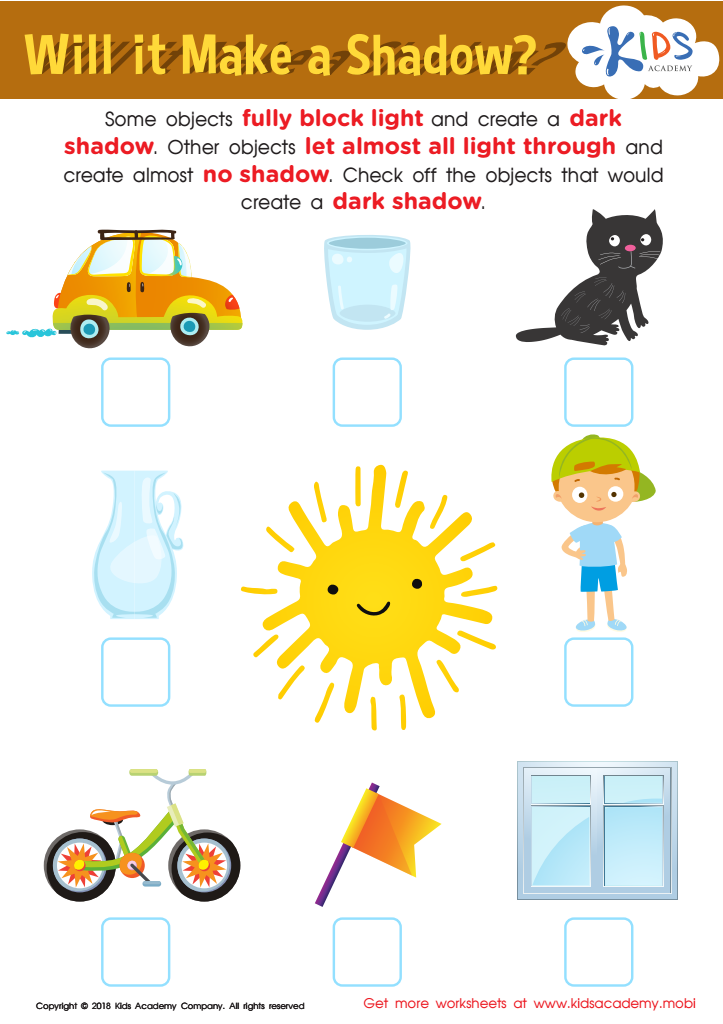
Will It Make a Shadow? Worksheet
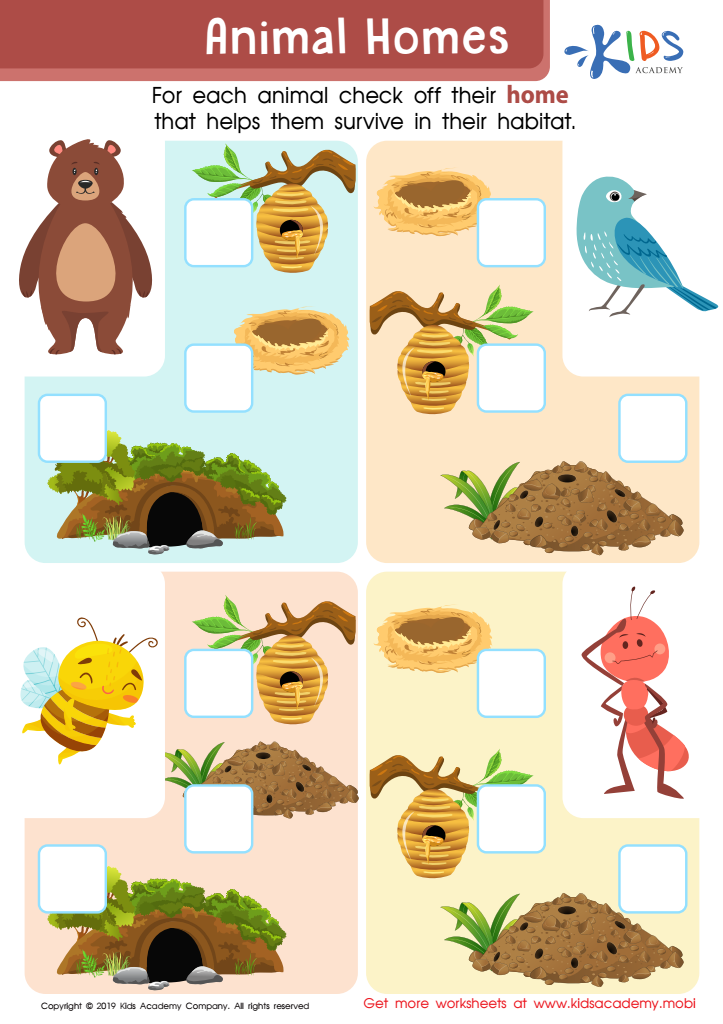
Animal Homes Worksheet
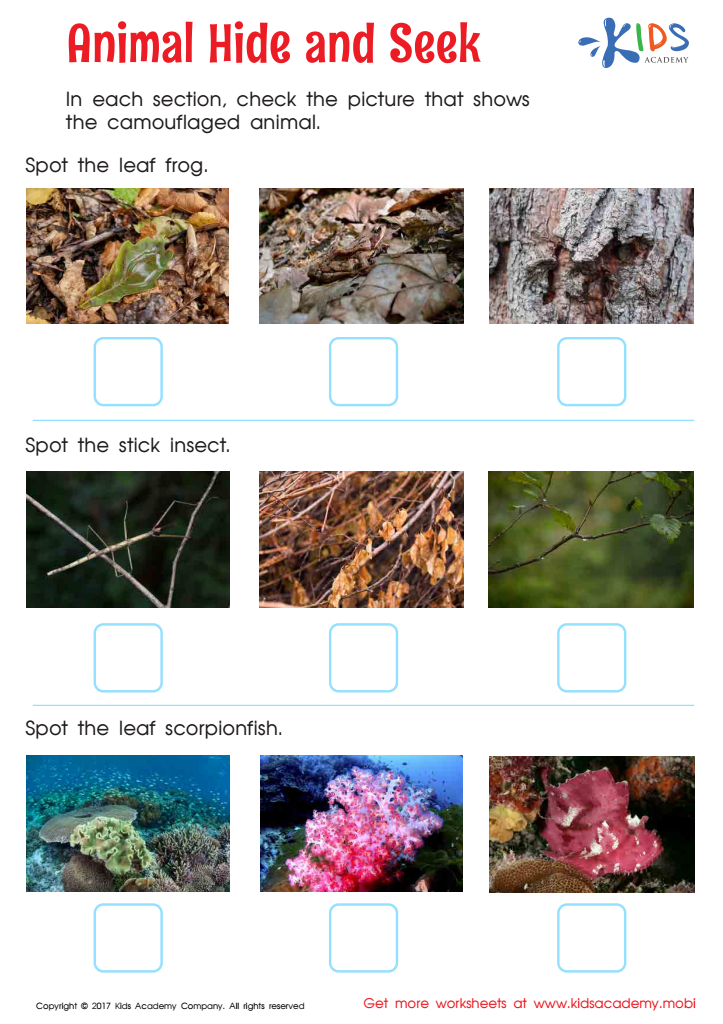
Animal Hide and Seek Worksheet







Visual perception skills are crucial for children aged 5-9, as they significantly impact their ability to learn and engage with the world around them. Visual perception encompasses the brain’s ability to interpret and make sense of visual information received through the eyes. Key skills include spatial relations (understanding object placement), visual discrimination (noticing differences and similarities), and figure-ground perception (distinguishing objects from their background).
Research in normal developmental science underscores that strong visual perception abilities are closely tied to academic performance. For instance, children who can easily differentiate between similar letters and numbers, such as 'b' and 'd' or '6' and '9', are better equipped for reading and arithmetic. These skills are foundational for tasks such as copying from the board, spelling, handwriting, and even simple activities like sorting objects by type or color.
Poor visual perception can lead to academic struggles, reduced confidence, and frustration. Therefore, parents and teachers should identify and support the development of these skills through activities like puzzles, drawing, matching games, and interactive learning tools. Early intervention can help strengthen visual perception abilities, fostering a child’s academic growth, self-esteem, and overall cognitive development. Understanding and nurturing these skills is essential for ensuring children achieve their full potential in school and beyond.







