Weather identification Normal Science Worksheets for Ages 5-9
4 filtered results
-
From - To
Explore our engaging Weather Identification Normal Science Worksheets designed specifically for children aged 5-9! These interactive resources help young learners discover different weather conditions, enhancing their observational skills and understanding of the natural world. Each worksheet features fun activities that encourage kids to identify and categorize various types of weather, from sunny days to snowy blizzards. Perfect for classroom use or at-home learning, our worksheets promote creativity and critical thinking while making science enjoyable. Bring the wonders of weather to your child's fingertips with our thoughtfully crafted materials that support early science education and foster a lifelong curiosity about the environment!
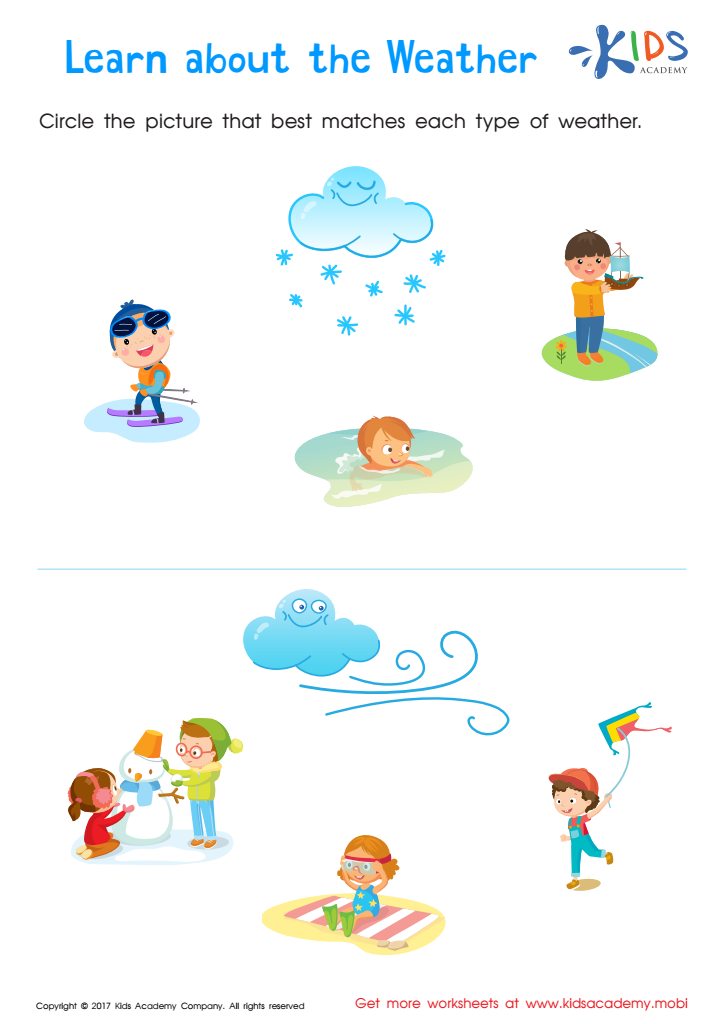
About the Weather Printable
 Assign to My Students
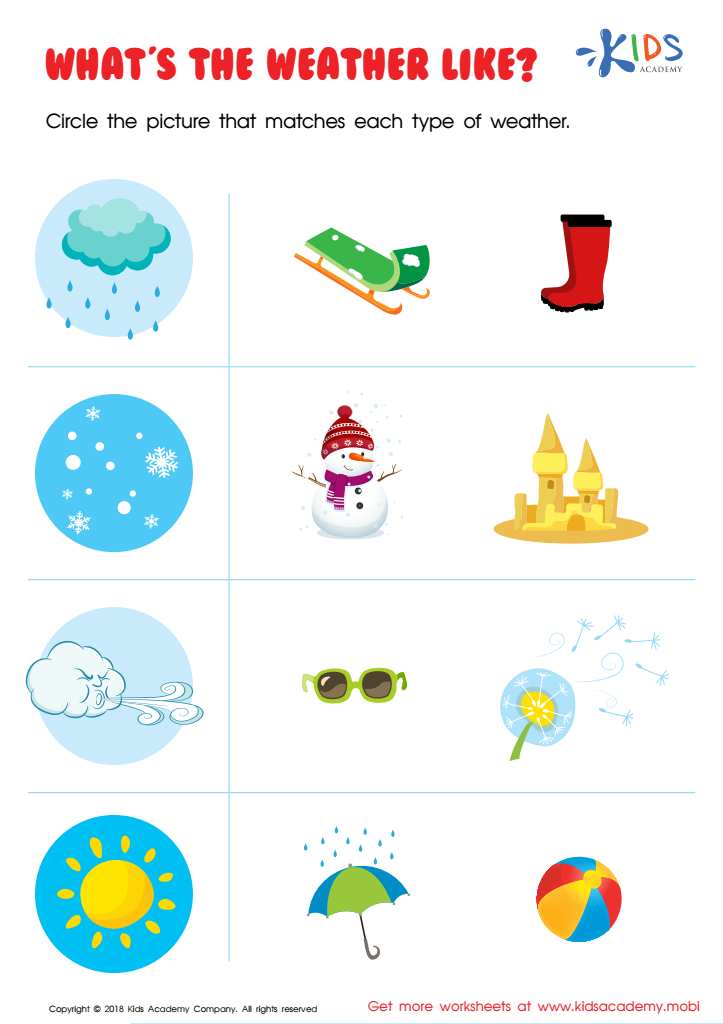
What's the Weather Like? Worksheet
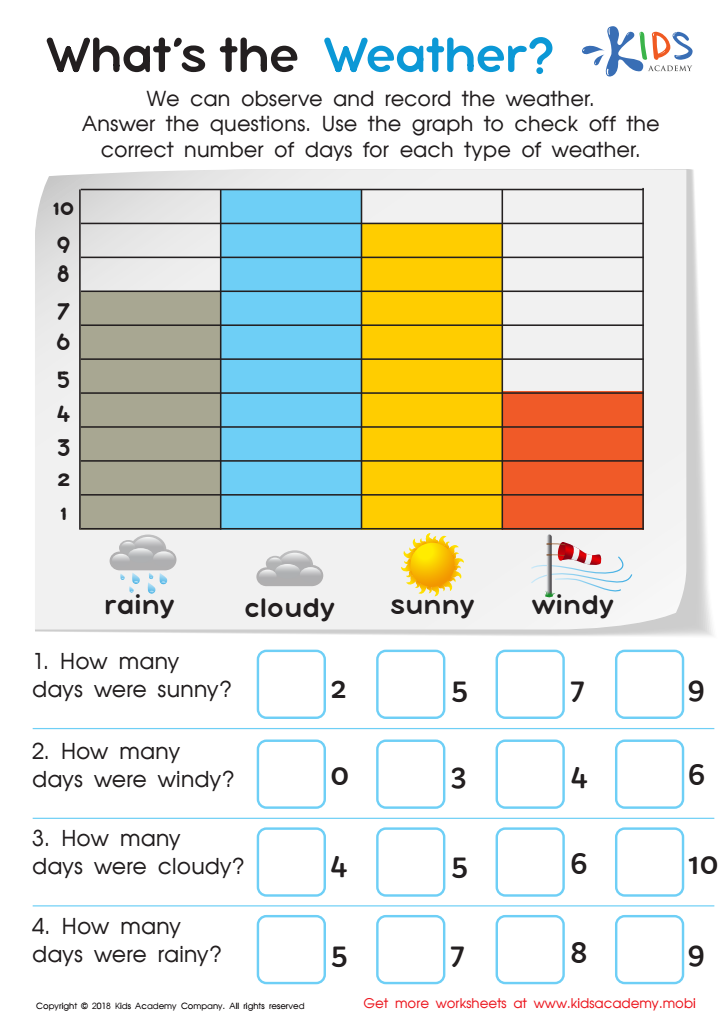
What's the Weather? Worksheet
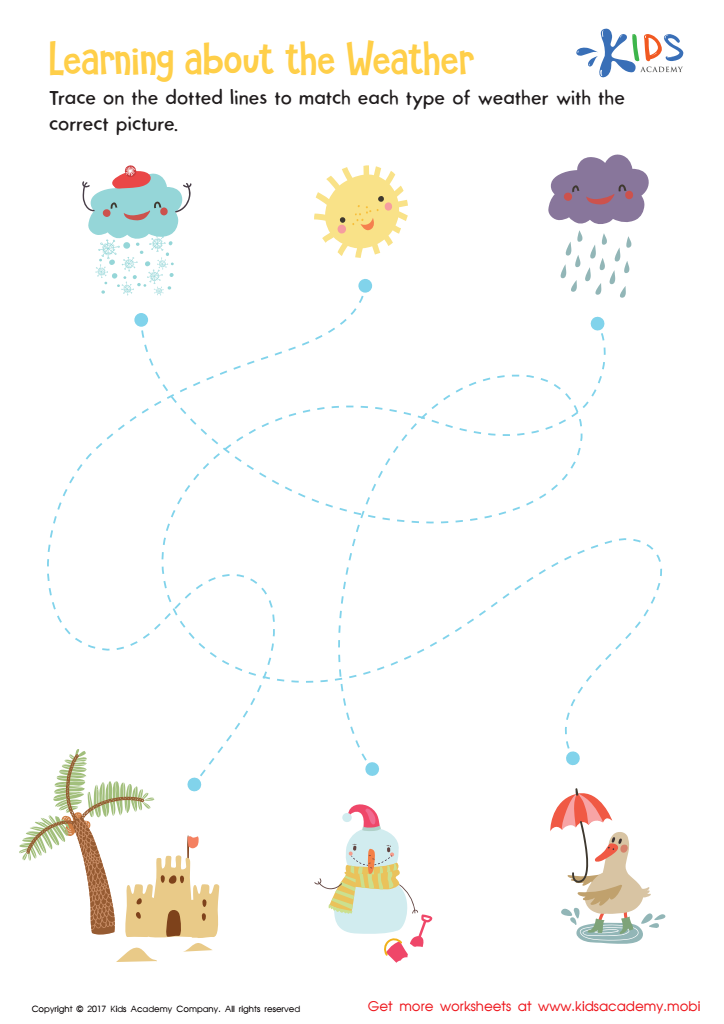


.jpg)





Weather identification is an essential component of normal science for children aged 5-9, as it lays the foundation for their understanding of the world around them. First and foremost, weather plays a significant role in children’s daily lives; it affects how they dress, their outdoor activities, and even their mood. By teaching children to identify different weather patterns—such as sunny, rainy, windy, or snowy—parents and teachers help them develop observational skills and critical thinking.
Furthermore, engaging children in weather identification promotes curiosity about natural phenomena. It encourages them to ask questions and seek answers, fostering a love of learning and exploration. Children learn to use their senses and interpret visual signals in their environment, which are fundamental skills in science.
Moreover, understanding weather also cultivates awareness about environmental issues. Children can grasp concepts like climate change and severe weather events’ impact, helping them become responsible global citizens.
Finally, weather-related activities can be fun and interactive, such as crafting weather charts or conducting simple experiments. This hands-on learning strengthens cognitive connections and enhances memory retention.
Overall, weather identification is not just an educational activity; it’s a valuable opportunity for growth, critical thinking, and fostering a lifelong love for science.







