Categorizing objects Normal Physical Science Worksheets for Ages 5-9
3 filtered results
-
From - To
Discover our engaging "Categorizing Objects Normal Physical Science Worksheets" designed for children aged 5-9. These worksheets help young learners explore and understand the world around them through interactive categorization activities. Kids will enjoy sorting objects based on various attributes, fostering critical thinking skills and enhancing their knowledge of physical science concepts. With colorful visuals and age-appropriate challenges, our worksheets provide a fun learning experience that encourages curiosity and discovery. Perfect for classroom use or at-home learning, these resources are ideal for teachers and parents looking to reinforce essential science skills in an enjoyable and accessible way.
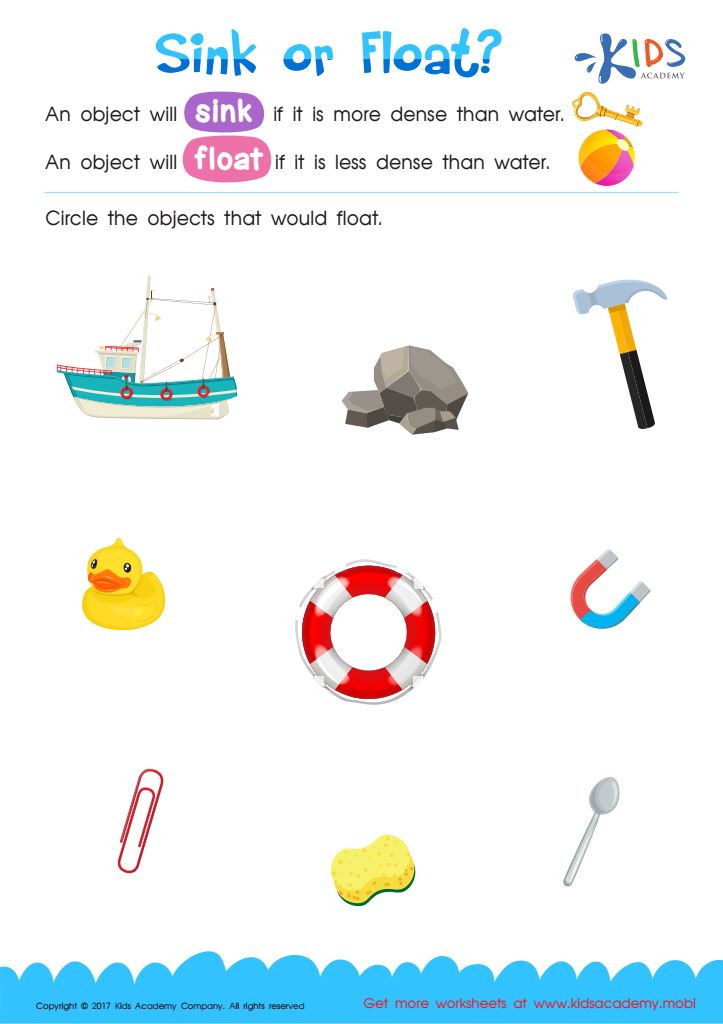
Sink or Float Printable
 Assign to My Students
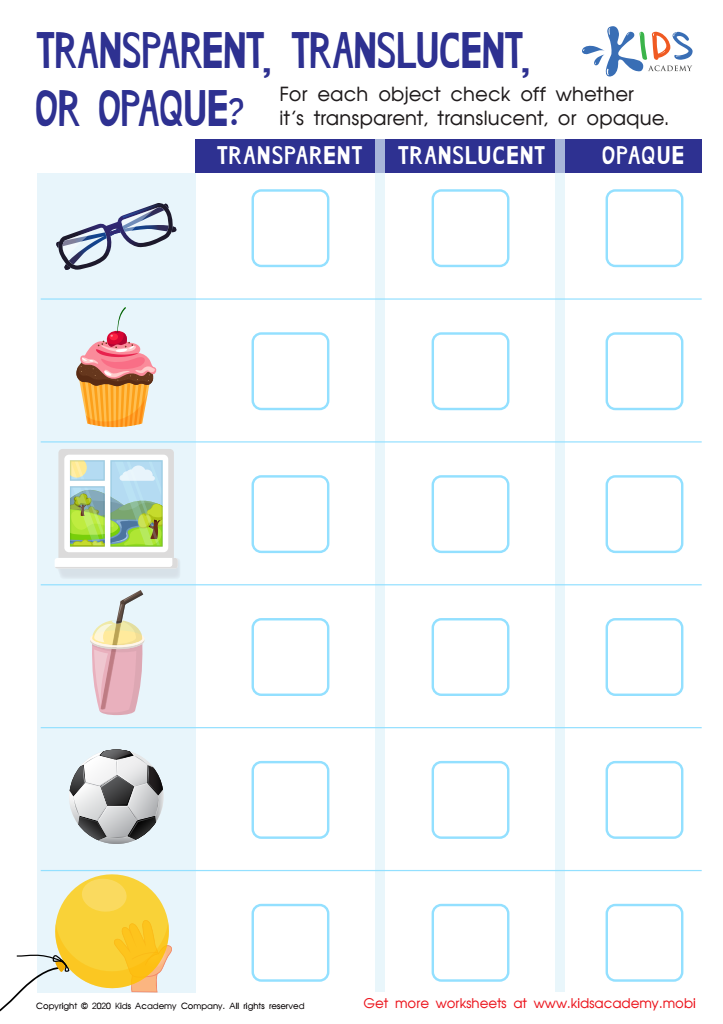
Transparent, Translucent, or Opaque Worksheet
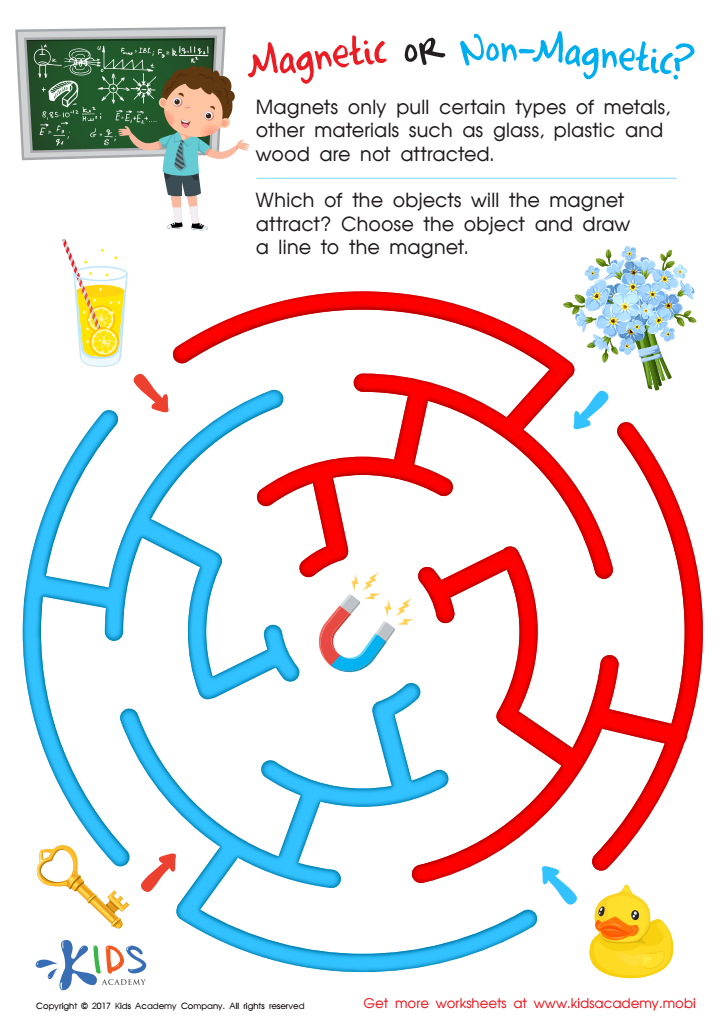
Magnetic or Non–Magnetic Worksheet







Categorizing objects in normal physical science is a fundamental skill that benefits children aged 5-9 in numerous ways. First and foremost, it enhances critical thinking abilities. When children organize objects based on shared characteristics—such as size, shape, or color—they engage in analytical thinking, which lays the groundwork for logical reasoning skills necessary for future learning.
Additionally, categorization encourages scientific inquiry and exploration. When students group items, they learn to observe and describe their properties, fostering a sense of curiosity about the physical world. This active engagement helps them develop a deeper understanding of scientific concepts and processes.
From a social perspective, categorizing objects promotes collaboration and communication skills. When working in groups, children share ideas, debate classifications, and build on each other’s thoughts. This teamwork mimics real-world scientific practices and helps develop social skills vital for their future.
Furthermore, understanding categorization also aligns with early math skills, as children learn to quantify, compare, and contrast different attributes. By integrating these experiences, teachers and parents play a crucial role in nurturing well-rounded, inquisitive learners who are equipped with early critical thinking and problem-solving skills essential for academic success and everyday life.







