Critical Thinking Normal Physical Science Worksheets for Ages 5-9
3 filtered results
-
From - To
Unlock your child's curiosity with our Critical Thinking Normal Physical Science Worksheets for ages 5-9. These expertly designed worksheets engage young learners in the exciting world of physical science through fun, hands-on activities. Kids will develop strong critical thinking and problem-solving skills as they explore fundamental concepts such as energy, motion, and matter. Each worksheet is designed to challenge young minds, provide practical experience, and inspire a love for science. Ideal for classroom or home use, our worksheets enhance comprehension, encourage creativity, and foster an enduring understanding of our physical world. Start your child's science adventure today!
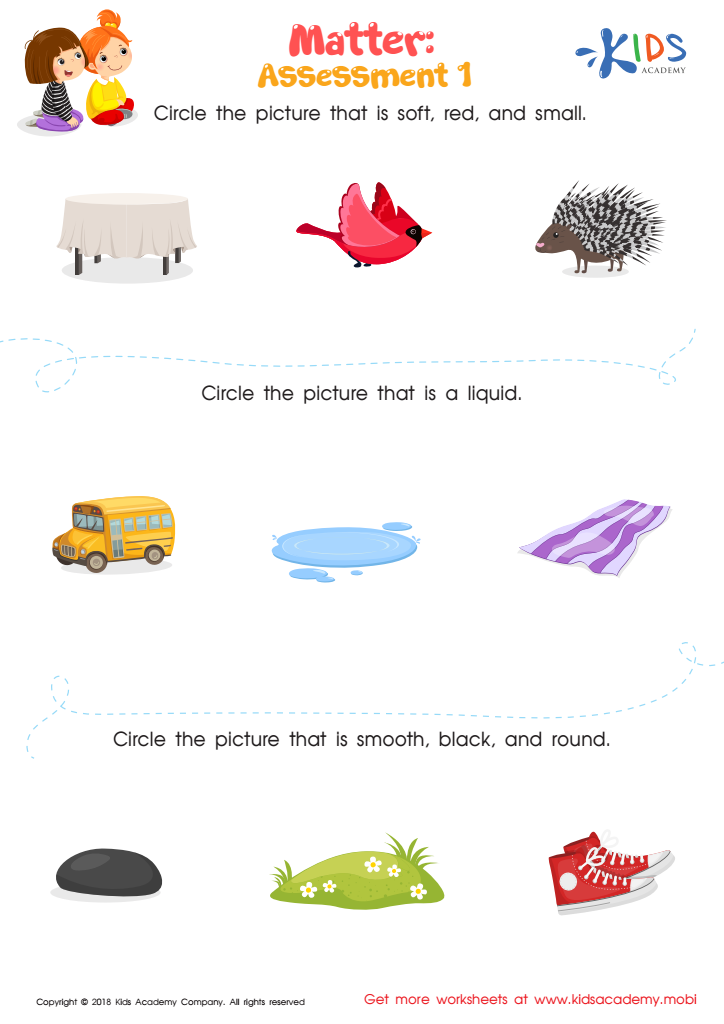
Matter: Assessment 1 Worksheet
 Assign to My Students
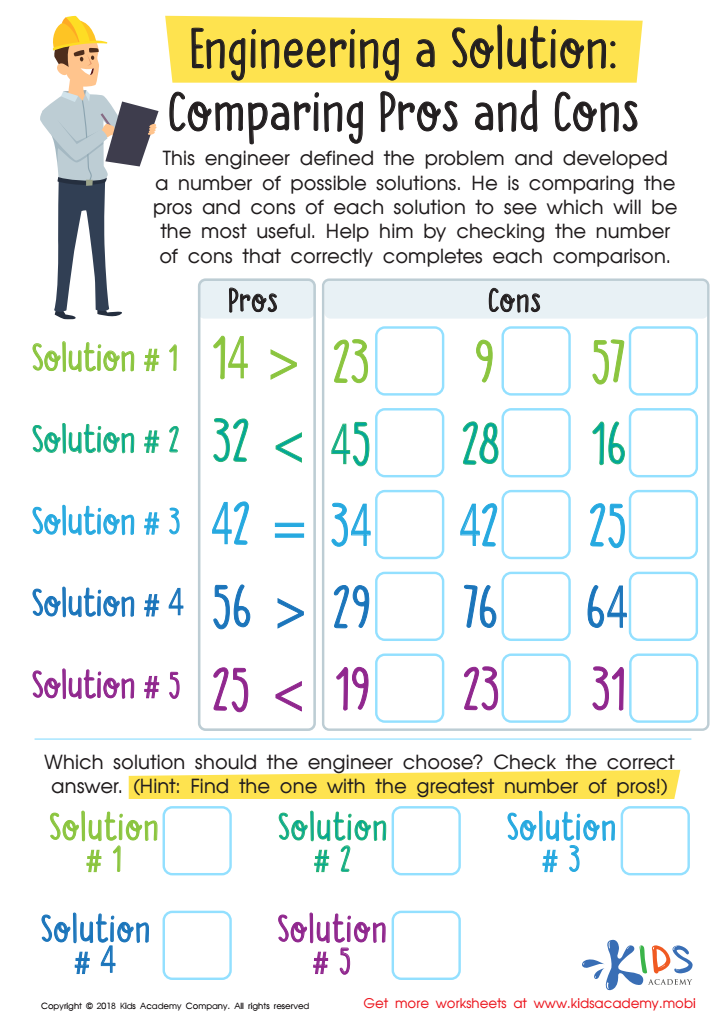
Engineering a Solution: Comparing Pros and Cons Worksheet
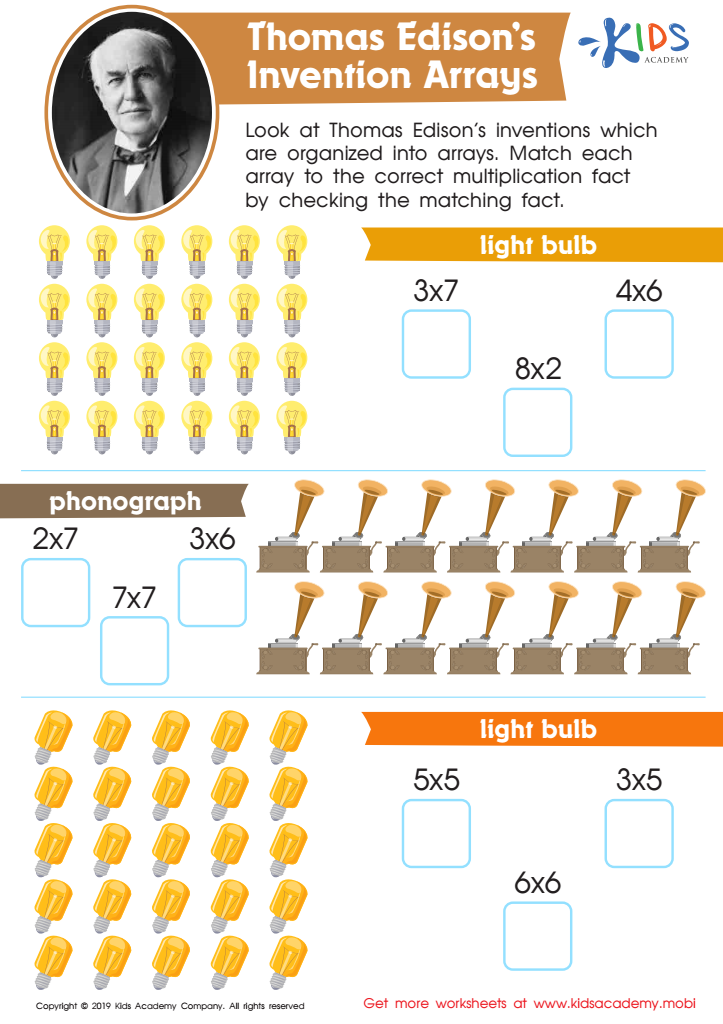
Thomas Edison’s Invention Arrays Worksheet








Critical thinking and a solid foundation in physical science are essential for the intellectual development of children aged 5-9. At this formative stage, young minds are especially receptive to new ideas and ways of thinking. Introducing them to critical thinking skills teaches them to ask questions, make observations, and gather information to make informed decisions. This skill set is crucial not only for academic success but also for making sense of the world around them.
Teaching basic principles of physical science—gravity, force, energy—enables children to understand and interact with their environment. They learn why leaves fall, how toys move, and what makes the sun shine. This foundational knowledge sparks curiosity, fostering a lifelong love of learning and an interest in STEM (Science, Technology, Engineering, and Mathematics) fields.
Moreover, incorporating critical thinking into science education encourages children to become independent thinkers. They learn not just to accept information as it is, but to analyze and question it. This empowers them to solve problems creatively and think logically, essential skills for future challenges in any field.
In summary, by nurturing critical thinking and physical science knowledge, parents and teachers can provide children with the tools to thrive academically and personally, building the thinkers, innovators, and informed citizens of tomorrow.







