Understanding moon phases Normal Space Worksheets for Ages 5-9
3 filtered results
-
From - To
Discover the fascinating changes of our moon with "Understanding Moon Phases" worksheets, designed for kids ages 5-9. These engaging, age-appropriate activities from Kids Academy simplify the science behind moon phases, making learning fun and memorable. Children will explore each phase, from new moon to full moon, with clear illustrations and easy-to-follow explanations. Perfect for young learners, these worksheets strengthen observational skills and ignite curiosity about space. Equip your child with a solid foundation in lunar science while enhancing their learning skills. Dive into the captivating world of moon phases today!
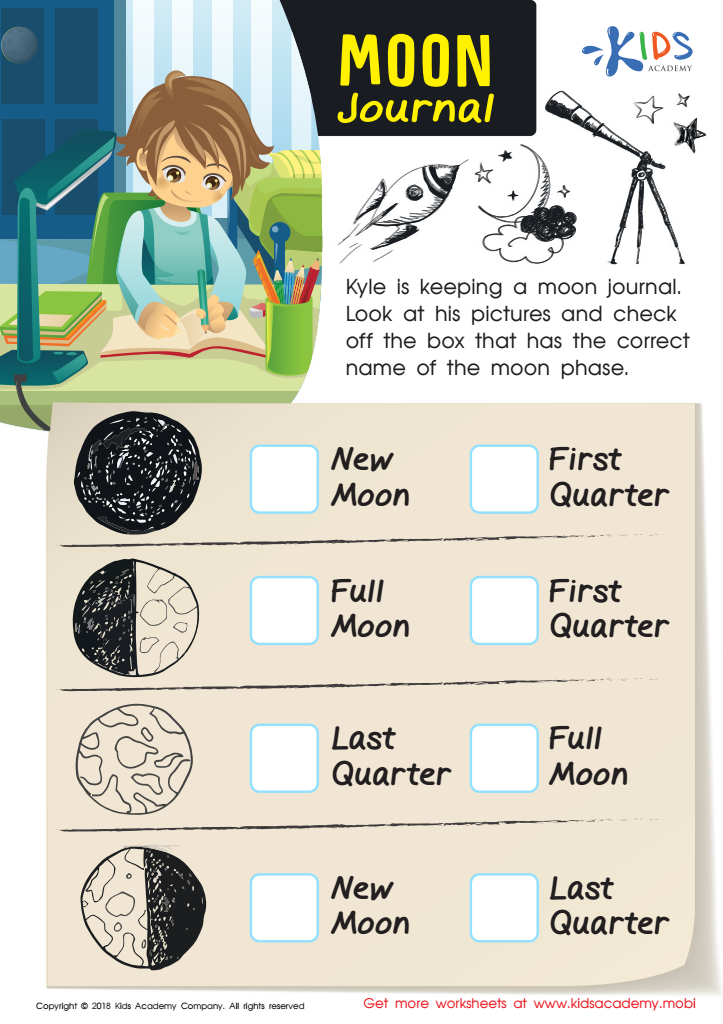
Moon Journal Worksheet
 Assign to My Students
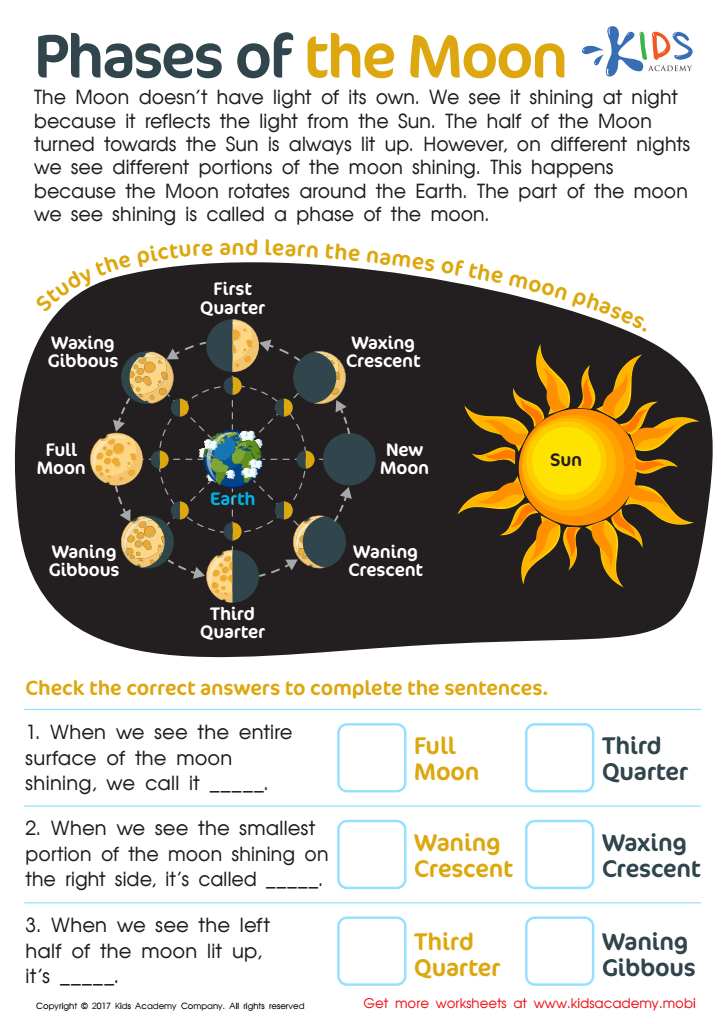
Phases of The Moon Worksheet
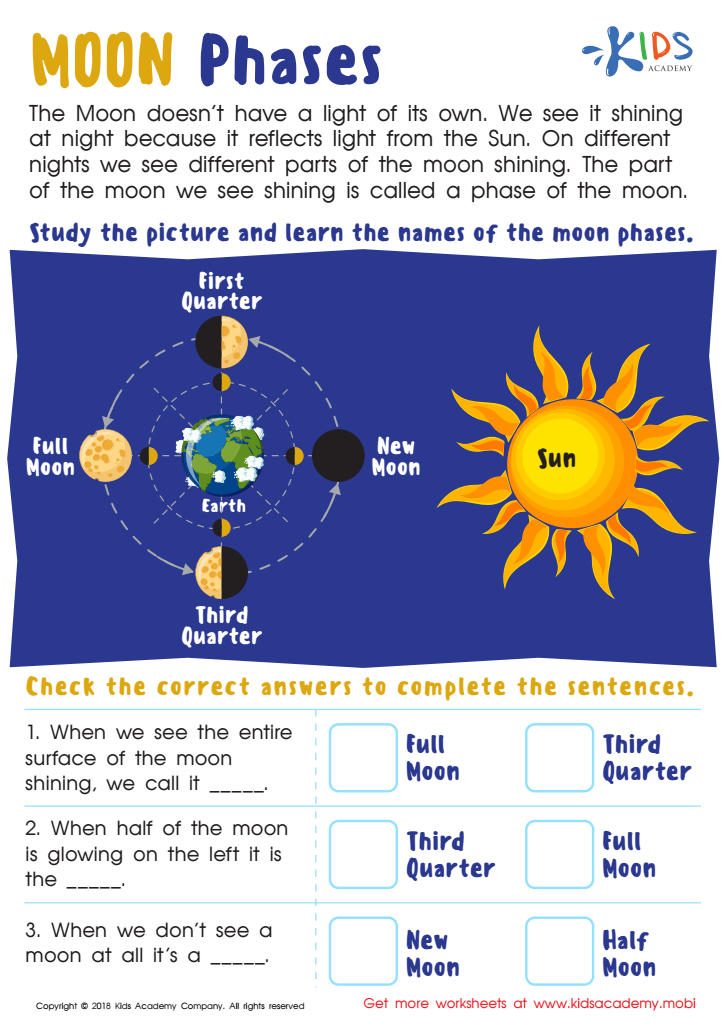
Moon Phases Worksheet






Understanding moon phases is a fundamental aspect of early education that benefits young minds immensely. For children aged 5 to 9, learning about the moon and its phases not only nurtures their curiosity about the natural world but also lays important educational foundations in science and astronomy. First and foremost, studying moon phases enhances a child's observational skills. It encourages them to regularly look up at the night sky and note changes, helping them cultivate attention to detail and fostering a sense of wonder.
Moreover, understanding moon phases can seamlessly integrate with other learning areas, such as reading, math, and storytelling. For instance, documenting moon phases over a month can improve counting and sequencing skills. Stories and myths about the moon from various cultures also enrich a child's knowledge about different worldviews and traditions.
In addition to reinforcing academic skills, understanding these lunar patterns empowers children to comprehend larger, abstract concepts, such as the cycles of time and nature. It nurtures their critical thinking, teaching them cause-and-effect relationships.
Parent and teacher involvement enhances these benefits, as guided exploration and shared activities create meaningful learning experiences. It also fosters an appreciation for the wonders of our universe and the ongoing quest for knowledge. Thus, cultivating an early understanding of moon phases is both educationally enriching and inspirational for young learners.







