Vocabulary Building Normal Weather Worksheets for Ages 5-9
3 filtered results
-
From - To
Discover our Vocabulary Building Normal Weather Worksheets, tailored for children ages 5-9, designed to enhance their understanding of everyday weather concepts. These engaging, educational worksheets guide young learners through a variety of activities focused on weather-related vocabulary, such as identifying weather patterns and learning new terms. Fun illustrations and interactive exercises make learning enjoyable, while also developing critical thinking and reading comprehension skills. Ideal for both classroom and at-home learning, our worksheets support science curriculum standards and foster a curiosity for natural phenomena in young minds. Start exploring today and watch your child's vocabulary blossom!
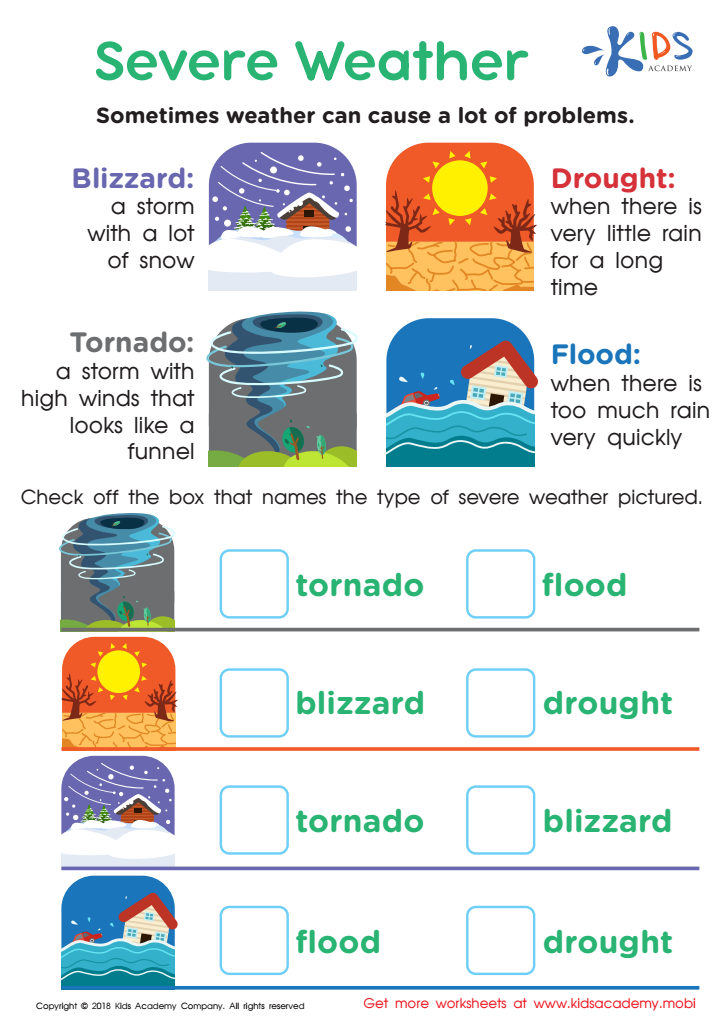
Severe Weather Worksheet
 Assign to My Students
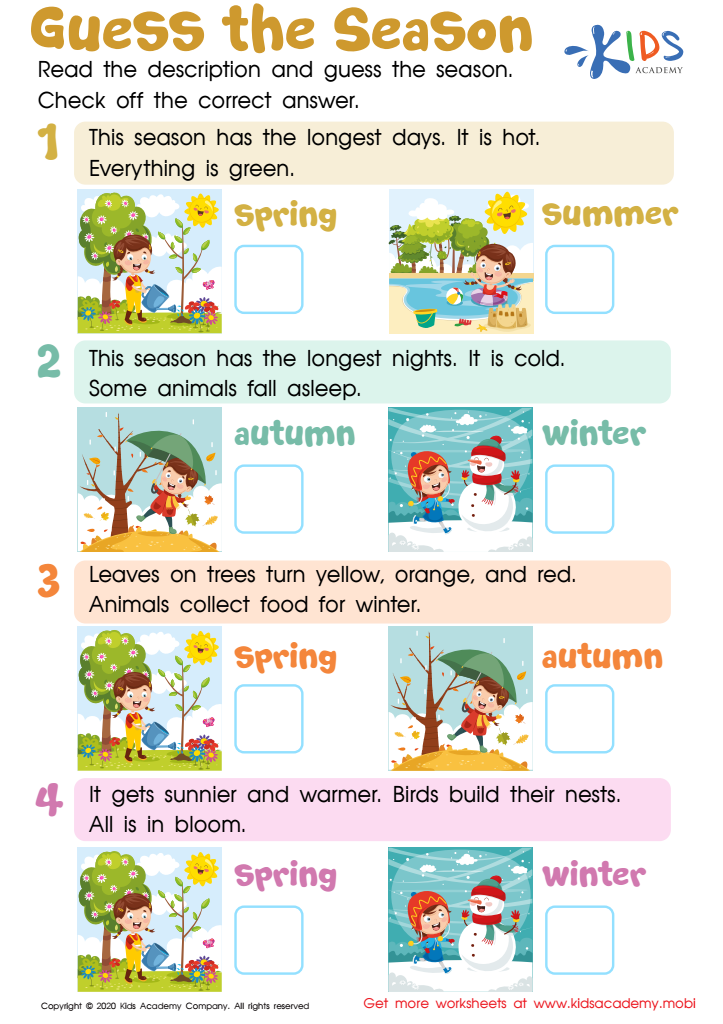
Guess the Season Worksheet
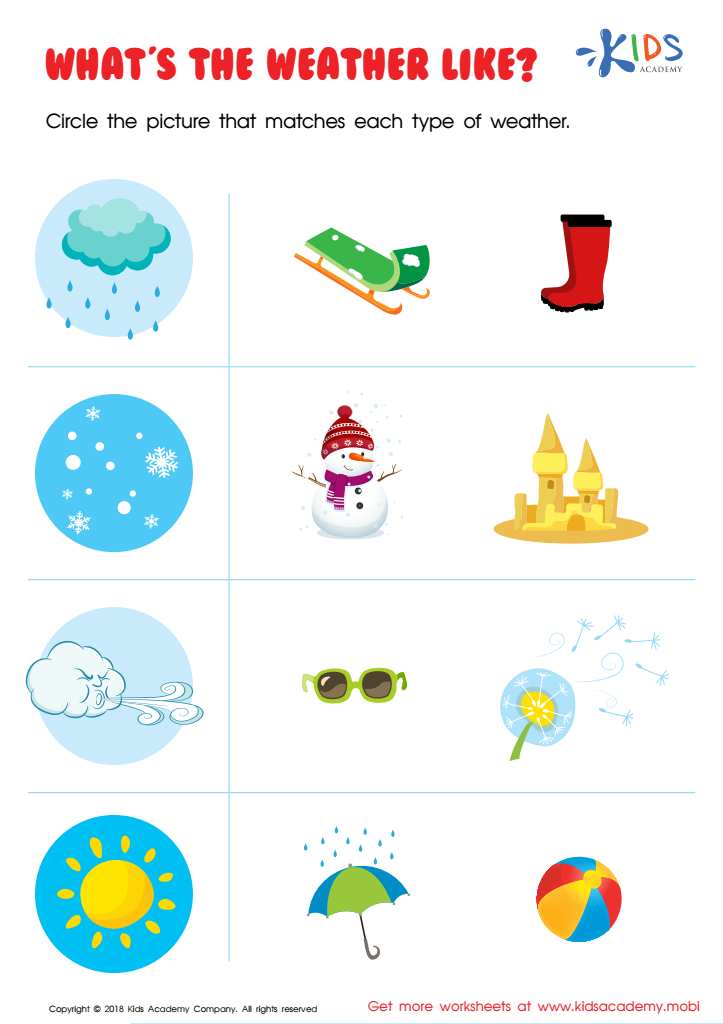
What's the Weather Like? Worksheet








Vocabulary building in the context of normal weather for ages 5-9 is crucial for several reasons. This age bracket is a formative period for linguistic and cognitive development, where children rapidly acquire language skills that serve as foundational blocks for future learning. Introducing weather-related vocabulary helps children understand the world around them, fostering their natural curiosity and scientific thinking.
Knowing terms like "sunny," "rainy," "cloudy," and "windy" not only expands their descriptive abilities but also enhances comprehension when engaging in everyday conversations, media consumption, or classroom activities. Additionally, weather discussions can integrate lessons about seasons, nature, and even basic geography, making vocabulary learning an interdisciplinary exercise that enriches overall knowledge.
Parents and teachers should care about this aspect of vocabulary building as it aids in improving children's communication skills. An enhanced vocabulary supports better reading comprehension and writing abilities, setting a solid base for academic success. Moreover, understanding weather conditions can be practical; it prepares children to talk about and respond to environmental changes, fostering a sense of awareness and safety.
By focusing on vocabulary building within this relevant and observable topic, children not only become better communicators but are also more engaged and perceptive of the world they live in.








