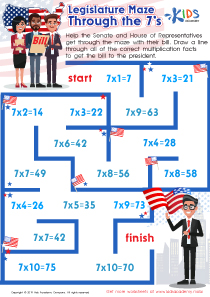
Shape Recognition Normal Social Studies Worksheets for Ages 5-9
4 filtered results
-
From - To
Discover our engaging Shape Recognition Normal Social Studies Worksheets designed for children ages 5-9. These interactive resources aim to enhance your child's understanding of shapes within a social context, fostering both cognitive and social development. Our worksheets incorporate fun activities that encourage children to identify, categorize, and relate shapes to everyday objects and communal settings. By integrating shape recognition with essential social studies concepts, we help young learners build critical thinking skills while stimulating their creativity. Perfect for classroom use or at-home learning, these worksheets support your child's educational journey in an exciting and effective manner. Start exploring today!
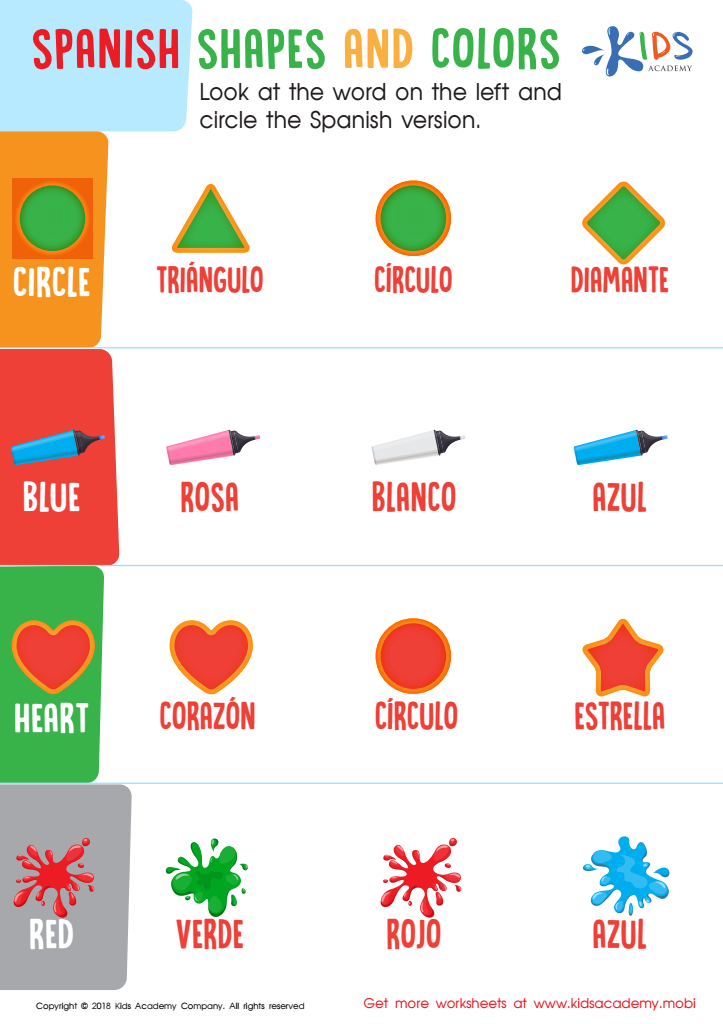
Spanish Shapes and Colors Worksheet
 Assign to My Students

Let's Check! Assessment Worksheet

Playground Worksheet
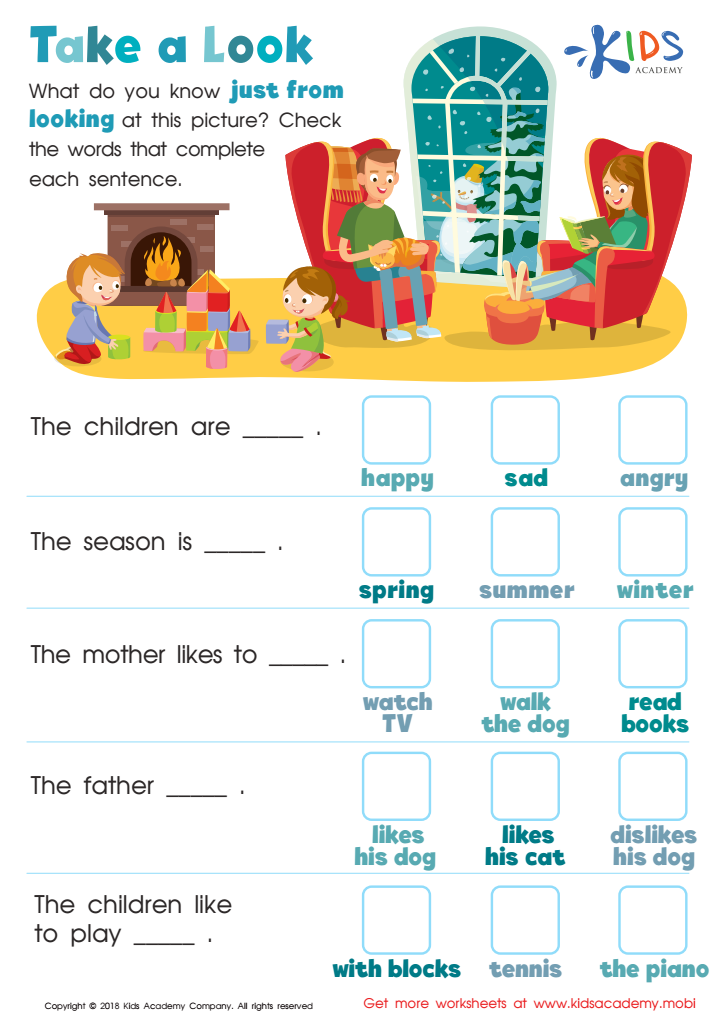
Take a Look - Part 1 Worksheet








Shape recognition is a fundamental aspect of early childhood development that plays a vital role in a child's cognitive growth, particularly in social studies. For children ages 5-9, understanding shapes extends beyond mere identification; it influences spatial awareness, problem-solving abilities, and even emotional intelligence.
Firstly, recognizing shapes helps children make sense of their environment. Recognizing basic shapes aids in mapping objects in their community, fostering connections with their surroundings. This understanding serves as a foundation for grasping complex concepts in mathematics and science later on.
Additionally, shape recognition activities provide opportunities for social interaction. Group activities around shape games encourage teamwork and communication skills, allowing children to express their ideas effectively. When parents or teachers facilitate shape-focused activities, they foster a collaborative learning environment that promotes respect and empathy.
Moreover, engaging children in shape-based discussions can stimulate their curiosity about different cultures and historical contexts where specific shapes may hold significance, enriching their social studies learning.
Ultimately, investing time in shape recognition aligns with broader educational goals, preparing young learners to navigate an increasingly complex world with confidence and creativity. This skill is not only essential academically but also socially, urging parents and educators to prioritize shape recognition in early education.