Critical Thinking Normal Grammar Worksheets for Ages 5-9
3 filtered results
Difficulty Level
Grade
Age
-
From - To
Subject
Activity
Standards
Unlock your child's potential with our "Critical Thinking Normal Grammar Worksheets for Ages 5-9"! These engaging resources are designed to enhance young learners' grammar skills while fostering essential critical thinking abilities. Our worksheets combine fun activities with essential grammar lessons, helping children understand sentence structure, punctuation, and vocabulary usage in a stimulating way. Perfect for home or classroom use, these age-appropriate tools encourage children to analyze, evaluate, and apply their grammar knowledge. As they work through puzzles and challenges, kids will build confidence and develop the creative thinking skills necessary for academic success. Empower your child to think critically while mastering grammar!
Favorites
With answer key
Interactive
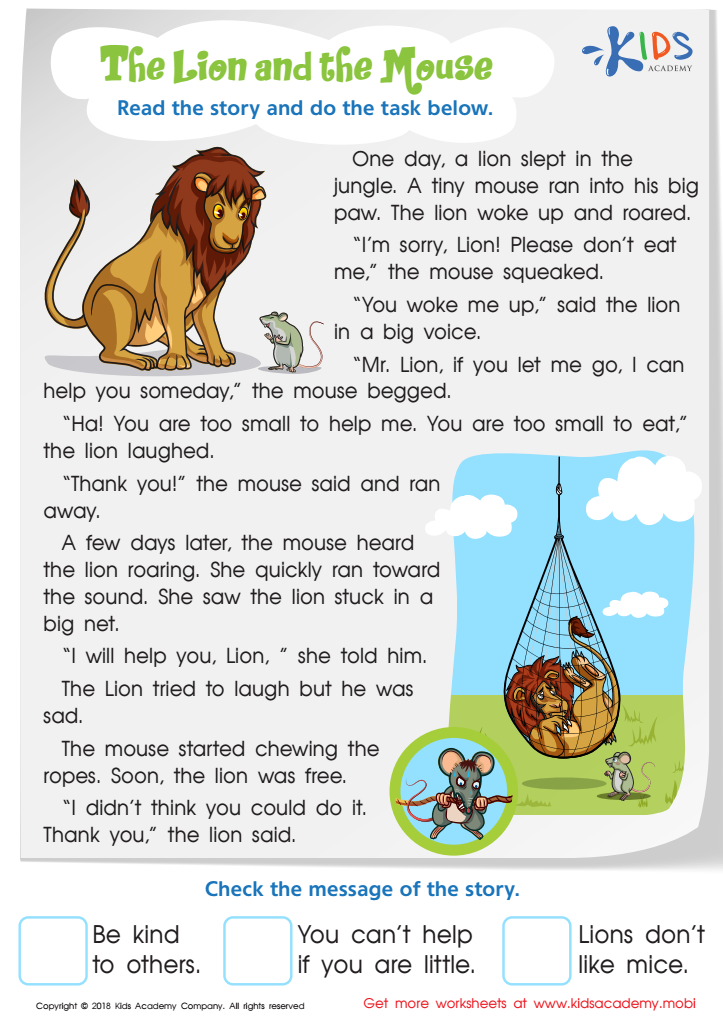
The Lion and the Mouse Worksheet
Writers often have a hidden message or theme in their stories. This printable worksheet helps readers uncover these themes by looking at what characters do and say in "The Lion and the Mouse". It's a great practice resource for learning to interpret stories.
 Assign to My Students
The Lion and the Mouse Worksheet
Worksheet
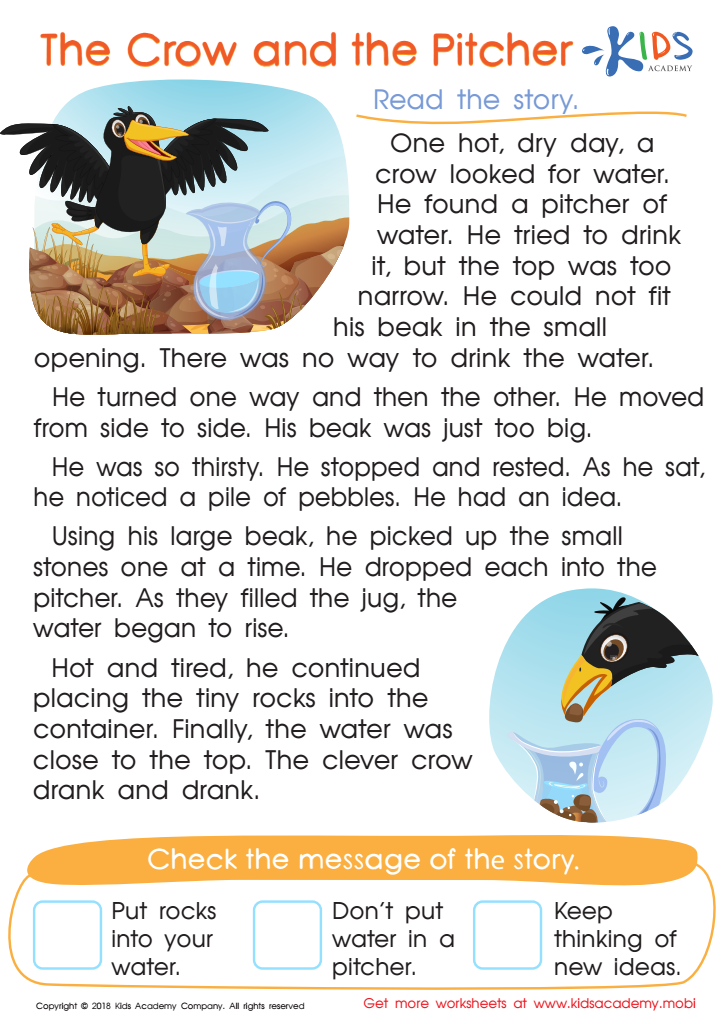
The Crow and the Pitcher Worksheet
Introduce your child to reading comprehension with this fascinating worksheet from Kids Academy! Featuring Aesop's fable of a thirsty crow, your child will enjoy reading and determining the central theme of the passage. This worksheet is a great way to give your child a purpose for reading while helping to build their comprehension skills.
The Crow and the Pitcher Worksheet
Worksheet
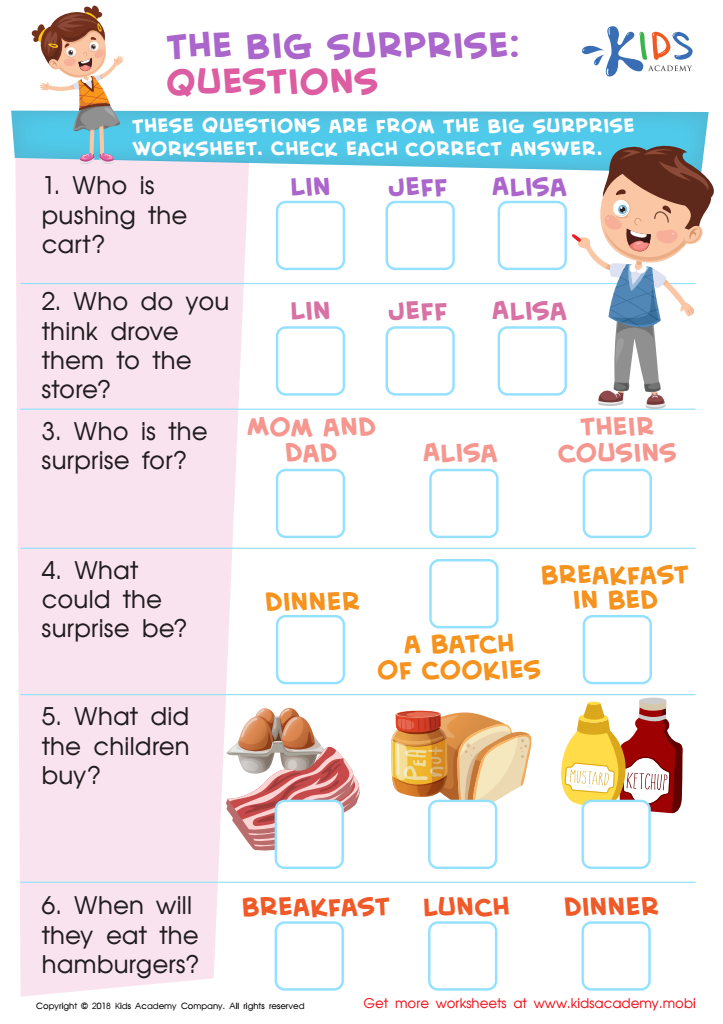
The Big Surprise: Questions Worksheet
Have your child read or listen to The Big Surprise. Ask them the questions in the printable, help check the answers and discuss the story. Keep it to 80 words.
Have your child read or listen to The Big Surprise, then ask them the questions in the printable. Discuss the story and help them check the answers.
The Big Surprise: Questions Worksheet
Worksheet
Join Kids Academy for Free
Who is primarily going to use this learning content?





Parents and teachers play a pivotal role in nurturing critical thinking skills in children aged 5 to 9, as these foundational years are crucial for cognitive development. Critical thinking normal grammar is essential because it empowers children to analyze information, evaluate different perspectives, and articulate their thoughts effectively.
Encouraging critical thinking helps young learners ask questions, solve problems creatively, and make informed decisions—a skill set that benefits them throughout their education and life. By fostering an environment that embraces inquiry and open dialogue, educators and parents can instill a love for learning and curiosity about the world. This methodology enhances comprehension skills and promotes respect for diverse opinions, nurturing empathy and social awareness.
Moreover, in an era where information is abundant yet sometimes misleading, children must develop the ability to discern credible sources and think independently. Engaging students in discussions that emphasize critical thinking normal grammar helps them articulate their ideas convincingly and lays the groundwork for effective communication skills. Ultimately, investing in critical thinking equips children not only to succeed academically but also to become responsible, thoughtful individuals capable of contributing positively to society. Cultivating these skills early can significantly influence their future learning and interpersonal relationships.