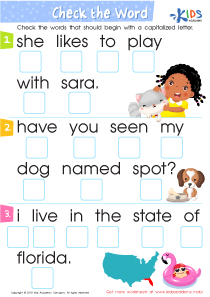
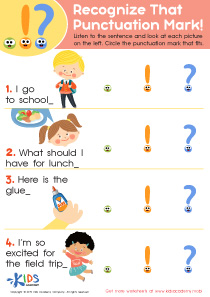
Noun identification Normal Writing Worksheets for Ages 5-9
3 filtered results
-
From - To
Introducing our Noun Identification Normal Writing Worksheets, designed specifically for children aged 5-9! These engaging worksheets help young learners identify and understand nouns through fun, interactive activities. By completing these worksheets, kids will enhance their grammar skills and recognize various types of nouns, including common and proper nouns. Our age-appropriate exercises encourage creativity and help build foundational writing skills while making learning enjoyable. Each worksheet aligns with educational standards, ensuring that children not only have fun but also achieve essential learning outcomes. Perfect for classroom use or at-home practice, our Noun Identification Worksheets are a fantastic resource for early grade teachers and parents!
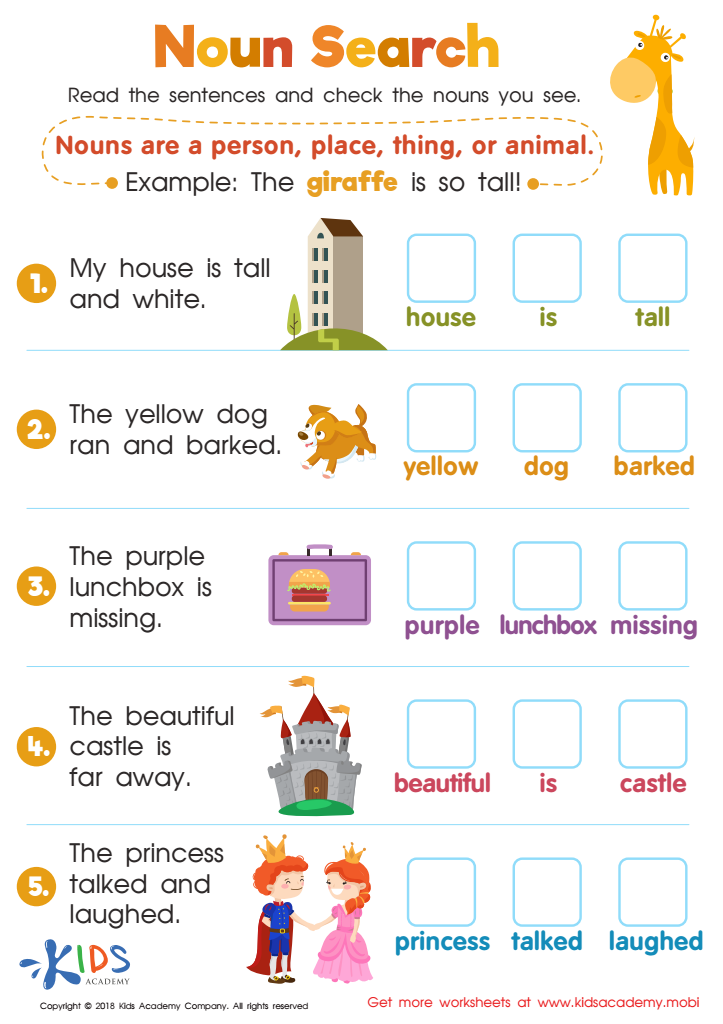
Noun Search Worksheet
 Assign to My Students
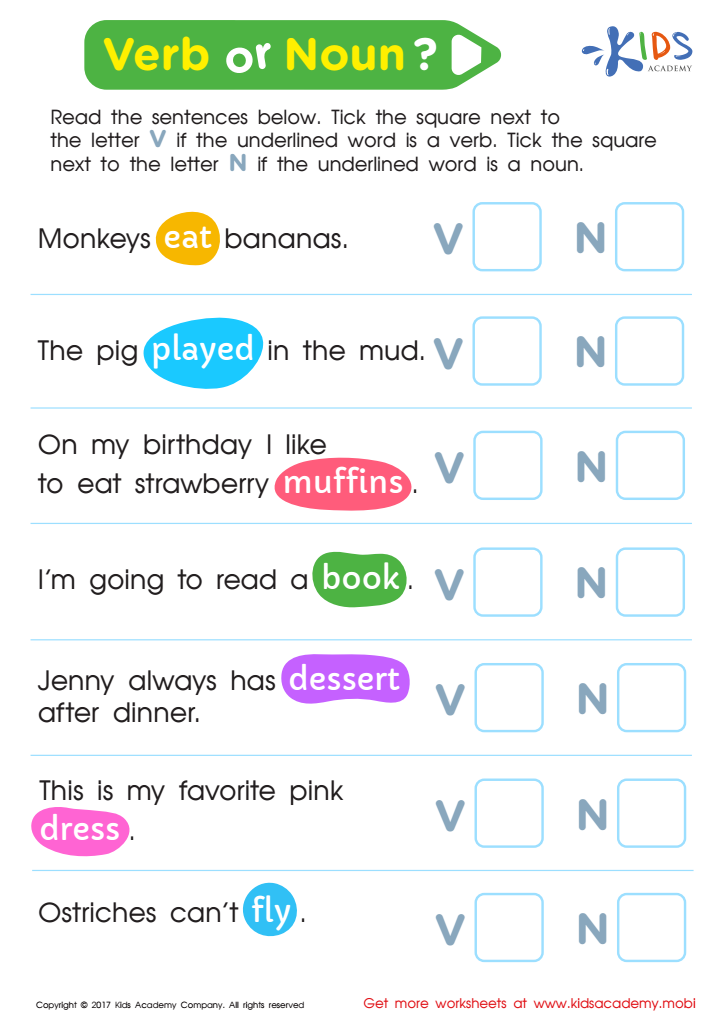
Verb or Noun Worksheet
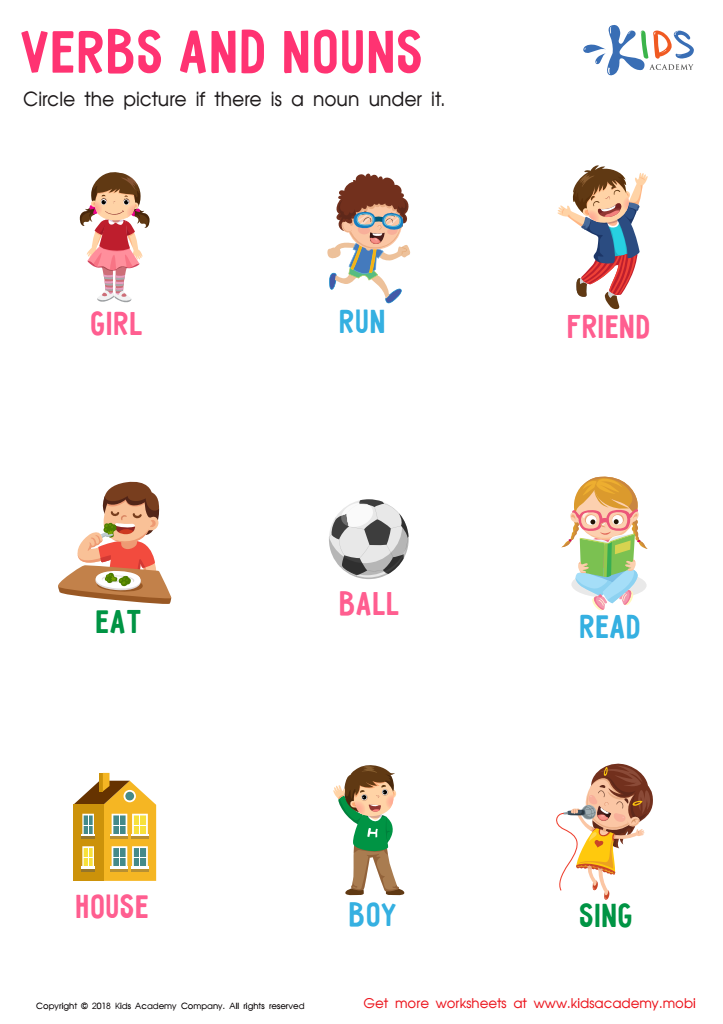
Verbs and Nouns Worksheet







Noun identification is a fundamental skill for children aged 5-9 that significantly impacts their language development and overall communication abilities. Understanding nouns—words that represent people, places, things, or ideas—helps children grasp the building blocks of language. When parents and teachers emphasize noun identification, they lay a strong foundation for reading and writing proficiency.
As children start to read, recognizing nouns enables them to comprehend texts more effectively, aiding their ability to build stories and construct sentences. This skill also supports vocabulary expansion, as children learn to categorize words and connect meanings in a meaningful way.
Furthermore, identifying nouns in everyday situations encourages children to observe and engage with their environment. Parents and teachers can utilize playful activities, like naming objects around the house or in the classroom, which fosters a sense of curiosity and enhances cognitive development.
Additionally, developmental milestones in language acquisition are closely linked to children's success in noun identification. By nurturing this skill, parents and educators can help children develop confidence in their communication abilities, preparing them for more advanced language tasks in the future. Overall, prioritizing noun identification is crucial for effective literacy development and lifelong learning.