Pronoun identification Normal Writing Worksheets for Ages 5-9
3 filtered results
-
From - To
Enhance your child's writing skills with our Pronoun Identification Normal Writing Worksheets, designed specifically for ages 5-9! These engaging worksheets help young learners recognize and use pronouns effectively, promoting better sentence structure and clarity in writing. With a variety of fun and interactive exercises, children will practice identifying pronouns in different contexts, all while developing essential literacy skills. Our user-friendly format encourages independent learning, making them perfect for home or classroom use. Give your child the tools they need to succeed in Language Arts and watch their confidence soar as they master pronoun usage with ease!
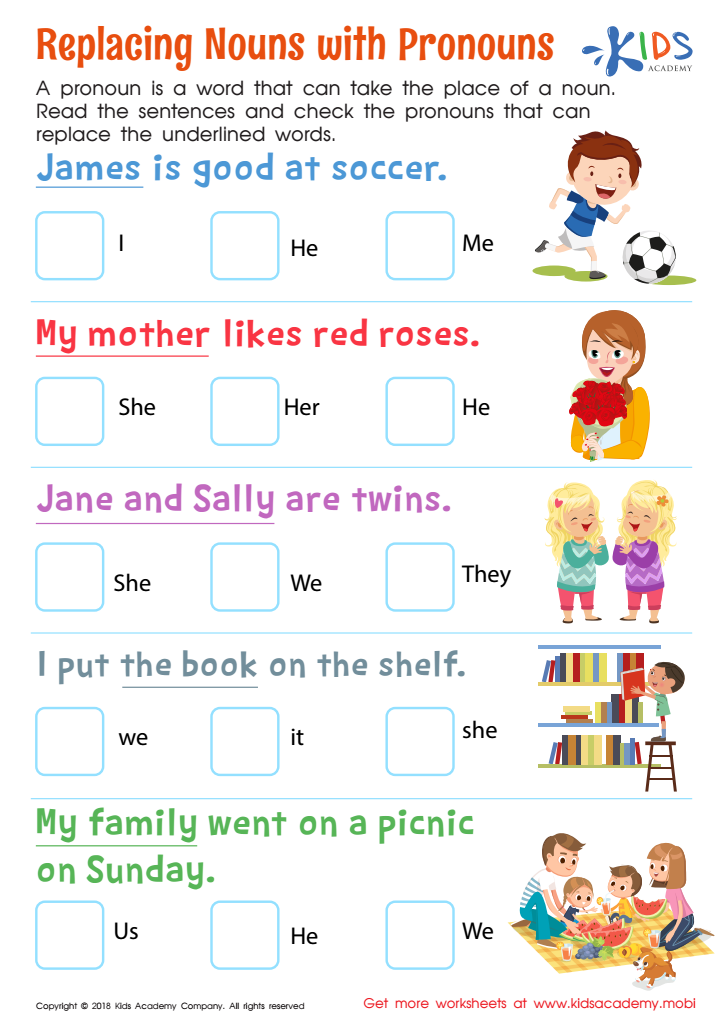
Replacing Nouns with Pronouns Worksheet
 Assign to My Students
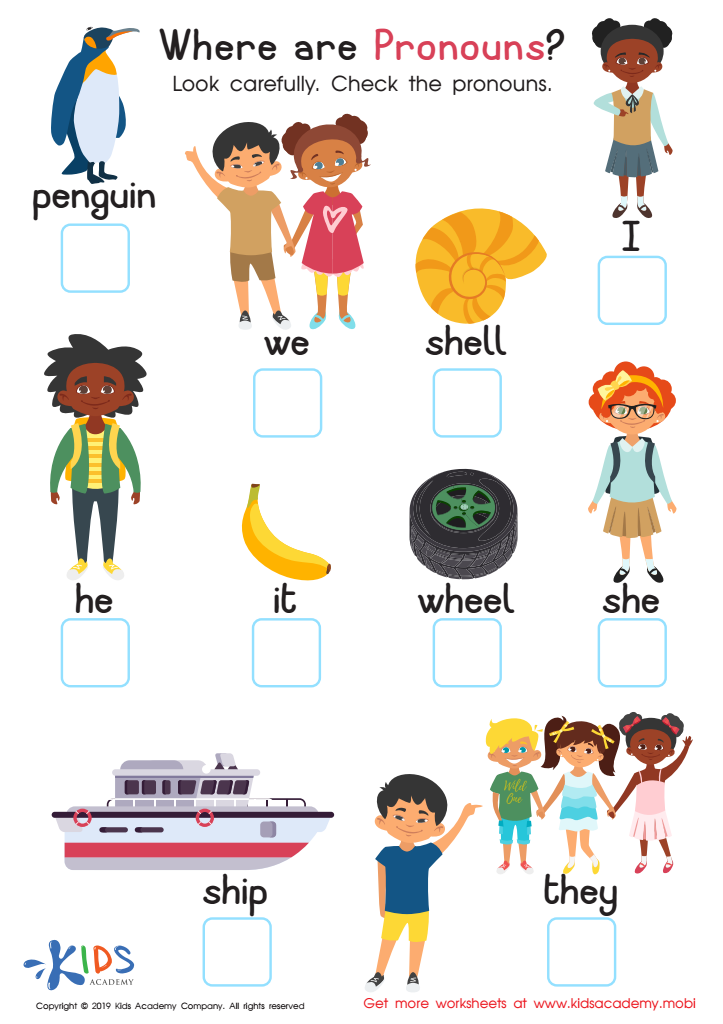
Where Are Pronouns? Worksheet
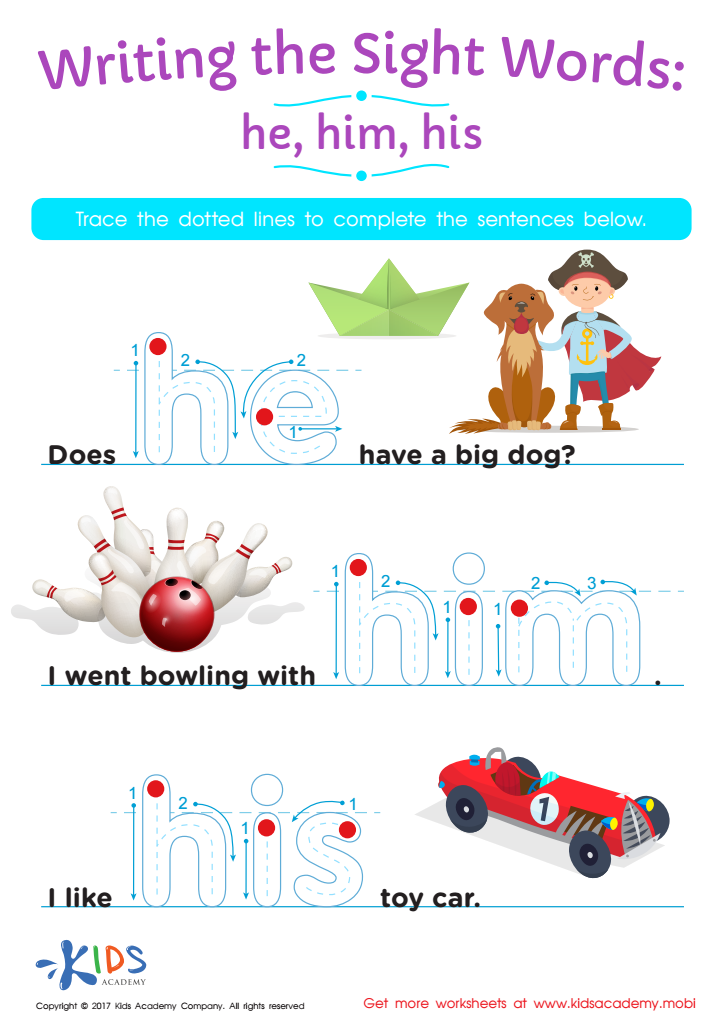
He, Him, His Printable Sight Words Worksheet







Parents and teachers should care about pronoun identification because it’s a crucial part of helping children communicate effectively and understand language better. When children learn to identify pronouns, like "he," "she," "they," and "it," they can express themselves more clearly and follow along with stories and conversations. This skill helps them build stronger reading and writing abilities as they can connect words to the people or things they refer to.
Understanding pronouns allows children to participate in discussions about feelings and to express their own emotions. It also helps them respect the identities of others by using the correct pronouns, which fosters kindness and inclusivity. This is particularly important as our understanding of gender expands, showing us that using the right pronouns is a way to honor each person's identity.
Moreover, strong pronoun identification supports literacy development, a key area of growth in early education. Engaging in activities centered around pronouns can make learning fun and interactive, helping to build a positive relationship with language. By focusing on pronoun identification, parents and teachers can encourage children to become confident communicators who appreciate the richness of language.