Rhyming skills development Normal Alphabet Worksheets for 5-Year-Olds
3 filtered results
-
From - To
Enhance your child's early literacy skills with our Rhyming Skills Development Normal Alphabet Worksheets, specially designed for 5-year-olds. These engaging worksheets help young learners identify and read rhyming words, promoting phonemic awareness and vocabulary growth. Fun and interactive, each activity incorporates letters and sounds, making learning enjoyable and effective. As children complete these worksheets, they build confidence in their reading abilities while honing their listening and creative thinking skills. Perfect for classroom use or at-home learning, our resources offer a playful approach to mastering rhymes and the alphabet. Discover the joy of learning through play with Kids Academy!

Rhyming Words Rhyming Worksheet
 Assign to My Students
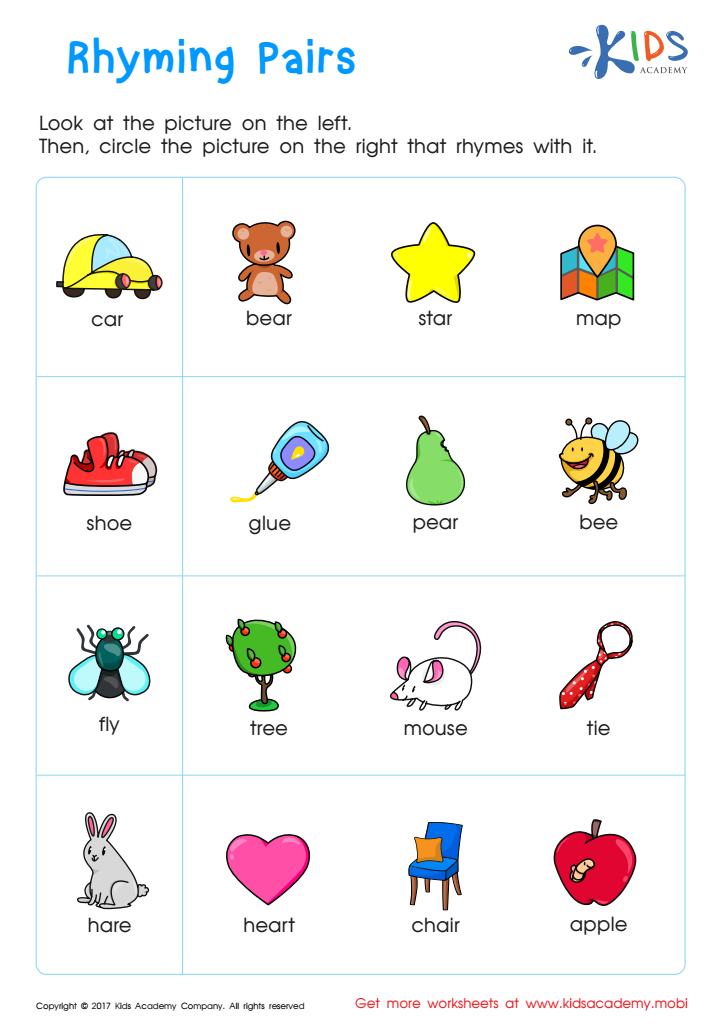

First Words: Picture Rhymes Worksheet







Rhyming skills are crucial for the early literacy development of 5-year-olds, making it essential for parents and teachers to prioritize this aspect of learning. Rhyming helps children develop phonemic awareness, which is the understanding that words are made up of sounds. This awareness is foundational for reading and writing, enabling young learners to decode new words and spell them correctly.
Additionally, engaging with rhyme enhances vocabulary and language development. When children hear and practice rhyming words, they expand their linguistic resources, learn new words, and improve their pronunciation. Rhyming activities also promote memory skills, as catchy phrases and repetitive sounds help children recall information more easily.
Moreover, rhyming fosters a love for language and literacy through fun and engaging activities such as nursery rhymes, songs, and word games. This early interaction with language makes reading more enjoyable and rewarding, laying the groundwork for future academic success.
By supporting rhyming skills at home and in the classroom, parents and teachers can help children build a strong foundation in literacy that will benefit them throughout their academic journey and beyond.







