Phonics development Normal Phonics Worksheets for 5-Year-Olds
3 filtered results
-
From - To
Unlock your child's reading potential with our "Phonics Development Normal Phonics Worksheets for 5-Year-Olds." Specially designed to align with early literacy programs, these worksheets make learning fun and engaging. Each sheet incorporates playful activities and colorful illustrations to help children master letter sounds, blending, and phonemic awareness. As they navigate through patterns and sound recognition, young learners will build a robust phonics foundation critical for future reading success. Perfect for home or classroom use, these worksheets offer an effective, enjoyable approach to phonics development. Empower your 5-year-old's reading journey with our comprehensive resources today!
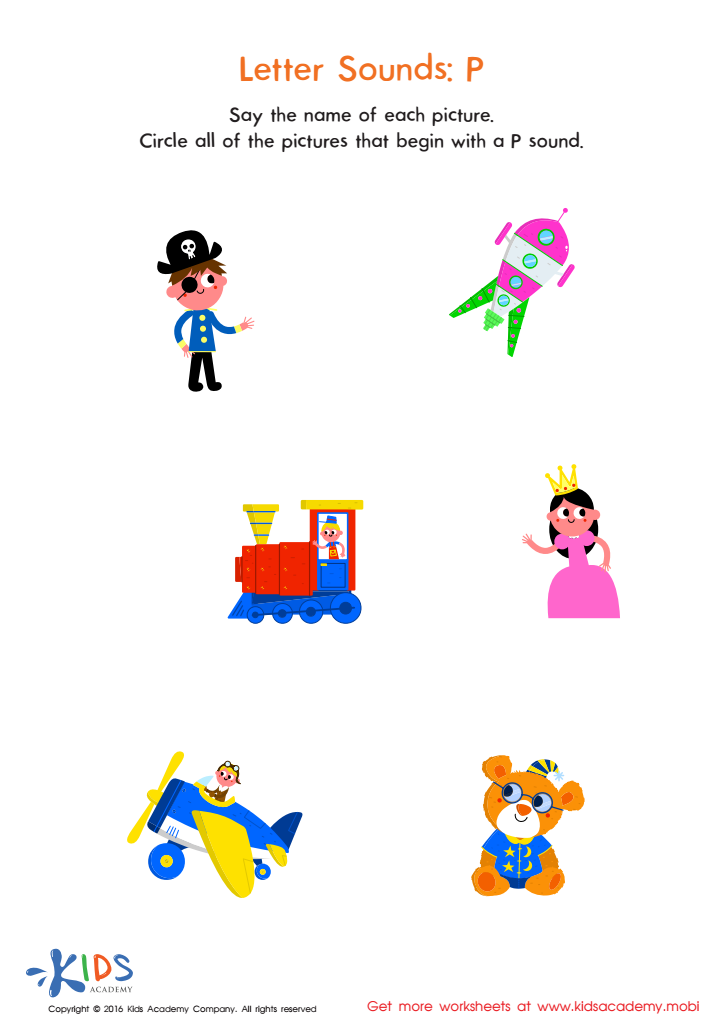
Letter P Sound Worksheet
 Assign to My Students
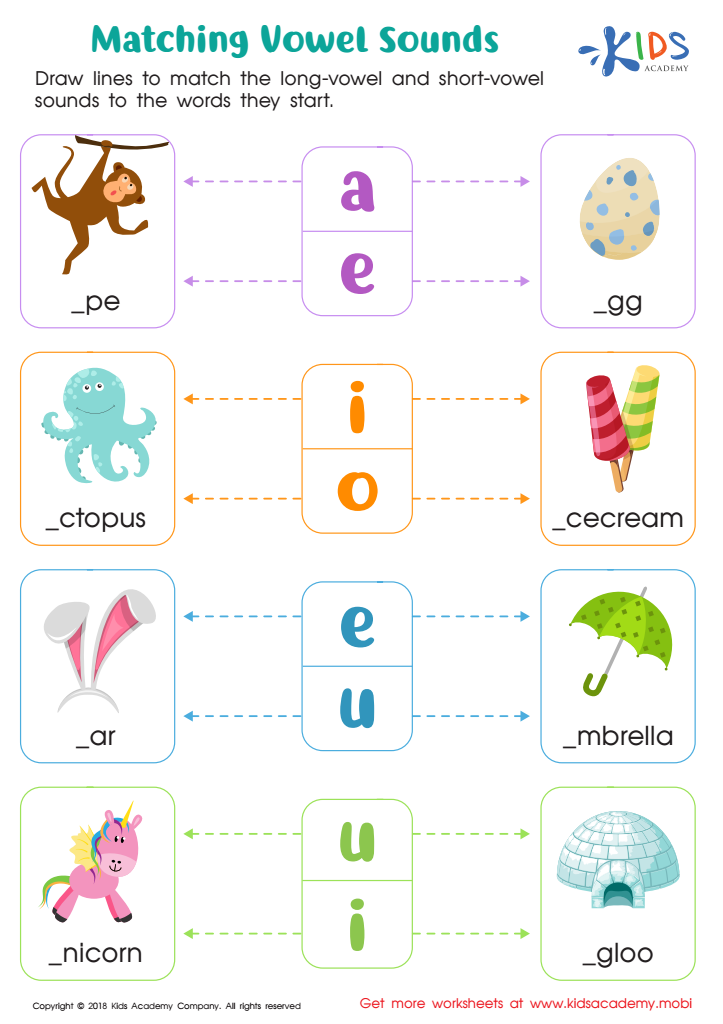
Matching Vowel Sounds Worksheet
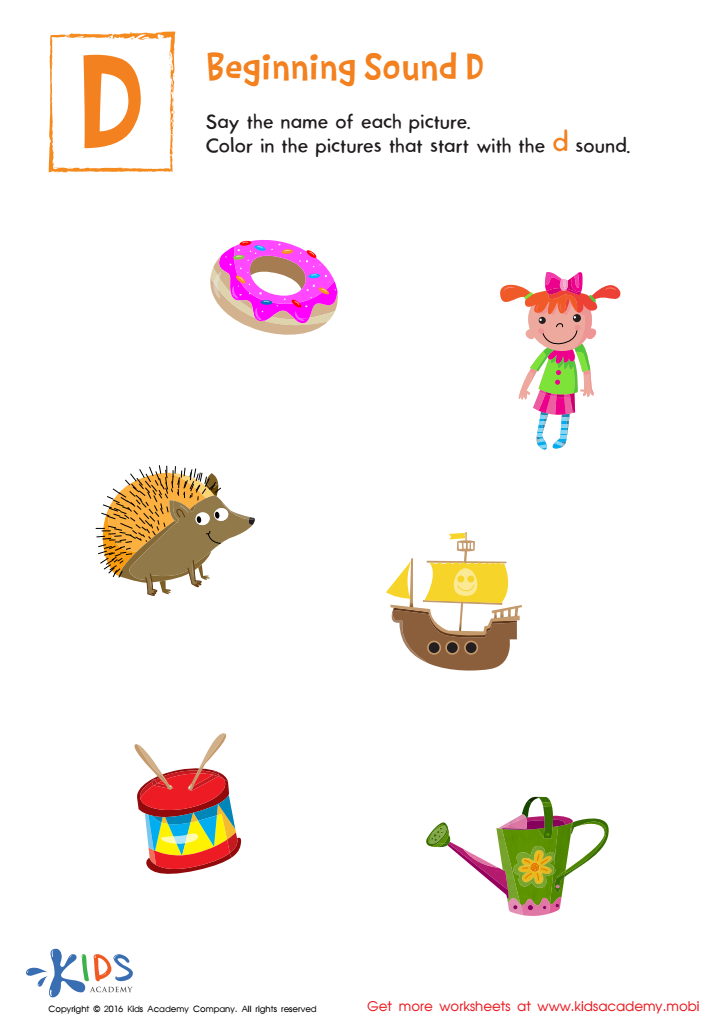
Beginning Sound D Worksheet








Phonics development is crucial for 5-year-olds as it lays the foundational skills necessary for reading and writing. At this age, children are in a critical period of literacy development, and acquiring strong phonics skills helps them understand the relationship between sounds and letters. This understanding is essential for decoding words, which is a fundamental step in reading fluency.
Parents and teachers need to care about phonics because it directly impacts a child’s ability to comprehend texts, which is crucial for academic success. Sound knowledge aids in the development of vocabulary and enhances spelling skills. With a solid foundation in phonics, children are more likely to become confident readers and writers, which fosters a positive attitude toward learning and education in general.
Ignoring phonics education can lead to reading difficulties, which may affect a child’s academic performance and self-esteem. Early intervention through purposeful phonics instruction can prevent long-term literacy issues. Parents and teachers should collaborate to create a learning environment rich in opportunities to practice phonics, such as reading aloud, playing phonics games, and encouraging writing, to ensure children establish these vital skills during a prime time in their cognitive development.







