
Reading proficiency Normal Phonics Worksheets for 5-Year-Olds
3 filtered results
Difficulty Level
Grade
Age
-
From - To
Subject
Activity
Standards
Discover the perfect blend of fun and education with our Reading Proficiency Normal Phonics Worksheets for 5-Year-Olds. Specifically designed for young learners, these worksheets introduce crucial phonics skills aligned with early reading standards. Each engaging activity helps children recognize letters, understand sounds, and form words. Our worksheets are tailored to support reading proficiency while keeping kids motivated and excited to learn. With vibrant illustrations and clear instructions, your child will develop a strong foundation in phonics, setting them on the path to becoming skilled and confident readers. Explore our collection and foster a love for reading today!
Favorites
With answer key
Interactive
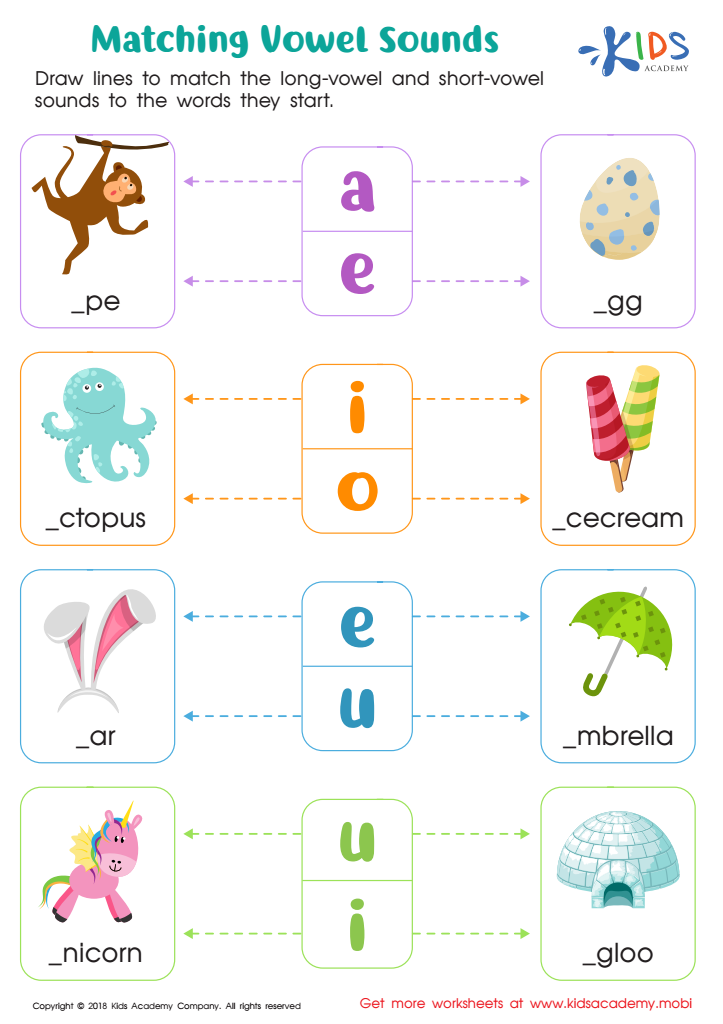
Matching Vowel Sounds Worksheet
Teach your child phonics with a fun worksheet! Ask your child to name a vowel sound and listen if it's long or short. Differentiating between long and short vowel sounds can be tricky, but this matching worksheet makes it easy for kids to understand. Have fun and master phonics - the worksheet will help them understand the difference between long and short vowel sounds!
Matching Vowel Sounds Worksheet
Worksheet

Long and Short U Worksheet
Revised: Spice up your lesson on long and short vowels with this fun printout! Kids read the words "tube" and "tub," then reinforce the sound by coloring in the words and pictures. It's a great way to make phonics class enjoyable!
Download (PDF)
 Assign to My Students
Assign to My Students
Long and Short U Worksheet
Worksheet
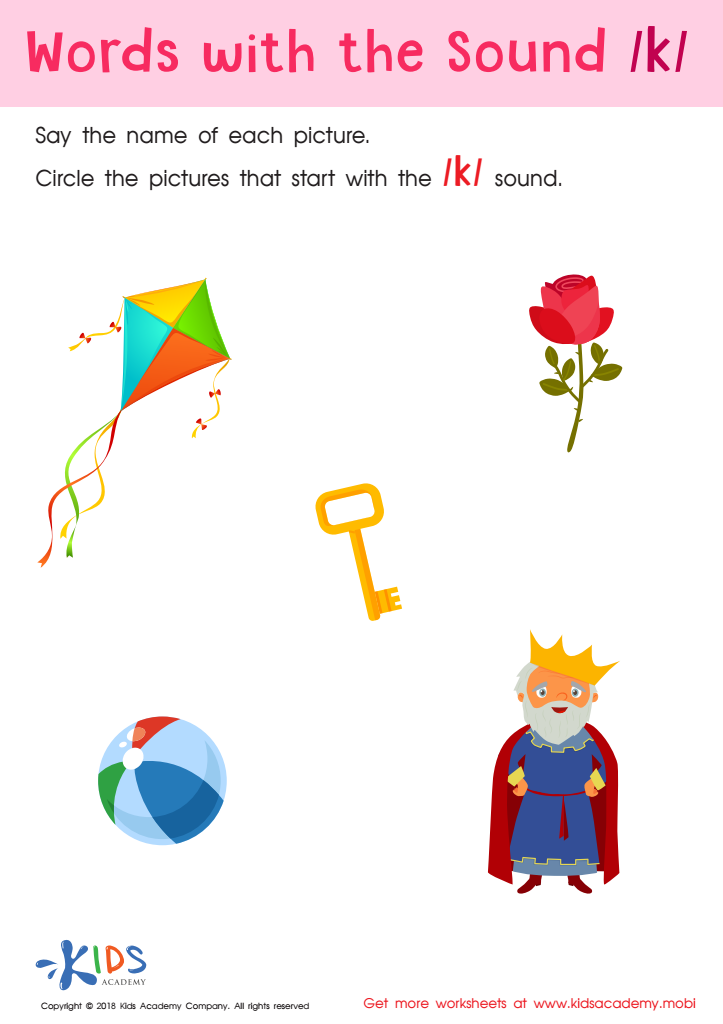
Words with sound k Reading Worksheet
Help your preschooler master the hard "k" sound with this fun worksheet from Kids Academy! Ask your child to say each picture aloud and circle only the pictures that start with "k". This early reading exercise will boost phonics skills and is sure to be loved by your little learner!
Words with sound k Reading Worksheet
Worksheet
Join Kids Academy for Free
Who is primarily going to use this learning content?








Parents and teachers should care about reading proficiency, including phonics, for 5-year-olds because it lays the foundation for future academic success and lifelong learning. At this age, children are at a critical developmental stage where their brains are highly receptive to language acquisition. Proficiency in reading and phonics enables them to decode words, understand text, and foster a love for reading. Early literacy skills are strongly correlated with later academic achievement, broader vocabulary, better listening skills, and improved focus.
Moreover, reading proficiency builds confidence and fosters independence in young learners. Phonics, which involves understanding the relationship between letters and sounds, is a crucial strategy for learning to read. It helps children to sound out unfamiliar words, enhances spelling, and enables fluent reading.
Addressing phonics and reading skills early helps to identify and tackle any learning difficulties, such as dyslexia, thereby providing timely support and preventing long-term academic struggles. Intervening early can bridge the gaps, ensuring that all children have an equal opportunity to thrive in their educational journey.
Parents and teachers who prioritize reading proficiency give children a strong foundation that supports cognitive development, critical thinking, and a lifelong passion for learning. This early investment pays dividends as children progress through more complex subjects, setting them up for ongoing academic and personal success.







