Phonics Skills Normal Short Vowels Worksheets for 5-Year-Olds
3 filtered results
-
From - To
Enhance your 5-year-old's reading abilities with our expertly-designed Phonics Skills Normal Short Vowels Worksheets! These engaging worksheets are tailored to introduce and reinforce essential short vowel sounds, aiding in early literacy development. Each sheet provides fun, interactive activities that help young learners recognize, pronounce, and differentiate short vowels. Ideal for preschoolers, our educational resources ensure that kids build a strong phonics foundation while enjoying their learning journey. Explore our collection to support your child in mastering phonics skills in a motivating and enjoyable way. Unlock the key to reading success with these comprehensive worksheets!
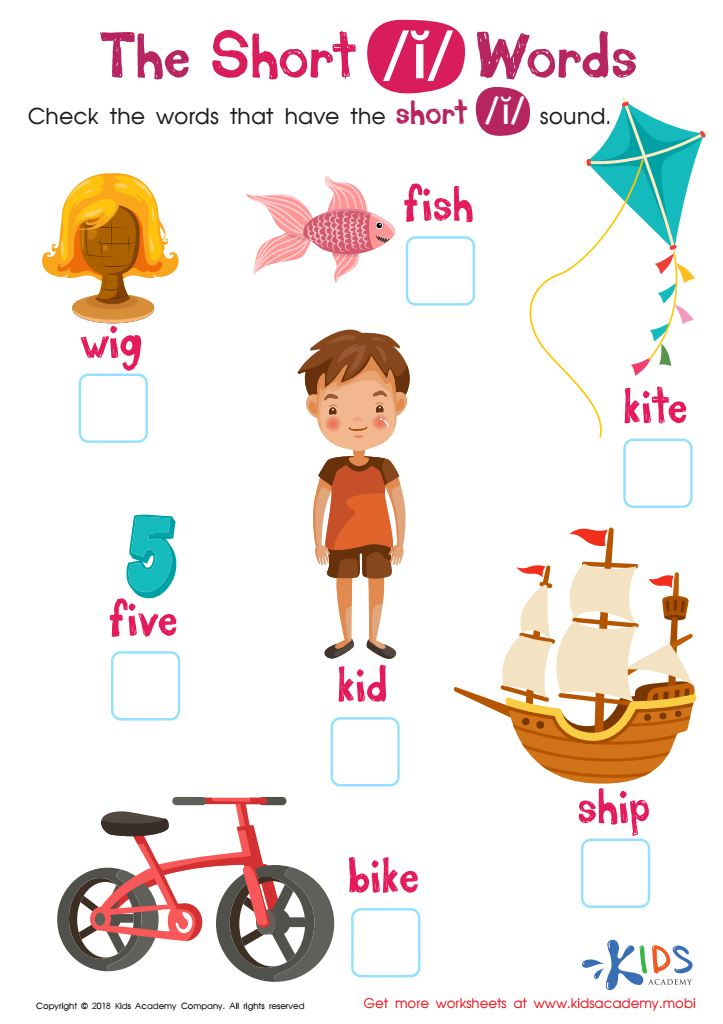
The Short I Words Reading Worksheet
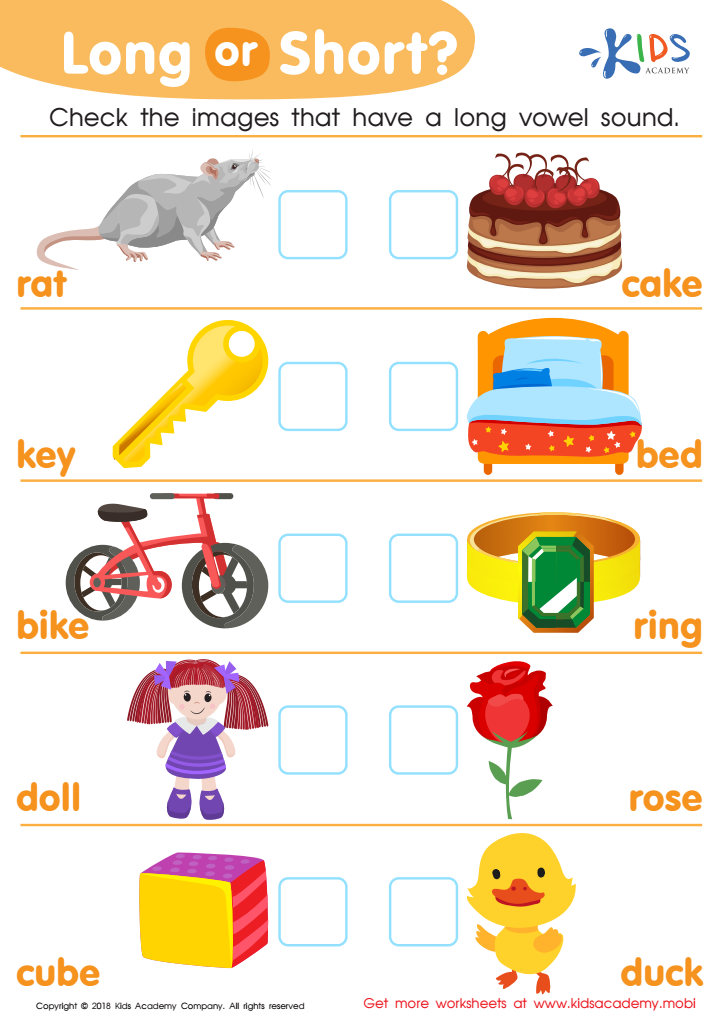
Long or Short Reading Worksheet

Long and Short E Worksheet
 Assign to My Students



Caring about phonics skills, particularly normal short vowels, for 5-year-olds is essential as these are foundational elements of early literacy. At this age, children are like sponges, rapidly absorbing new information. Phonics instruction, which includes the understanding of short vowel sounds, is crucial for decoding words. This makes reading manageable and enjoyable for young learners, paving the way for future academic success.
Mastering short vowels helps children blend sounds to form words and recognize word patterns, enabling them to become confident readers. This skill is critical because early reading proficiency is strongly linked to later academic achievement. Children who struggle with these basics may find reading frustrating, which can affect their motivation and overall attitude towards learning.
In addition, strong phonics skills enhance spelling and writing capabilities. Recognizing vowel sounds allows children to phonemically spell out words, building a better understanding of language structure. This paves the way for more complex literacy skills such as reading comprehension and fluency.
Furthermore, focusing on phonics can foster a love for reading. Enjoyment in reading at an early age cultivates a lifelong habit of learning and curiosity. By investing time and attention in phonics skills, parents and teachers can significantly influence a child's educational journey and holistic development.








