Vocabulary enhancement Normal Short Vowels Worksheets for 5-Year-Olds
3 filtered results
-
From - To
Boost your child's language skills with our engaging "Vocabulary Enhancement Normal Short Vowels Worksheets" designed for 5-year-olds! These thoughtfully crafted worksheets focus on enriching young learners' vocabulary by teaching short vowel sounds, a crucial element in early reading development. Fun and interactive exercises help kids recognize and practice short vowels in various words and contexts, fostering better pronunciation and comprehension. Each worksheet is visually appealing and age-appropriate, ensuring that learning becomes an enjoyable adventure. With our valuable resources, your child will build a solid vocabulary foundation, enhancing their reading and communication skills effortlessly. Get started today!
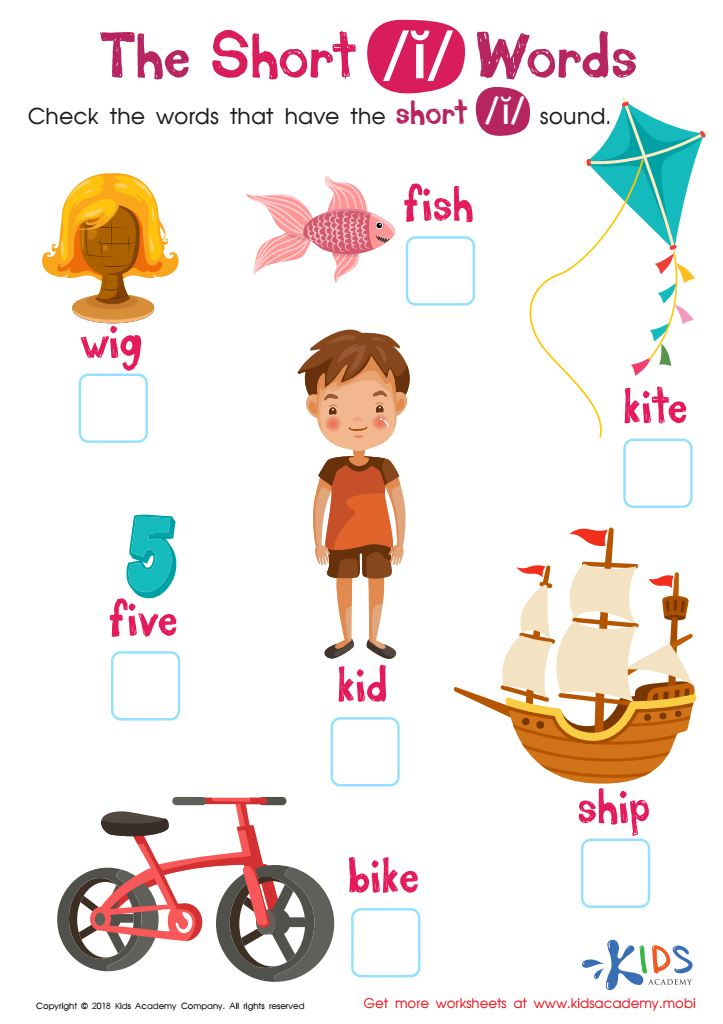
The Short I Words Reading Worksheet
 Assign to My Students
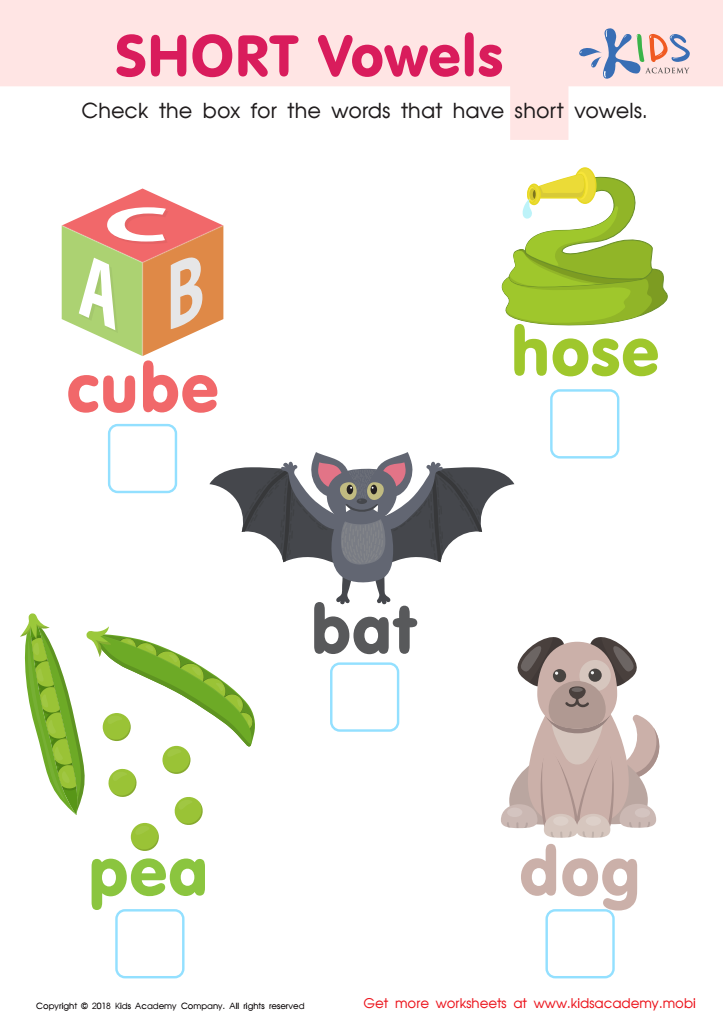
short vowels Worksheet
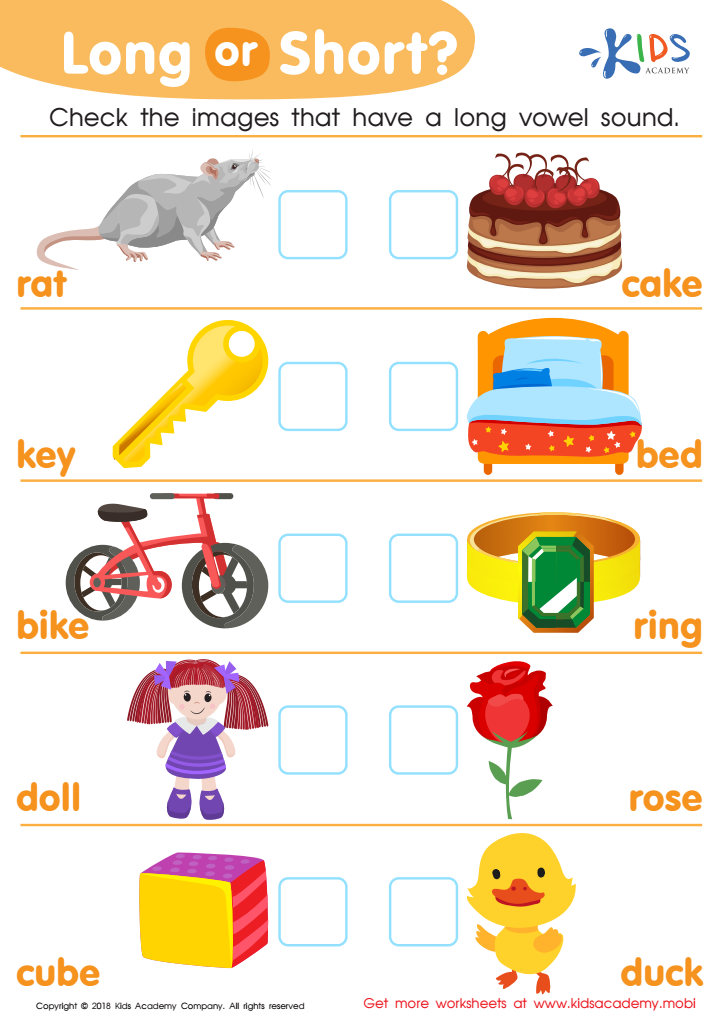
Long or Short Reading Worksheet



Vocabulary enhancement, especially through Normal Short Vowels, is crucial for 5-year-olds as it lays the foundation for effective communication, literacy skills, and overall cognitive development. These fundamental vowel sounds enable children to decode words, which is essential for reading fluency. Understanding and recognizing short vowel sounds aids in distinguishing between words that otherwise sound similar, thus averting potential confusion.
When teachers and parents emphasize short vowel sounds, they provide children with the phonemic awareness necessary for spelling accuracy and word recognition. This focus not only enhances reading skills but also improves writing competence as children learn the correct patterns of word construction.
Moreover, a strong vocabulary supports academic success across all subjects. It enhances comprehension abilities, allowing children to follow instructions and grasp new concepts more readily. Socially, a rich vocabulary helps children express themselves better, interact more confidently with peers and adults, and develop stronger relationships.
Ultimately, prioritizing vocabulary enhancement through normal short vowels when children are around 5 years old ensures that they build a robust linguistic foundation. This formative effort sets them on a path toward academic excellence, better problem-solving skills, and enriched interpersonal communication throughout their lives. In essence, parents’ and teachers’ attention to this area reflects a commitment to unlocking the full potential within each child.