Hand-eye Coordination Normal Tracing Letters Worksheets for 5-Year-Olds
4 filtered results
-
From - To
Enhance your child's hand-eye coordination with our "Normal Tracing Letters Worksheets" designed specifically for 5-year-olds. These engaging worksheets are perfect for young learners looking to improve their fine motor skills while mastering the alphabet. With fun and stimulating tracing activities, children will develop precision in their writing and boost their confidence in letter recognition. Our user-friendly designs ensure that learning is both enjoyable and effective, making it easy for parents and educators to incorporate into daily practice. Discover the perfect resource to support your child's educational journey and lay the foundation for future writing success! Download now and watch them grow!
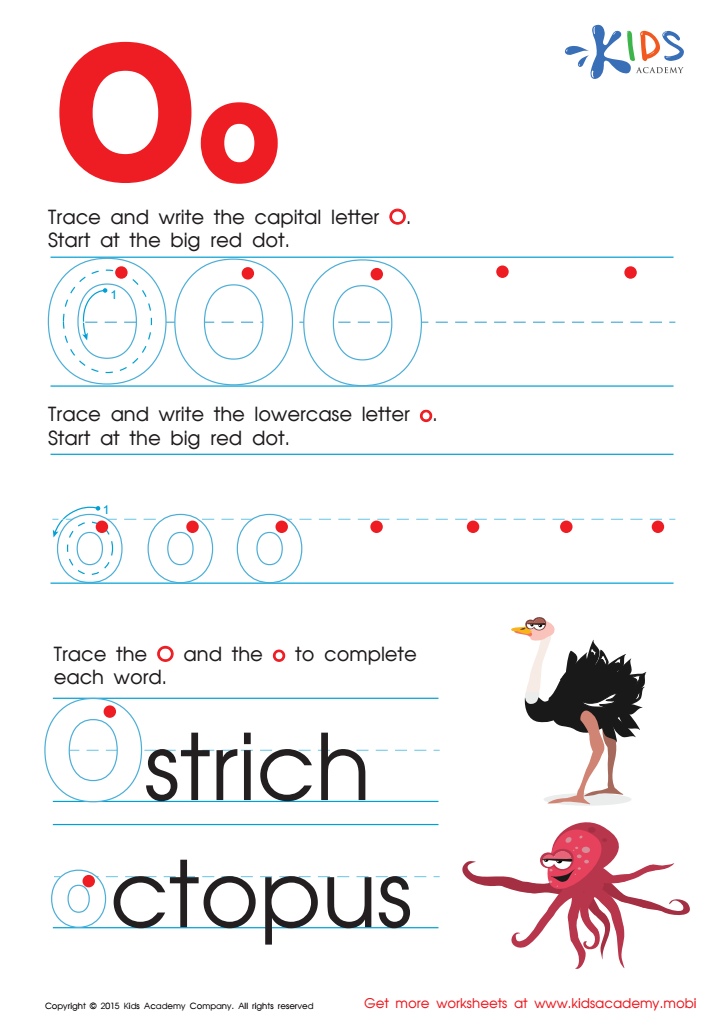
Letter O Tracing Page
 Assign to My Students
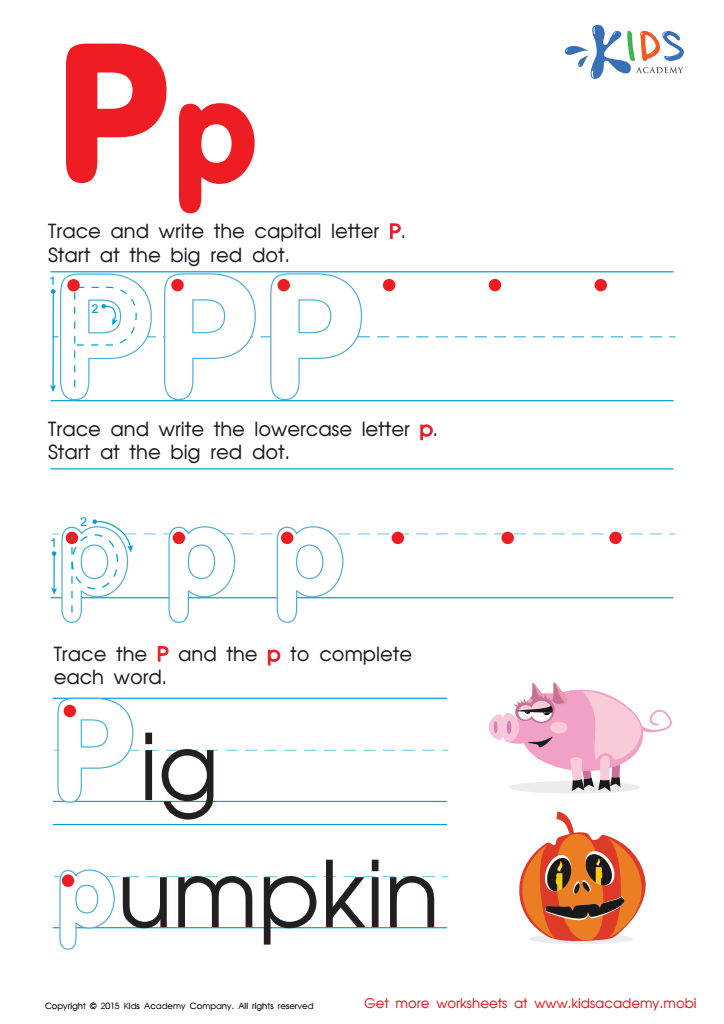
Letter P Tracing Page
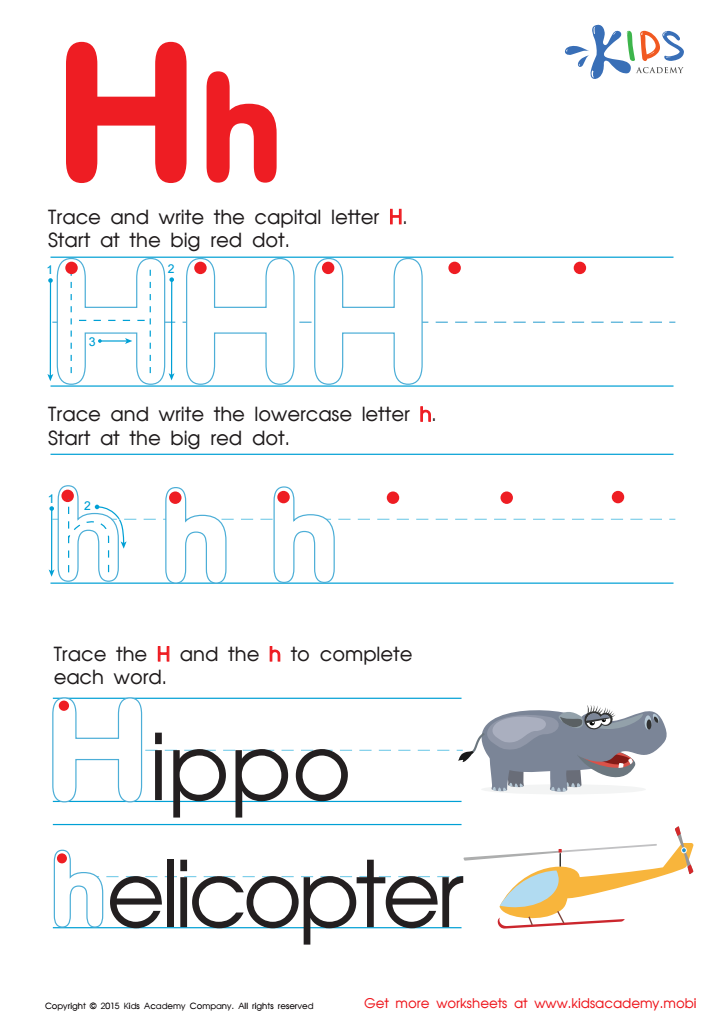
Letter H Tracing Page

Letter D Tracing Page







Hand-eye coordination is a critical skill for young learners, especially for 5-year-olds who are starting to develop foundational abilities for writing and other fine motor tasks. Tracing letters not only enhances this skill but also supports children's overall cognitive and emotional development.
When children trace letters, they practice syncing their visual observations with their hand movements. This coordination is essential for future tasks such as writing, drawing, and eventually typing, which are integral to their academic success. Strong hand-eye coordination can lead to improved confidence and proficiency in these activities, allowing for a smoother transition into more complex writing and creative endeavors.
Moreover, tracing letters can help reinforce letter recognition and phonemic awareness, key components in early literacy. Parents and teachers can use tracing activities to foster an engaging and playful environment where children develop skills at their own pace.
Fostering hand-eye coordination through tracing letters can also have lasting benefits, influencing a child's ability to focus, pay attention, and organize their thoughts—I am better equipped to tackle challenges both academically and socially. Thus, by encouraging tracing activities, parents and teachers are investing in a child's overall development and lifelong learning journey.








