Vocabulary development Normal Vowels Worksheets for 5-Year-Olds
4 filtered results
-
From - To
Boost your 5-year-old’s reading and language skills with our Vocabulary Development Normal Vowels Worksheets! These cleverly designed printables focus on enhancing your child’s understanding of vowels, a foundational aspect of the alphabet. Through engaging exercises and vibrant illustrations, our worksheets help youngsters recognize, pronounce, and use vowels proficiently. They're perfect for developing early literacy skills, enriching vocabulary, and promoting phonetic awareness. Ideal for both classroom and home use, these worksheets make learning fun and effective. Give your child the tools to succeed in reading with Kids Academy’s expertly crafted educational resources!
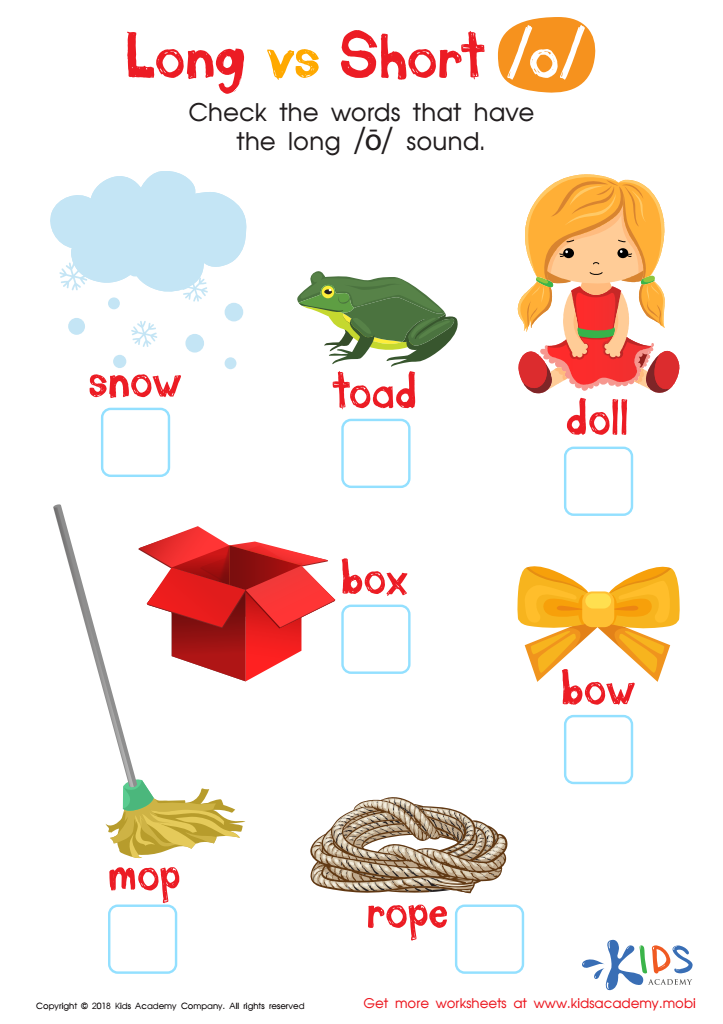
Long vs Short O Reading Worksheet
 Assign to My Students
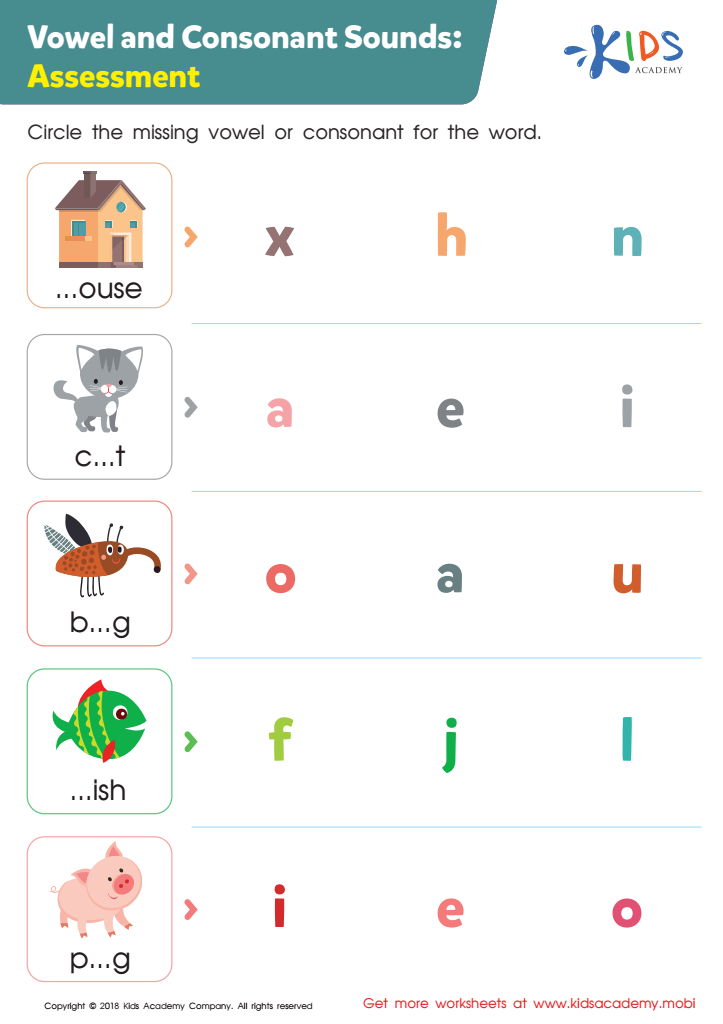
Vowel and Consonant Sounds: Assessment Worksheet
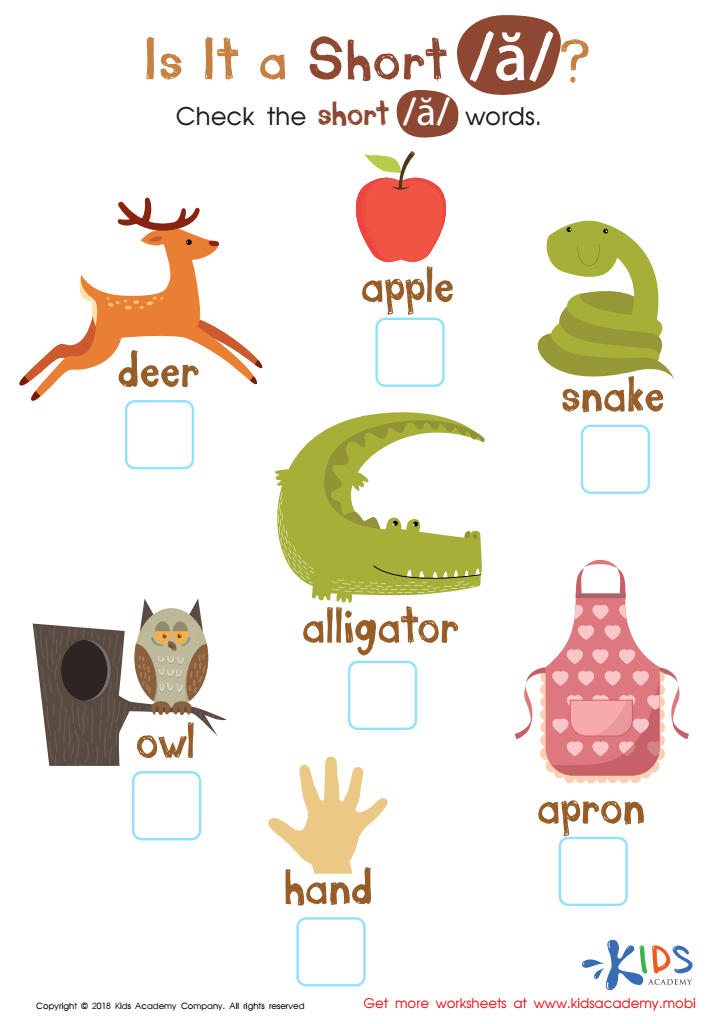
Is It Short A? Reading Worksheet
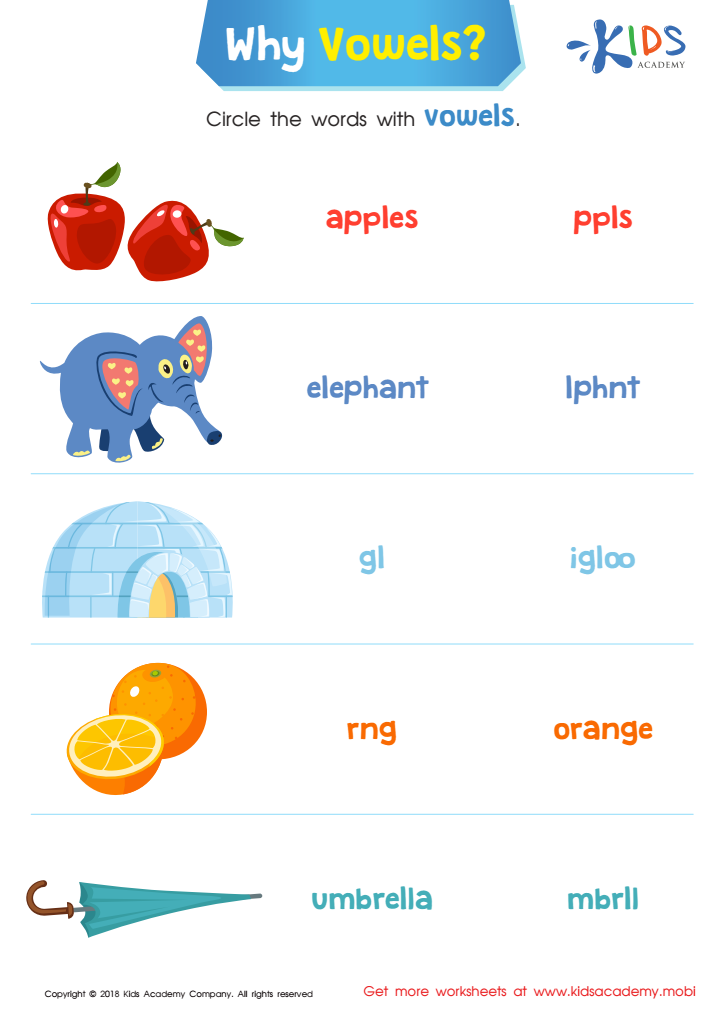
Why Vowels? Reading Worksheet





Vocabulary development and understanding normal vowels are essential cornerstones of a five-year-old child's linguistic and cognitive growth. At this pivotal age, children are just beginning their journey into structured education, where a strong vocabulary lays the foundation for effective communication skills, reading comprehension, and academic success.
Firstly, a robust vocabulary enables children to better express their thoughts, emotions, and needs, fostering more meaningful interactions with peers and adults. This leads to improved social skills and self-confidence, which are crucial as they transition into school environments.
Secondly, an extensive vocabulary supports reading and writing skills. Recognizing and correctly using vowels—the building blocks of words—is integral to phonemic awareness. This awareness helps children decode words, an essential skill for fluent reading. Understanding vowels also aids in proper spelling and pronunciation, directly impacting early literacy development.
Lastly, vocabulary development enhances cognitive abilities. It stimulates brain areas responsible for memory, problem-solving, and critical thinking. Engaging in conversations, reading books together, and playful learning with vowels enrich a child's language exposure and retention, promoting a lifelong love for learning and curiosity.
Parents and teachers play a vital role in nurturing a child's verbal skills. Investing time and resources into vocabulary development ensures children are not only school-ready but equipped with the tools to thrive both academically and socially.






