Phonics development Normal Worksheets for 5-Year-Olds
3 filtered results
-
From - To
Explore our engaging "Phonics Development Worksheets for 5-Year-Olds," designed to enhance your child's early reading skills. These carefully crafted printable worksheets offer a variety of fun activities that help children recognize letters, sounds, and simple words. With brightly colored illustrations and age-appropriate challenges, your little learners will enjoy practicing essential phonics concepts while building their confidence. From letter tracing to sound matching exercises, our worksheets cater to diverse learning styles and make phonics practice enjoyable. Perfect for home or classroom use, these resources are a fantastic way to support your child's literacy journey. Start fostering a love for reading today!
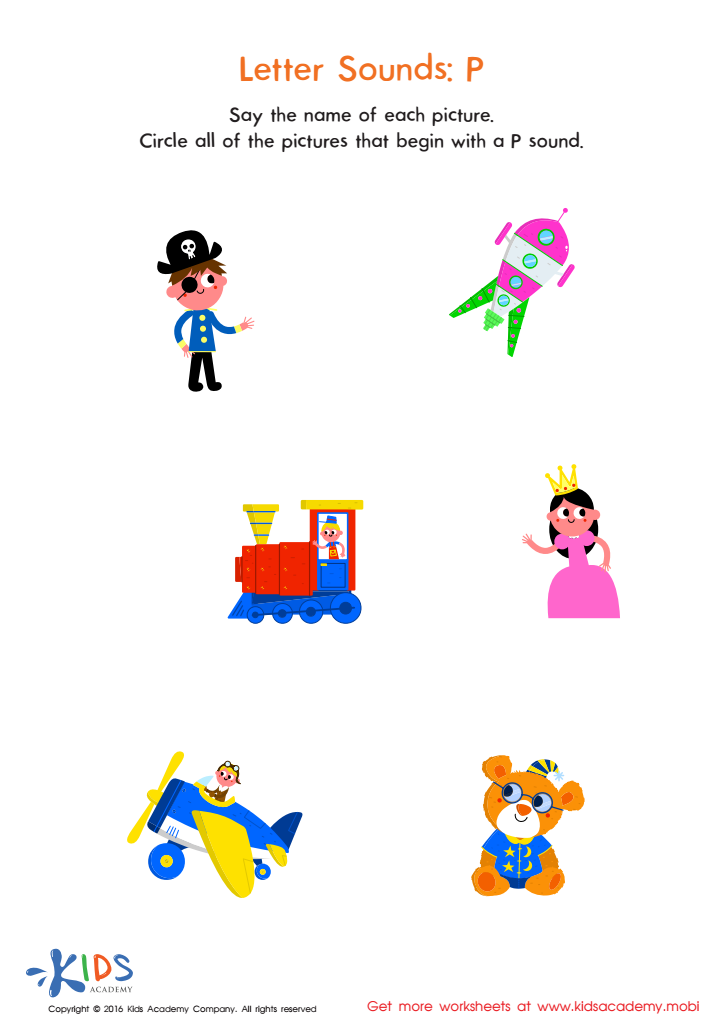
Letter P Sound Worksheet
 Assign to My Students
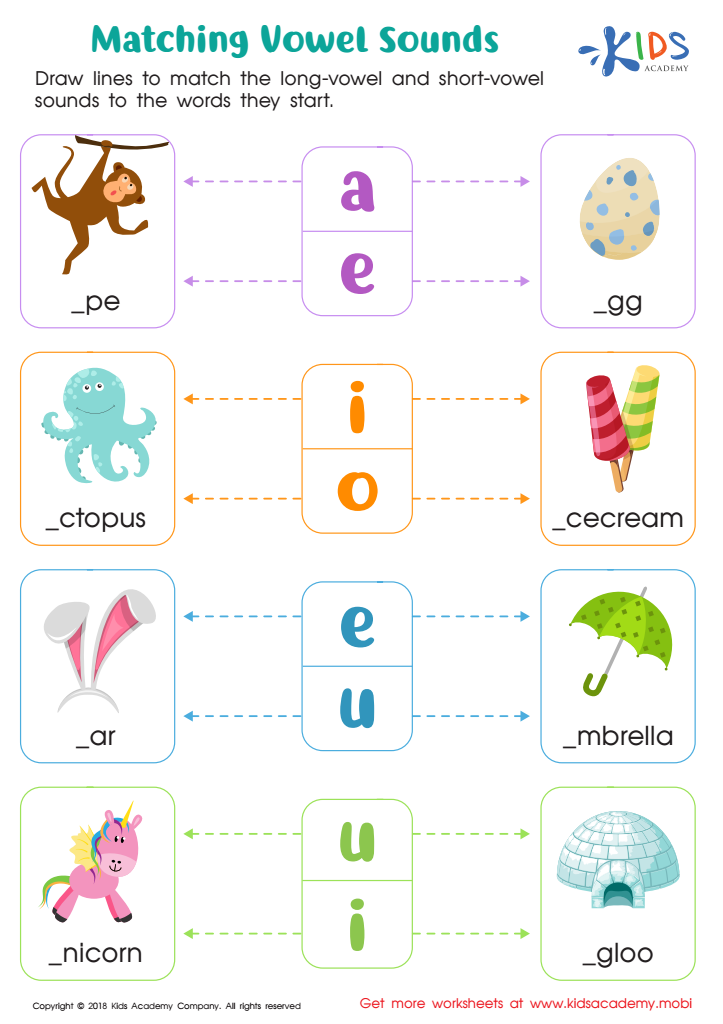
Matching Vowel Sounds Worksheet
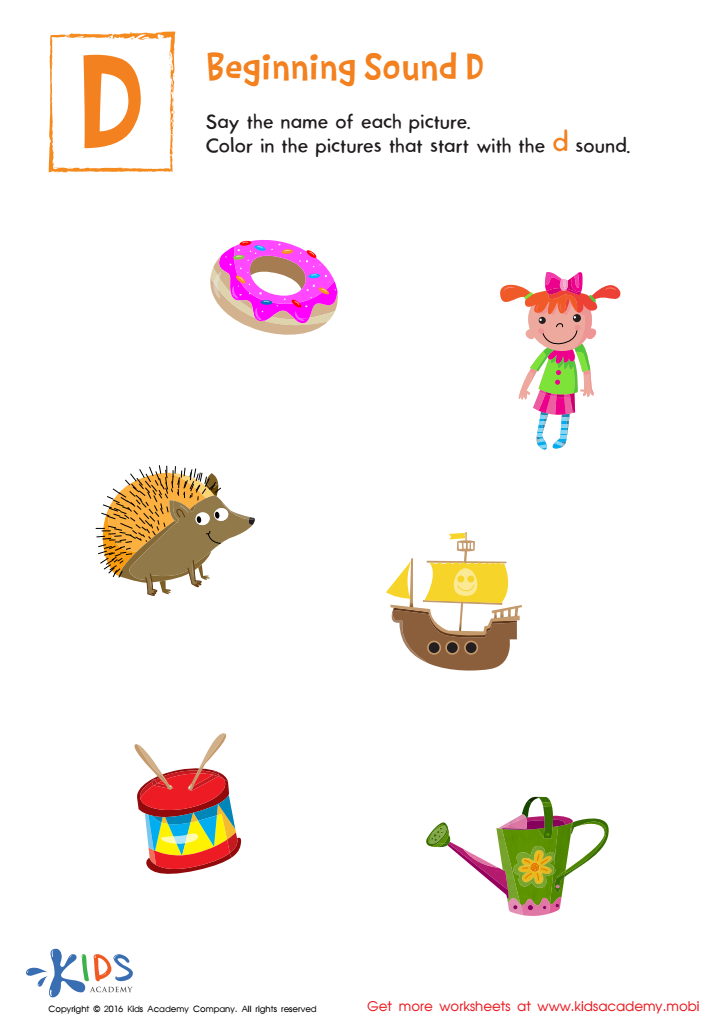
Beginning Sound D Worksheet







Phonics development is crucial for 5-year-olds as it lays the foundation for reading and writing skills. At this age, children are beginning to make connections between sounds and letters, which is essential for literacy. By understanding phonics, children learn to decode words, recognize letter patterns, and ultimately develop fluency in reading.
Parents and teachers should prioritize phonics development because it directly influences a child’s academic success. Early proficiency in reading enhances comprehension skills, allowing children to understand and engage with various subjects. This, in turn, fosters a lifelong love for reading and learning.
Moreover, phonics instruction supports cognitive development, improving critical thinking and problem-solving abilities. Children who grasp phonics concepts are more likely to develop strong vocabulary skills and confidence in their abilities, which contributes positively to their self-esteem and social interactions.
Additionally, early intervention can help identify and support children who may struggle with reading. The ability to recognize these needs allows parents and teachers to provide tailored support, preventing future challenges. Investing time and resources into phonics development not only sets the stage for academic achievement but also cultivates essential communication skills that benefit children beyond the classroom.








