Real-life application Normal Worksheets for 5-Year-Olds
3 filtered results
-
From - To
Discover our engaging Real-Life Application Normal Worksheets designed specifically for 5-year-olds! These worksheets help young learners connect classroom concepts with everyday experiences. Each activity promotes critical thinking, problem-solving, and decision-making skills through relatable scenarios that children encounter in their daily lives. From identifying shapes in their environment to understanding basic math in shopping situations, these worksheets make learning fun and relevant. Enhance your child’s understanding of the world while building essential skills for future academic success. Visit our site to explore a variety of worksheets that inspire creativity and practical learning for your preschooler!
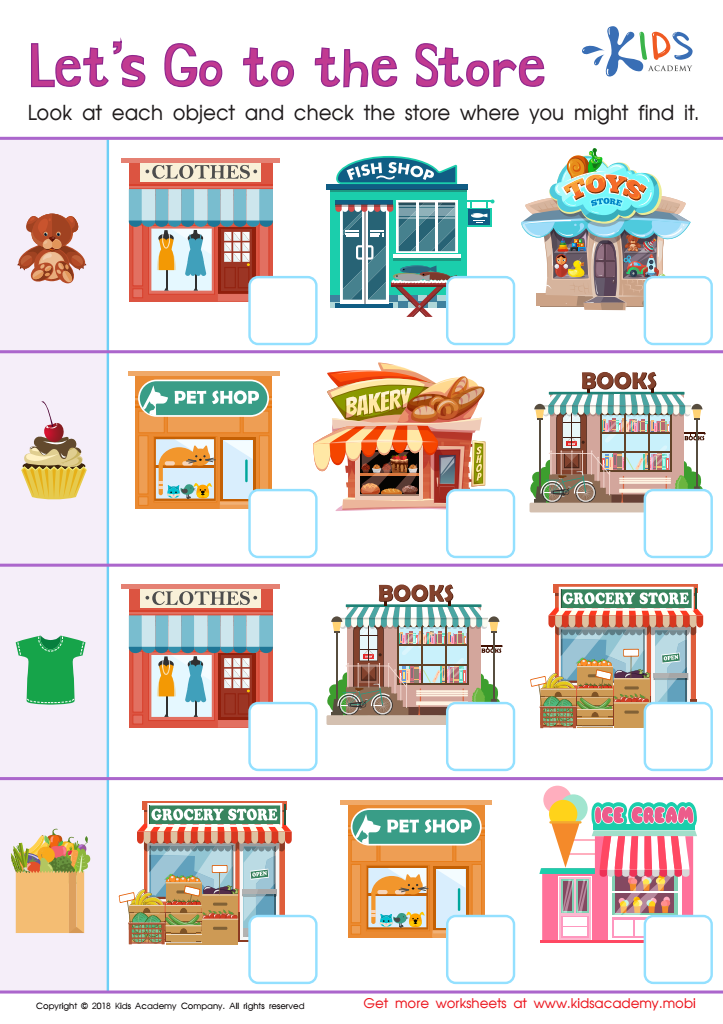
Let's Go to the Store! Worksheet
 Assign to My Students
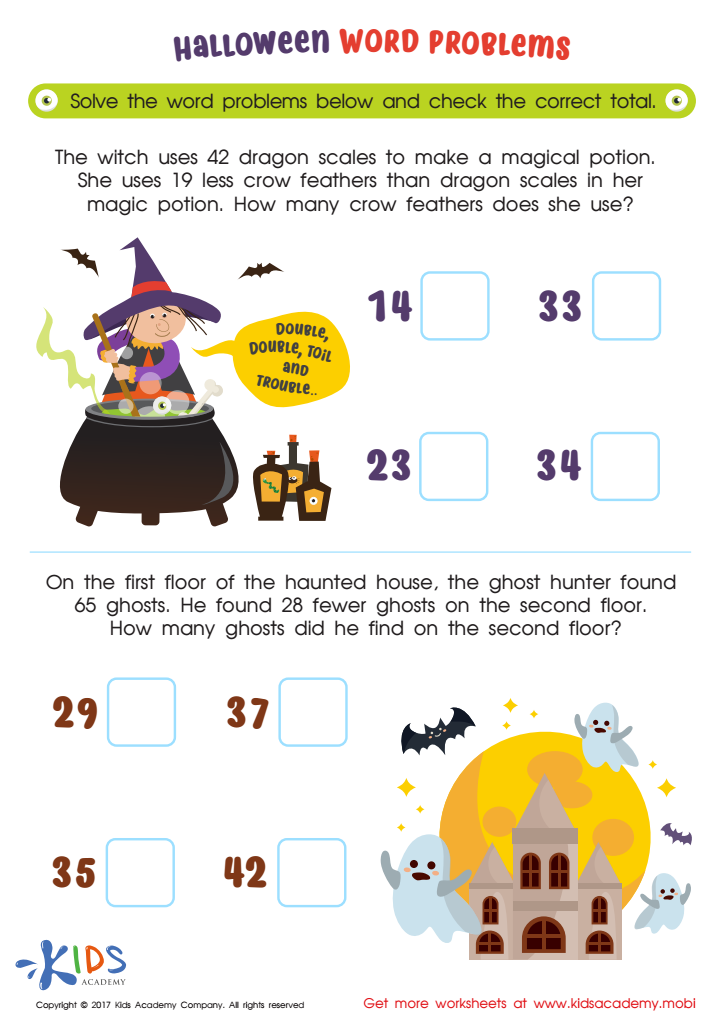
Halloween Word Problems Printable
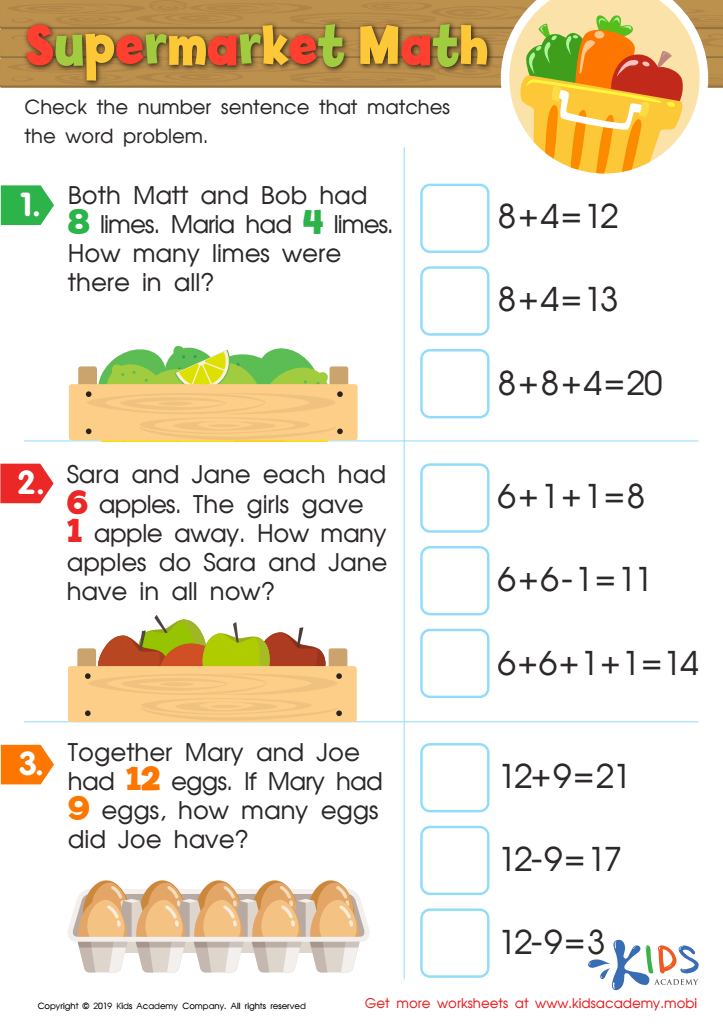
Supermarket Math Worksheet






Parents and teachers should emphasize real-life application for 5-year-olds because it enhances learning by making lessons relevant and engaging. Children at this age are naturally curious, eager to explore the world around them. By connecting lessons to everyday experiences, we help them understand concepts better and retain information longer.
Real-life application encourages critical thinking and problem-solving skills. For instance, when teaching basic math, counting apples during snack time puts numbers into context, turning abstract ideas into tangible experiences. These hands-on activities foster creativity and allow children to see the purpose behind their learning.
Additionally, applying lessons to real-life situations builds confidence. When children see that they can use what they’ve learned in practical ways, they feel empowered and motivated to explore further. This approach also promotes social skills, as group activities such as cooking or gardening encourage collaboration and communication.
Overall, engaging children in real-life applications not only cements academic concepts but also cultivates a love for learning, preparing them for future challenges. By focusing on practical contexts, both parents and teachers play a critical role in fostering well-rounded development, setting a strong foundation for lifelong learning.








