Rhyming skills development Normal Reading Worksheets for 5-Year-Olds
3 filtered results
-
From - To
Enhance your 5-year-old's reading journey with our engaging Rhyming Skills Development Normal Reading Worksheets! Designed specifically for young learners, these worksheets encourage phonemic awareness through playful activities that make learning enjoyable. Children will explore word patterns, identify rhymes, and develop their vocabulary, all while having fun. Our resources are thoughtfully crafted to cater to the learning needs of early readers, ensuring they build essential skills for future literacy. With colorful designs and interactive exercises, these worksheets create a dynamic learning environment. Download the worksheets today and help your child discover the joys of rhyming while reinforcing their reading foundation!
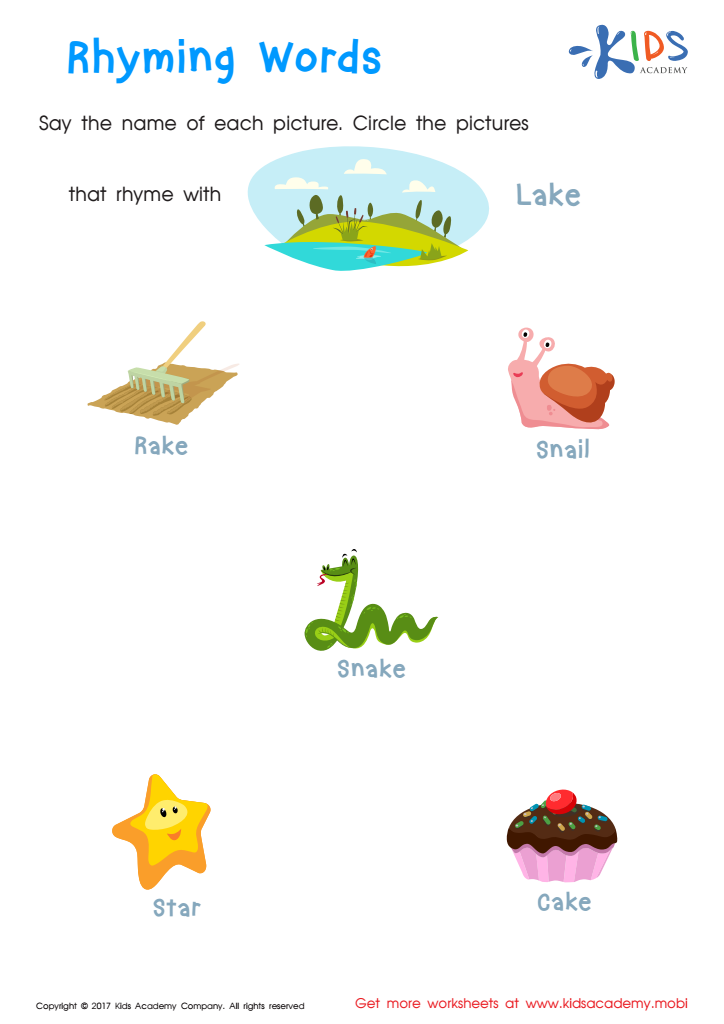
Rhyming Words Rhyming Worksheet
 Assign to My Students
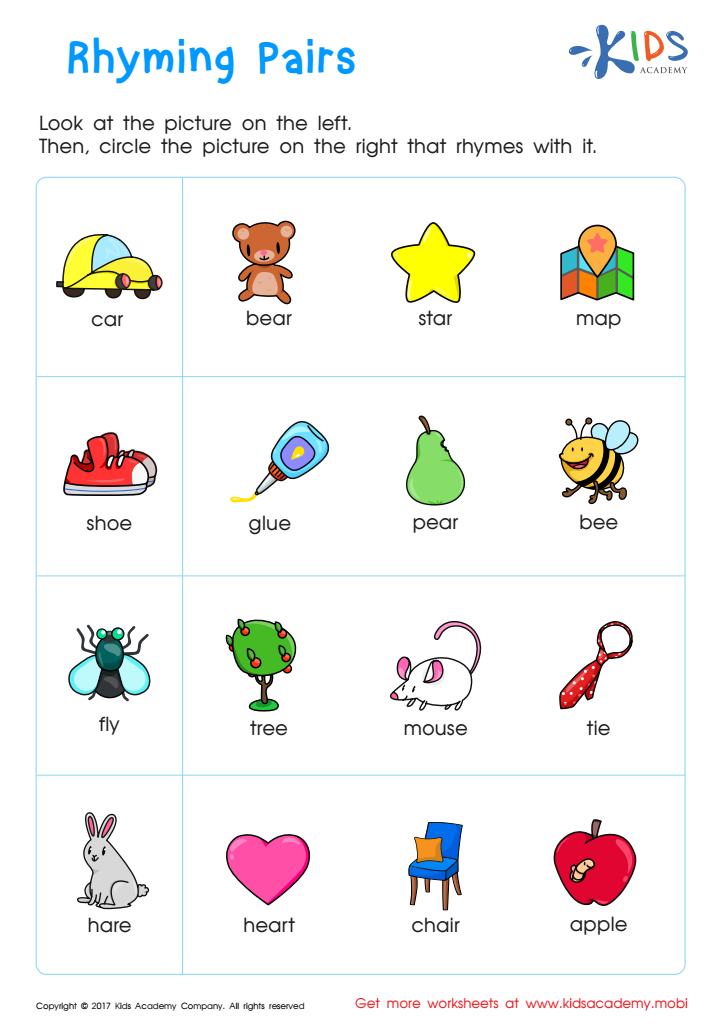
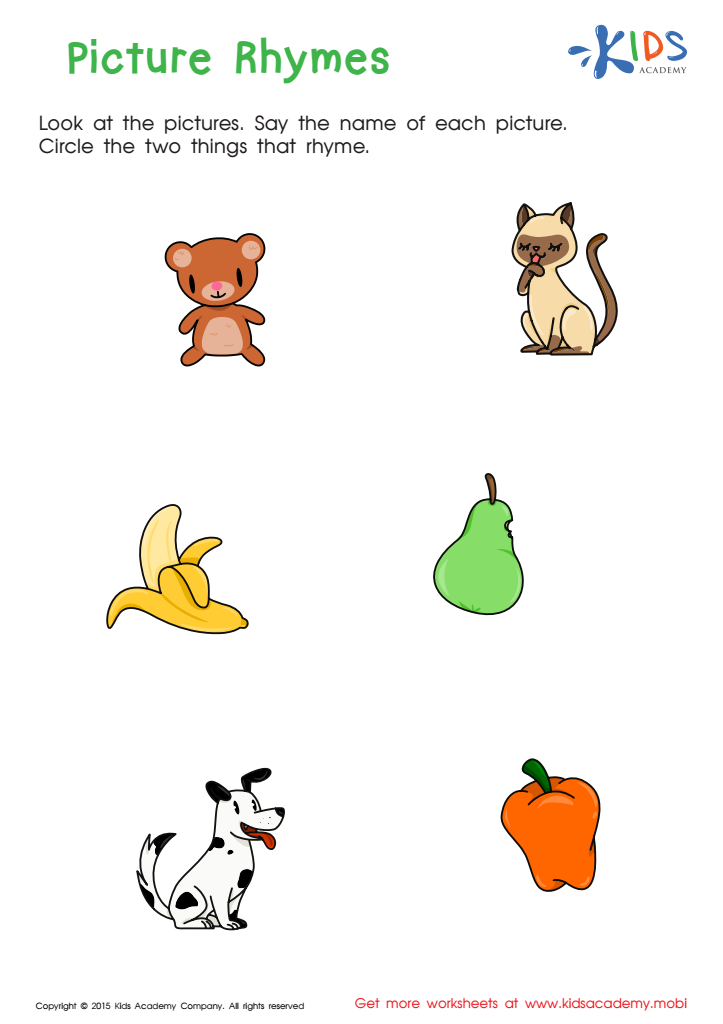
First Words: Picture Rhymes Worksheet







Rhyming skills are fundamental in the early literacy development of 5-year-olds, making it crucial for parents and teachers to pay attention to this aspect of learning. Rhyming enhances phonemic awareness, the ability to hear and manipulate sounds in words, which is essential for reading success. Children who can identify, generate, and manipulate rhymes show better skills in decoding and spelling, leading to improved reading abilities.
Moreover, rhyming activities foster vocabulary growth and enhance language skills. Through exposure to rhymes in songs, poems, and stories, children learn new words in a fun and engaging way, which helps them understand language patterns and structures. These skills create a strong foundation for future reading and writing.
Beyond academics, rhyming exercises bolster memory and listening skills. They encourage participation in shared reading experiences, promoting bonding and social interaction between parents, caregivers, and children. Recognizing that learning through play can inspire a lifelong love for reading can also enrich a child's cultural and creative expression.
In summary, nurturing rhyming skills in young learners not only prepares them for reading but also lays the groundwork for overall language proficiency and cognitive development, making it a priority for both parents and educators.








