
Story sequencing Normal Reading Worksheets for 5-Year-Olds
6 filtered results
Difficulty Level
Grade
Age
-
From - To
Subject
Activity
Standards
Enhance your 5-year-old's reading skills with our engaging Story Sequencing Normal Reading Worksheets! Designed to foster comprehension and critical thinking, these worksheets guide young learners in identifying and arranging story events in the correct order. With vibrant illustrations and age-appropriate narratives, children will easily connect with the material, making learning both fun and effective. Perfect for classroom or home use, these resources support developmental milestones in reading and literacy. Encourage your child's imagination while enhancing their ability to recall story details and sequences with our interactive worksheets. Unlock a world of storytelling and analysis today!
Favorites
With answer key
Interactive
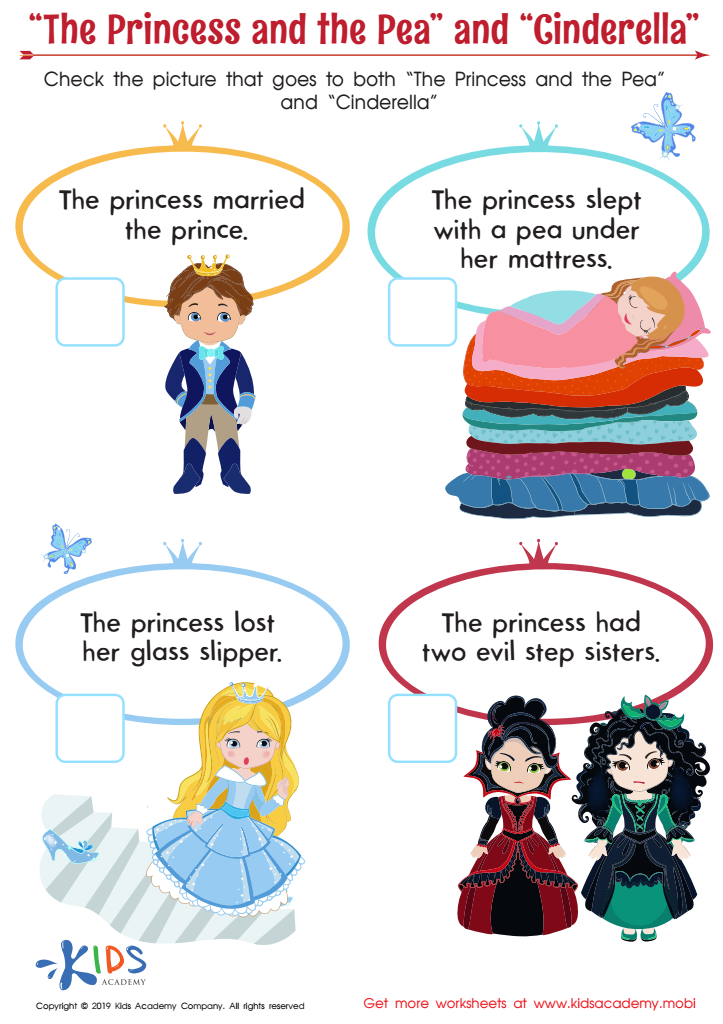
“The Princess and the Pea” and “Cinderella” Worksheet
Read "Cinderella" and "The Princess and the Pea" to your little ones. Ask them what their favorite parts were and what similarities they found in the princesses. This worksheet has four pictures of scenes from the stories. Ask your kids which picture goes with both tales.
 Assign to My Students
“The Princess and the Pea” and “Cinderella” Worksheet
Worksheet
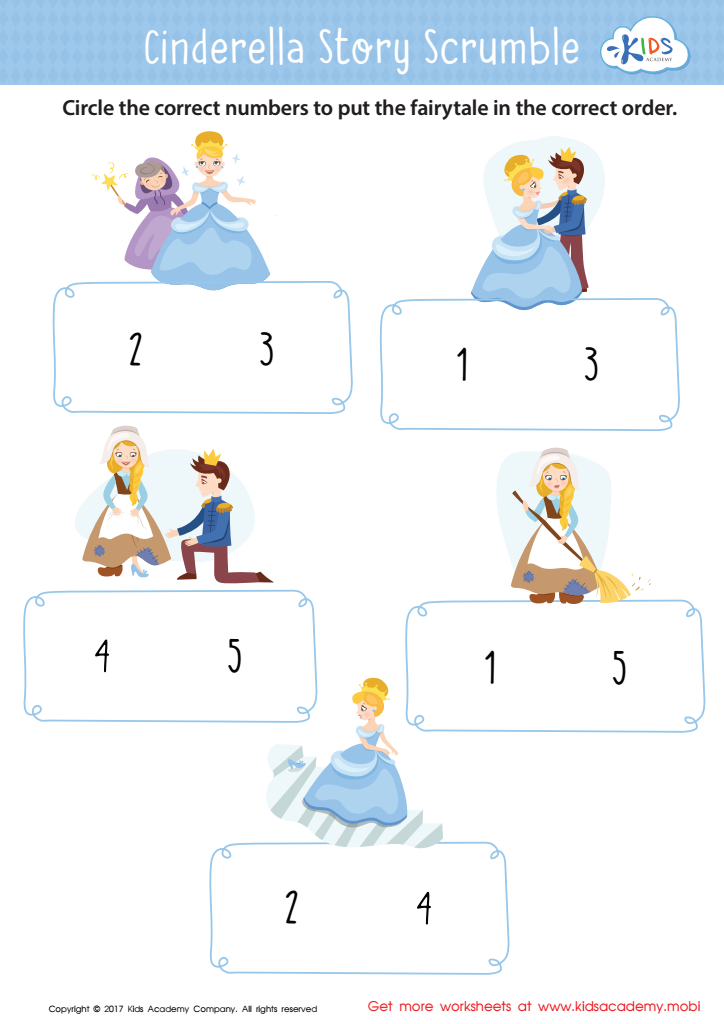
Cinderella Story Sequencing Worksheet
This worksheet helps strengthen reading comprehension skills by getting your child to remember key moments from the Cinderella story. They'll be asked to place pictures in the right order to tell the story.
Cinderella Story Sequencing Worksheet
Worksheet
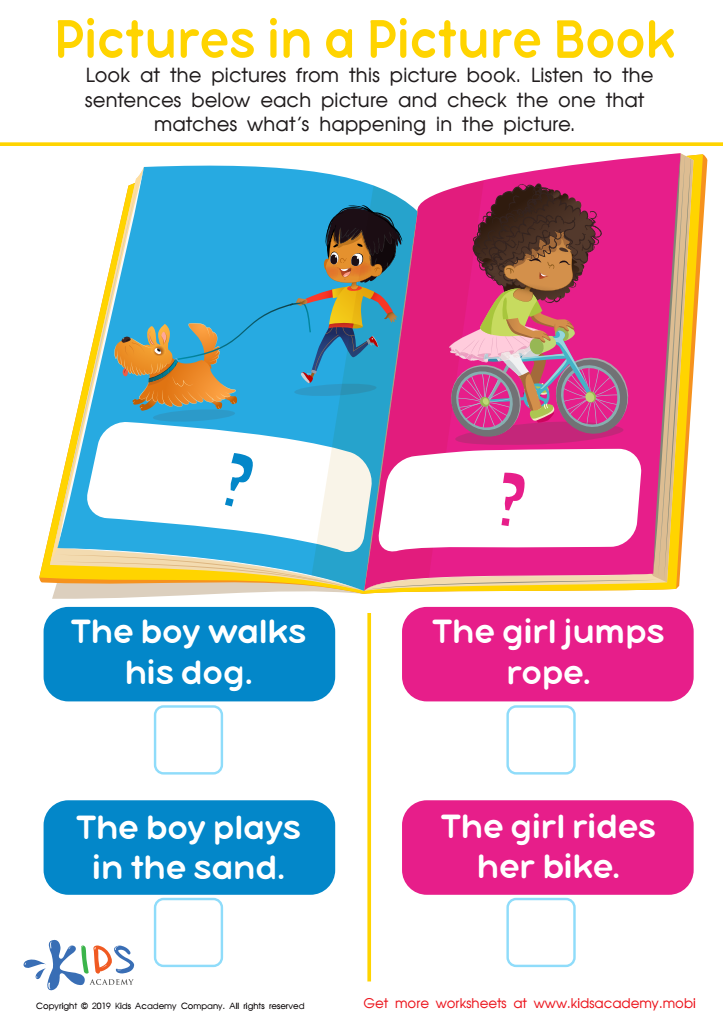
Picture in Books Worksheet
Picture books are popular with students - they're easier to read and understand because of the captions and illustrations. With preschoolers, look at the pictures in the book and read the sentences in the worksheet. Help them choose the one that matches the scene.
Picture in Books Worksheet
Worksheet
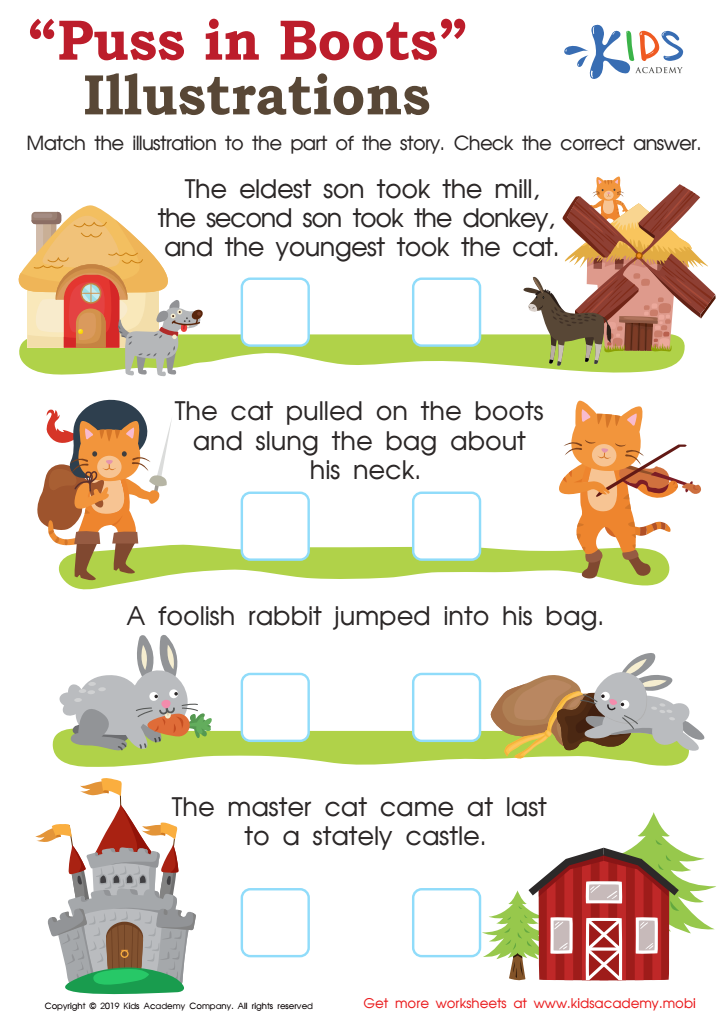
Puss in Boots Illustrations Worksheet
This Puss In Boots Illustrations worksheet is a great way to help kids learn about retelling stories. They'll match images to different parts of the story and check off the correct answer. As they recall events and put them in sequence they'll enjoy this fun and creative activity.
Puss in Boots Illustrations Worksheet
Worksheet
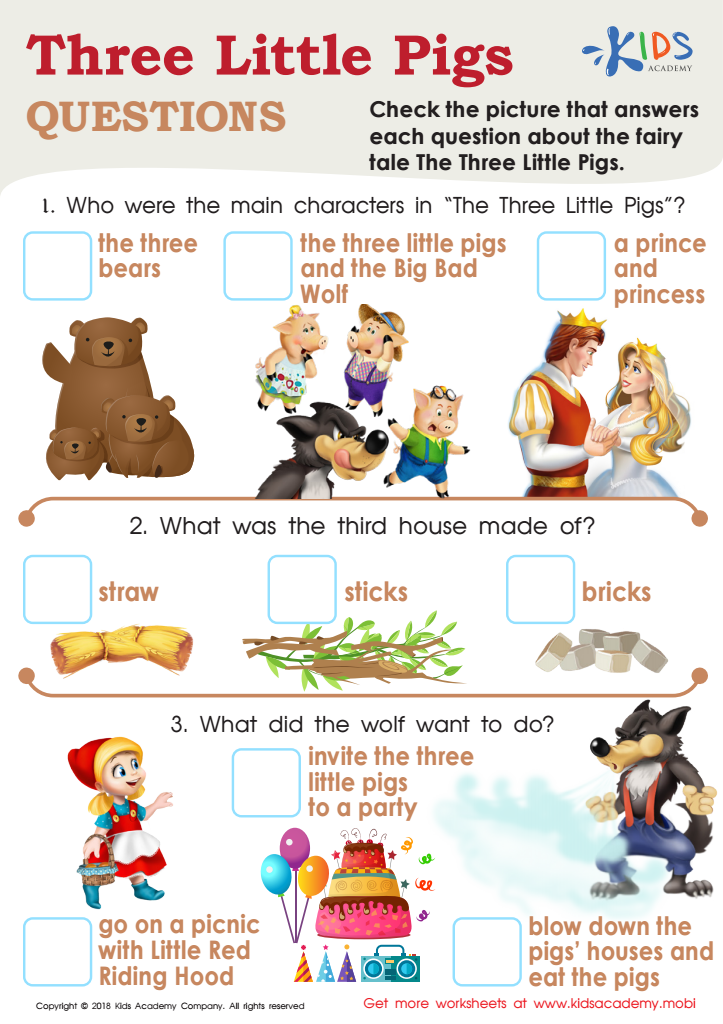
Three Little Pigs Questions Worksheet
Does your kid love bedtime stories? Test their classic fairytale knowledge with this worksheet! If they mention The Three Little Pigs, they're in luck - this pdf has them answering questions based off the classic fairytale. They'll check the picture that answers each question about the story. Is their fairytale knowledge up to scratch?
Three Little Pigs Questions Worksheet
Worksheet
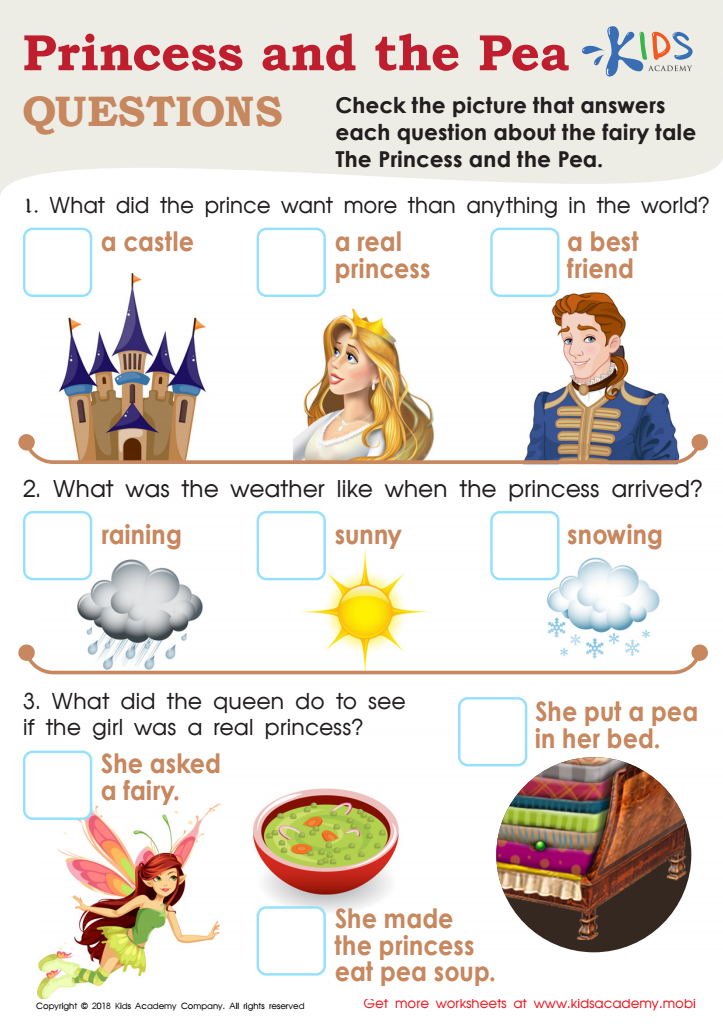
Princess and the Pea Questions Worksheet
Your kid knows The Princess and the Pea inside-out? Test their knowledge with this worksheet. Ask your little one to read the questions and match each one to the picture. It's a fun way to see just how much attention they've paid to their bedtime story.
Princess and the Pea Questions Worksheet
Worksheet
Join Kids Academy for Free
Who is primarily going to use this learning content?








Story sequencing is a vital skill for 5-year-olds, as it aids in their reading comprehension and cognitive development. Parents and teachers should care about this process for several reasons. First, it enhances comprehension; understanding the order of events helps children grasp the overall narrative and its meaning. By identifying what happens first, next, and last, children build a foundation for critical thinking and inference.
Second, story sequencing promotes vocabulary development. As children discuss and arrange the sequence of events, they encounter new words and phrases, boosting their language skills. Additionally, sequencing activities often incorporate visual aids, further solidifying their understanding through a multi-sensory approach.
Moreover, story sequencing encourages creativity and imagination. When children retell stories or create their own sequences, they learn to express thoughts clearly and organize ideas coherently, which are essential skills for effective communication.
Lastly, mastering story sequencing also lays the groundwork for later literacy practices, including summarizing and predicting outcomes, which are crucial for comprehension in more complex texts. By fostering these skills early on, parents and teachers empower children to become confident and proficient readers. Therefore, prioritizing story sequencing is essential for fostering a love of reading and learning.








