
Letter tracing skills Normal ABC Letters Worksheets for Ages 6-7
3 filtered results
Difficulty Level
Grade
Age
-
From - To
Subject
Activity
Standards
Enhance your child's handwriting with our "Letter Tracing Skills Normal ABC Letters Worksheets for Ages 6-7." These worksheets are designed to make learning fun and effective for young learners. Each sheet provides guided practice for mastering letter formation, ensuring kids build confidence in their writing abilities. Perfectly tailored for children ages 6-7, the worksheets focus on developing fine motor skills, hand-eye coordination, and recognition of each letter. With engaging activities and clear instructions, kids will enjoy tracing their way to better handwriting. Help them achieve writing success and boost their literacy skills today!
Favorites
With answer key
Interactive
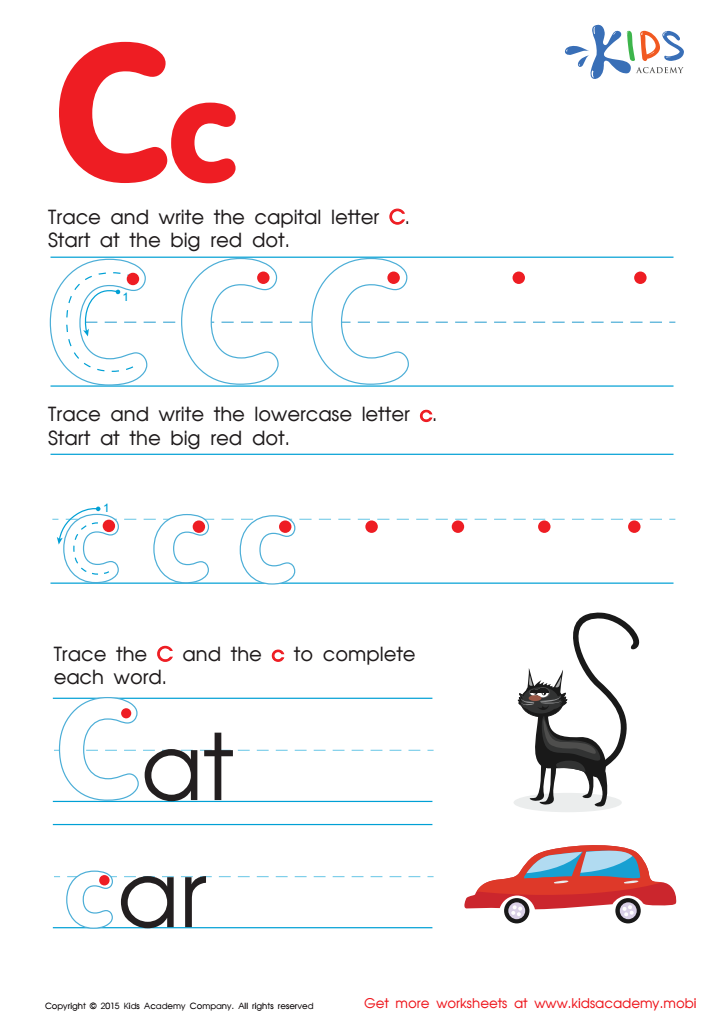
Letter C Tracing Page
Trace and write the letter 'C'! Put the pencil at the red dot then follow the lines – the capital letter first then the lowercase one. Cats love it and so will you! Get more free printables to practice tracing and writing.
Letter C Tracing Page
Worksheet








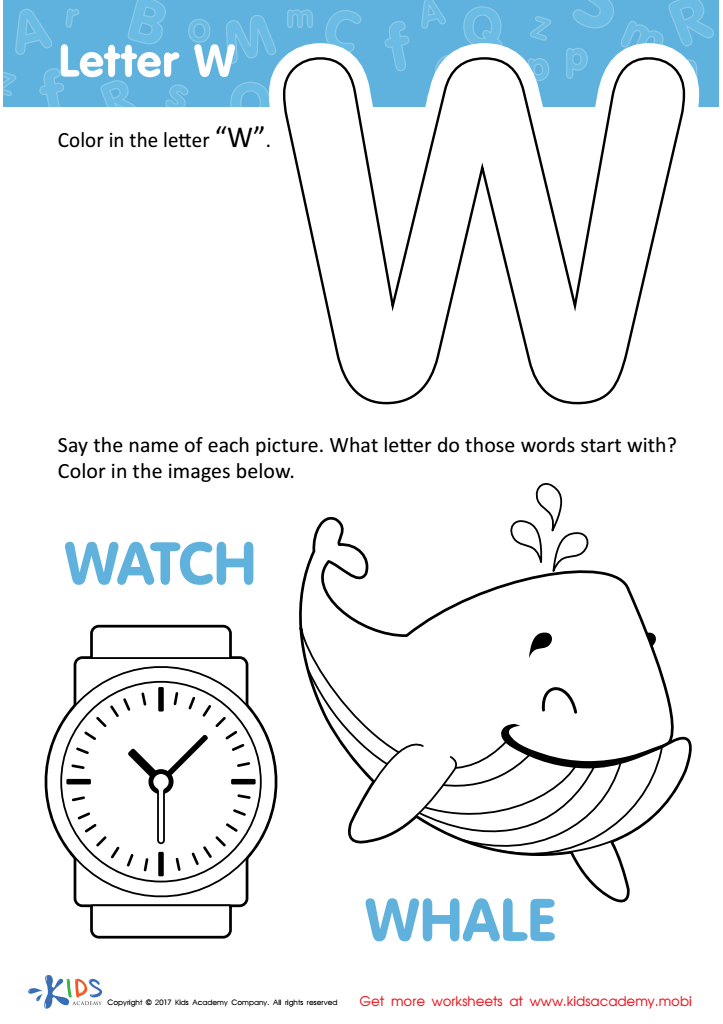
Letter W Coloring Sheet
Let your child have fun with this letter "W" coloring page! They can use their imagination to color the whale and discover the letter and its sound. Give them a helping hand to make it a whale of a time!
Download (PDF)
 Assign to My Students
Assign to My Students
Letter W Coloring Sheet
Worksheet
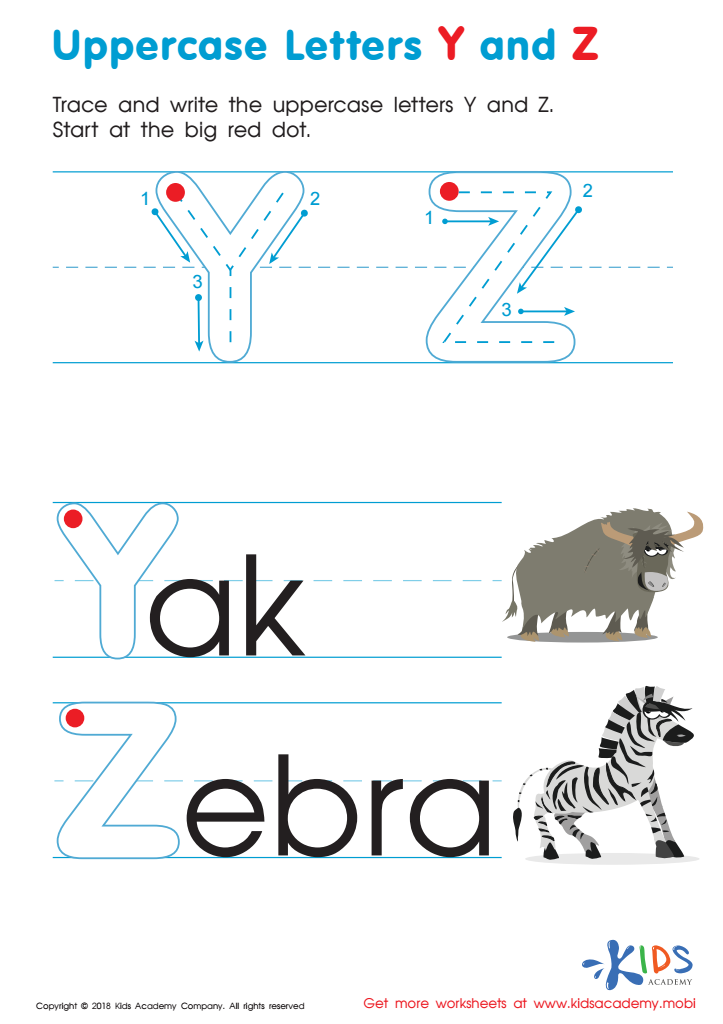
Uppercase Letters Y Z Worksheet
Help your child learn their ABCs with this fun tracing activity! They must trace and write Y and Z in uppercase form, starting from the red dot. Kids will love the fun images for extra engagement. Guiding their hand carefully will help them practice and perfect their writing skills.
Uppercase Letters Y Z Worksheet
Worksheet
Join Kids Academy for Free
Who is primarily going to use this learning content?








Letter tracing skills, particularly learning to trace normal ABC letters, are fundamental for children aged 6-7 as they serve as the building blocks for literacy. At this critical stage of development, honing these skills significantly benefits their cognitive, academic, and motor skill growth.
Firstly, letter tracing helps children understand the alphabetic system, an essential component of early education. It solidifies letter recognition and their corresponding sounds, facilitating smoother reading and writing progress. Children who practice trace letters repeatedly often find it easier to remember them.
Secondly, engaging in letter tracing enhances fine motor skills and hand-eye coordination. Learning to form letters requires precise hand movements, which strengthens the small muscles in the hands and fingers. This dexterity is not only vital for writing but also for other day-to-day skills like buttoning shirts, tying shoelaces, and using utensils.
Moreover, tracing activities can boost children’s confidence and self-expression. As they gain proficiency, they take pride in their ability to communicate through writing, fostering a positive attitude towards learning.
Lastly, letter tracing forms the foundation for school preparedness. Early mastery predicts greater success in future academic pursuits, as reading and writing are fundamental across all subjects. By encouraging letter tracing, parents and teachers empower children with crucial skills for lifelong learning.







