Phonics recognition Normal Consonants Worksheets for Ages 6-7
3 filtered results
Difficulty Level
Grade
Age
-
From - To
Subject
Activity
Standards
Discover our engaging Phonics Recognition Normal Consonants Worksheets designed specifically for children ages 6-7! These worksheets are perfect for reinforcing essential phonetic skills, helping young learners identify and master normal consonant sounds. Each activity is tailored to spark curiosity and promote phonemic awareness through fun, interactive tasks. Children will enhance their reading and writing abilities while enjoying colorful illustrations and exciting exercises. Ideal for both classroom and home use, our worksheets provide the perfect balance of education and entertainment. Equip your children with the foundational skills they need to succeed in literacy as they explore the world of consonants with confidence!
Favorites
With answer key
Interactive
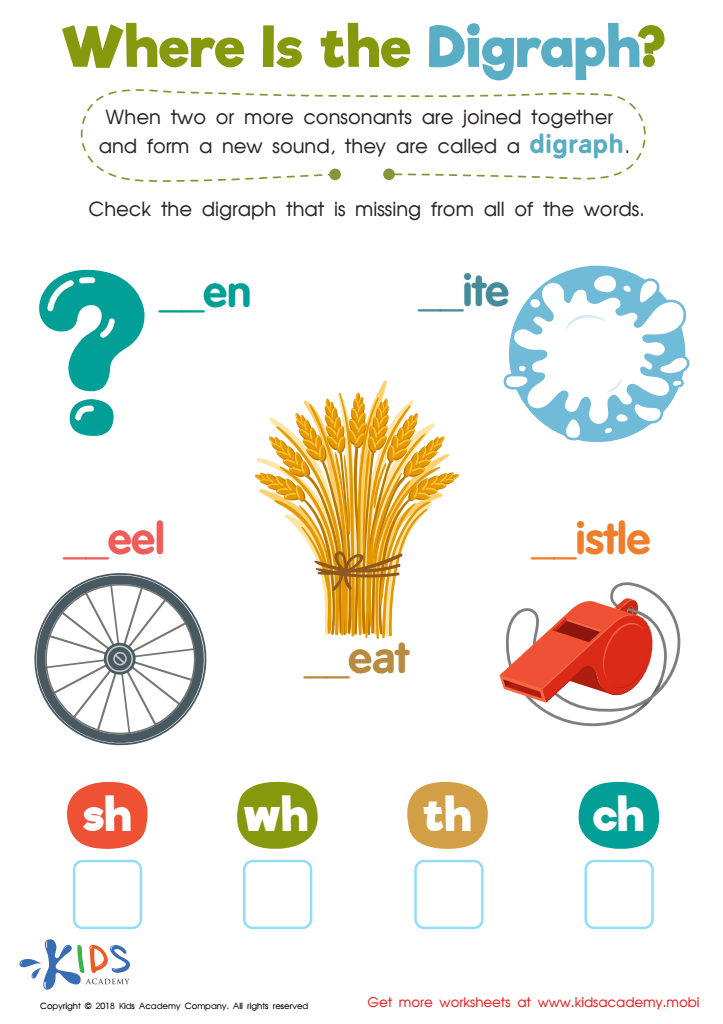
Where Is the Digraph? Worksheet
Teach your child about digraphs - two or more consonants that form one sound, like /wh/, /sh/, and /ch/. Show them words with these sounds and use this worksheet to help. Ask them which digraph is missing from the words and point out the pictures. 80 words.
 Assign to My Students
Where Is the Digraph? Worksheet
Worksheet
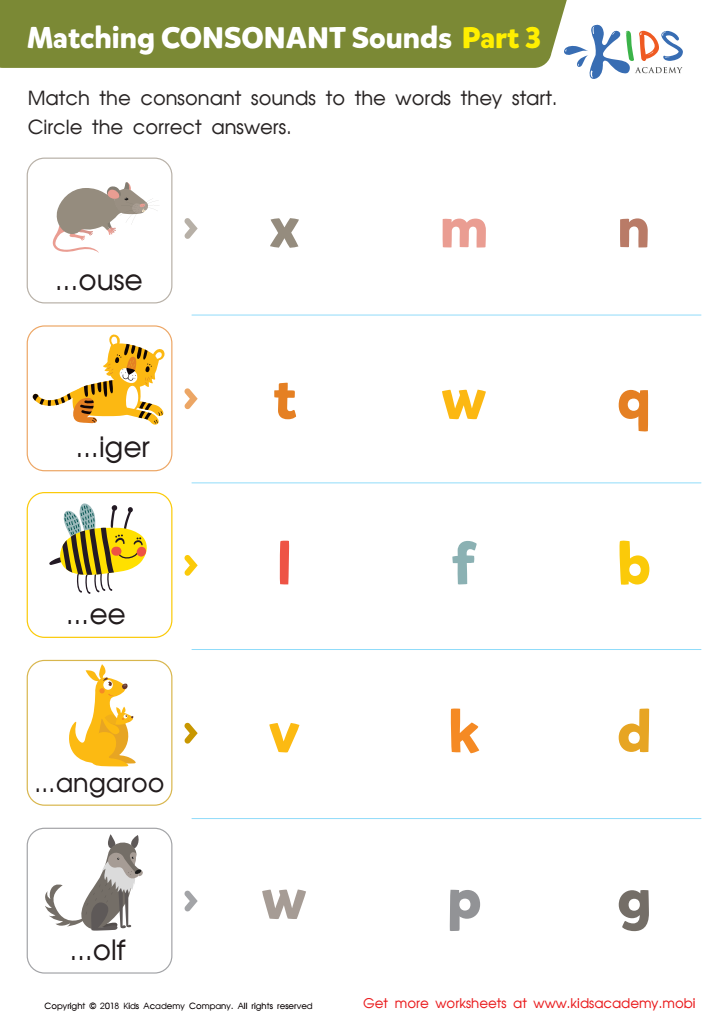
Matching Consonant Sounds: Part 3 Worksheet
Help your early learner match consonant sounds to words with this fun worksheet! Have them name the pictures and try out each letter in the corresponding column. When they hear the sound that matches, circle it. Have them write the letter in the box to complete the word. Work their way down the page until the critters' names all match with consonants!
Matching Consonant Sounds: Part 3 Worksheet
Worksheet
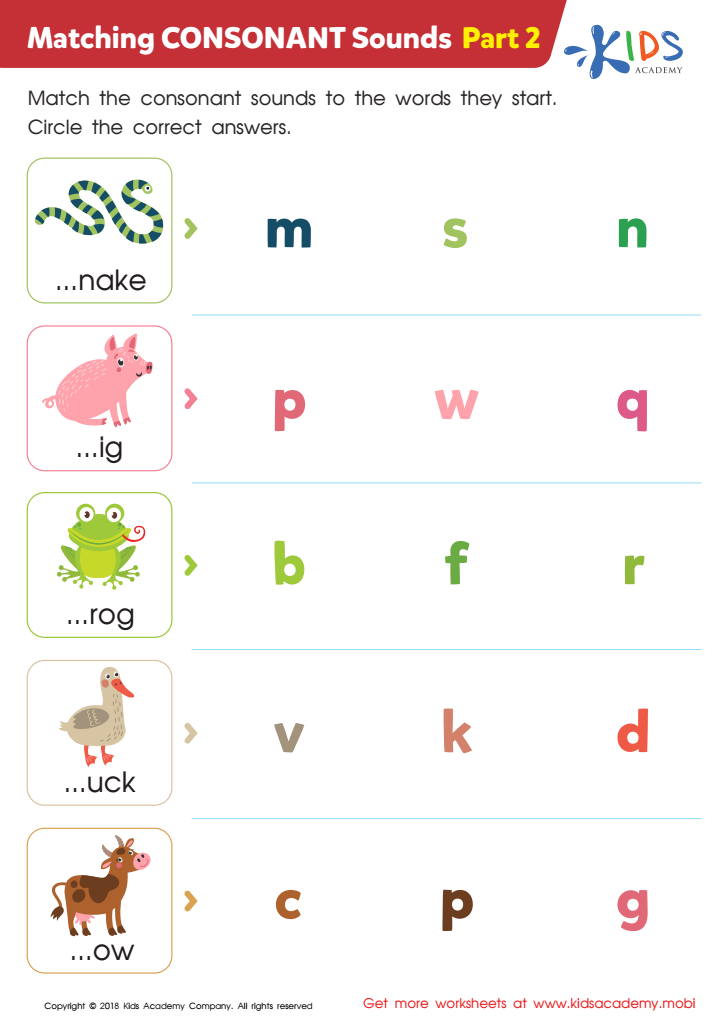
Matching Consonant Sounds: Part 2 Worksheet
Look at the picture, say the word and match the consonant sound with the letter. Coach your child to name the animal and complete the word. For extra challenge, write the missing letter in the box! This PDF worksheet helps kids learn to read words with familiar animal pictures.
Matching Consonant Sounds: Part 2 Worksheet
Worksheet
Join Kids Academy for Free
Who is primarily going to use this learning content?



Phonics recognition of normal consonants is crucial for children aged 6-7 as it lays the foundation for literacy development. At this stage, children are transitioning from learning letter names to understanding their sounds, which are integral for decoding words. Mastery of consonant sounds allows students to blend phonemes, enabling them to sound out words when reading, which builds confidence and fluency.
Parents and teachers should prioritize phonics recognition because a strong grasp of consonants contributes to overall reading skills, which are essential not only for academic success but also for a child’s self-esteem. It aids vocabulary expansion and comprehension, allowing children to better understand materials aligned with their learning levels. That understanding is particularly essential as they begin to engage with more complex texts.
Moreover, early phonics skills influence writing development. Children who can connect sounds with their corresponding letters are more likely to express their ideas fluently in writing. By fostering a phonics-rich environment through supportive practices, parents and teachers can facilitate lifelong literacy skills and a love for reading, which is fundamental for future learning and personal growth. Thus, prioritizing phonics recognition in the formative years supports holistic educational development.