
Understanding vowel sounds Normal Alphabet Worksheets for Ages 6-7
4 filtered results
Difficulty Level
Grade
Age
-
From - To
Subject
Activity
Standards
Explore our engaging "Understanding Vowel Sounds" worksheets designed specifically for children aged 6-7. These interactive resources are tailored to help young learners distinguish between short and long vowel sounds, enhancing their phonemic awareness and literacy skills. Each worksheet features fun, age-appropriate activities that encourage creativity while reinforcing essential reading concepts. With vibrant illustrations and guided exercises, children will enjoy practicing their understanding of vowels in an enjoyable manner. Ideal for classroom use or at-home learning, these worksheets foster an essential foundation for future reading success. Dive into the world of vowels and watch your child flourish in their language proficiency!
Favorites
With answer key
Interactive
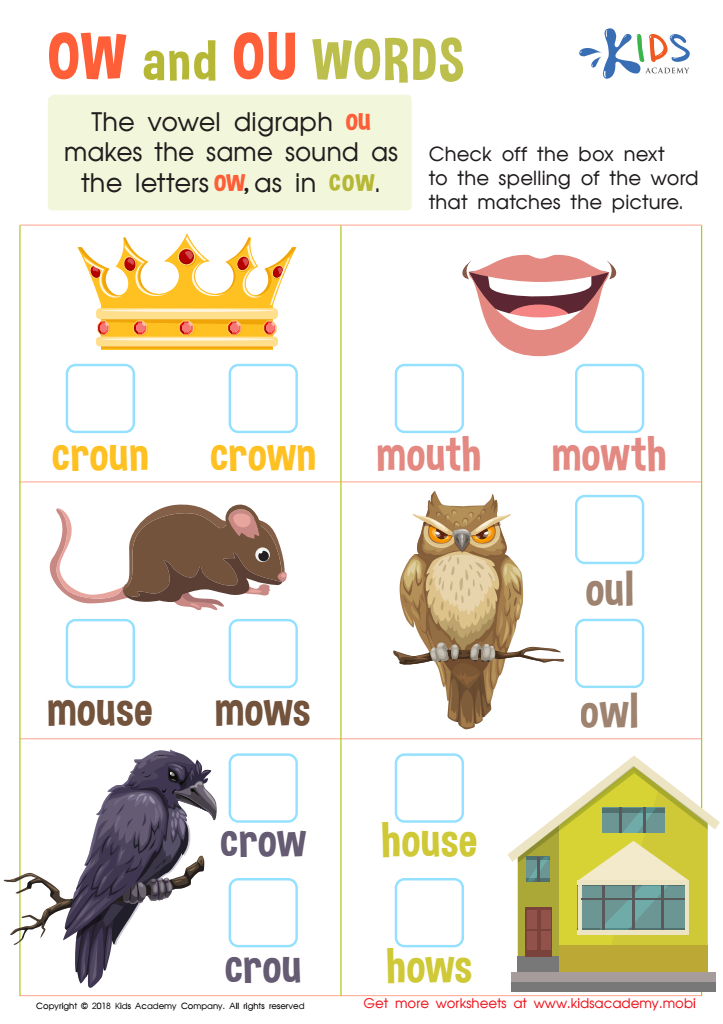
Reading: OW and OU Words Worksheet
Help your kids learn phonetics! Explain the different sounds and long/short variations. Emphasize that some vowel sounds are the same, e.g. ou = ow in cow. For practice, have them read aloud the words in the worksheet and check the box next to the spelling that matches the picture.
Reading: OW and OU Words Worksheet
Worksheet
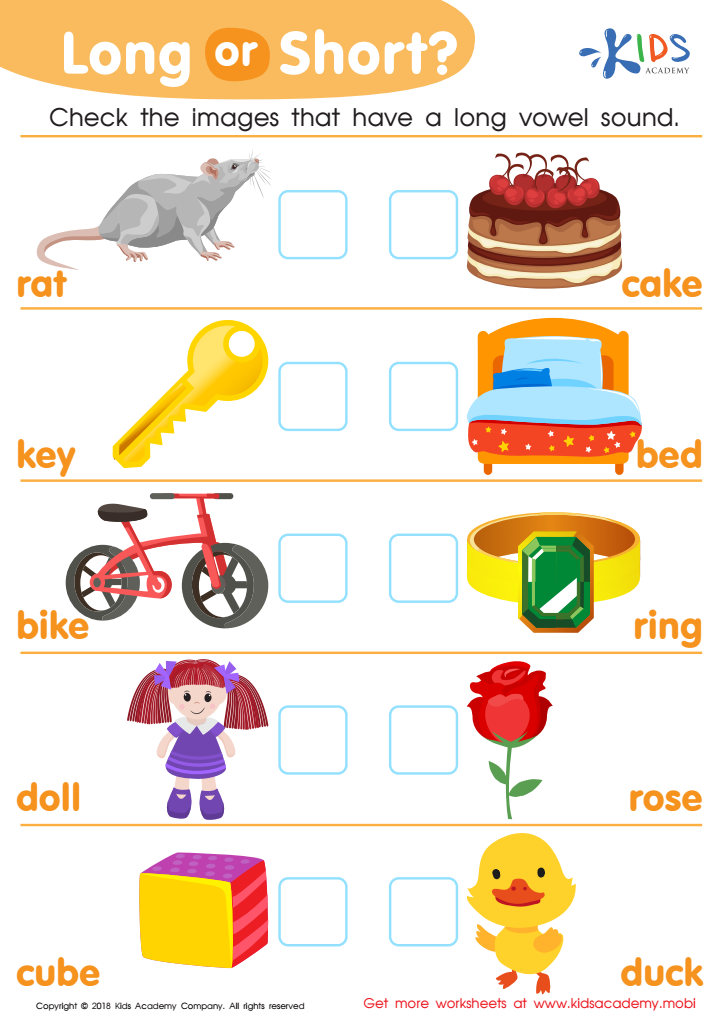
Long or Short Reading Worksheet
Every new reader needs to learn to recognize long and short vowel sounds. This phonics worksheet uses pictures of high-frequency words to help. Kids read the words and then check off images with long vowel sounds. It helps them learn to decode words and improves fine motor skills.
Long or Short Reading Worksheet
Worksheet
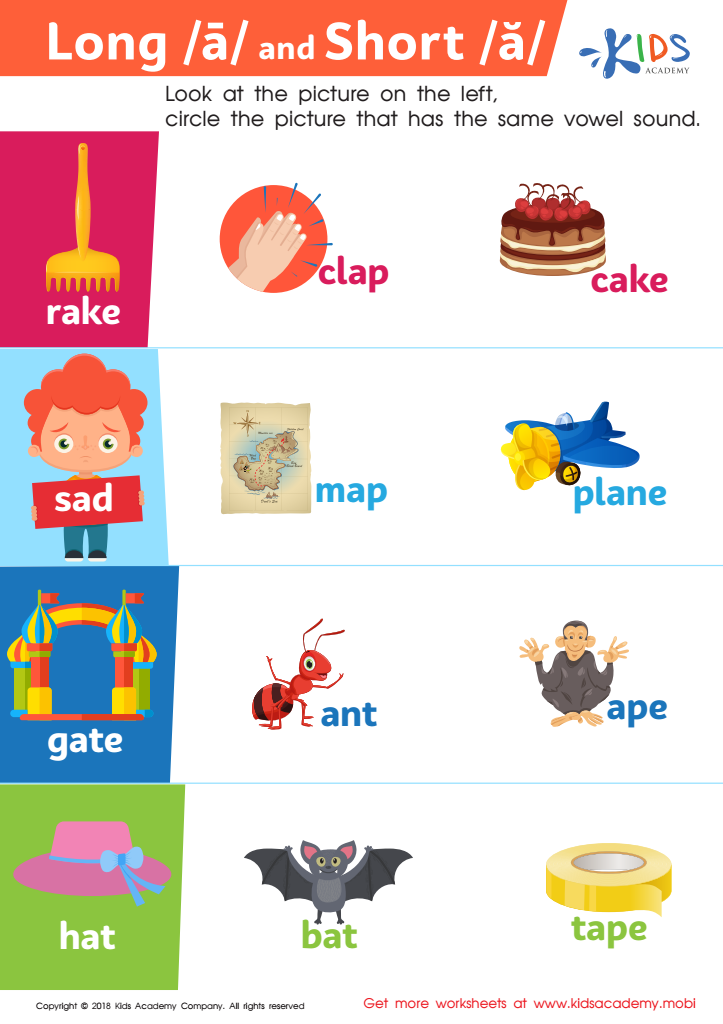
Reading: Long a and Short a Worksheet
This printable helps students practice distinguishing the long and short A sound. Pictures provide clues to read each word and students identify if it has a short or long sound. By completing this worksheet, children gain mastery of the phonics skill.
Reading: Long a and Short a Worksheet
Worksheet
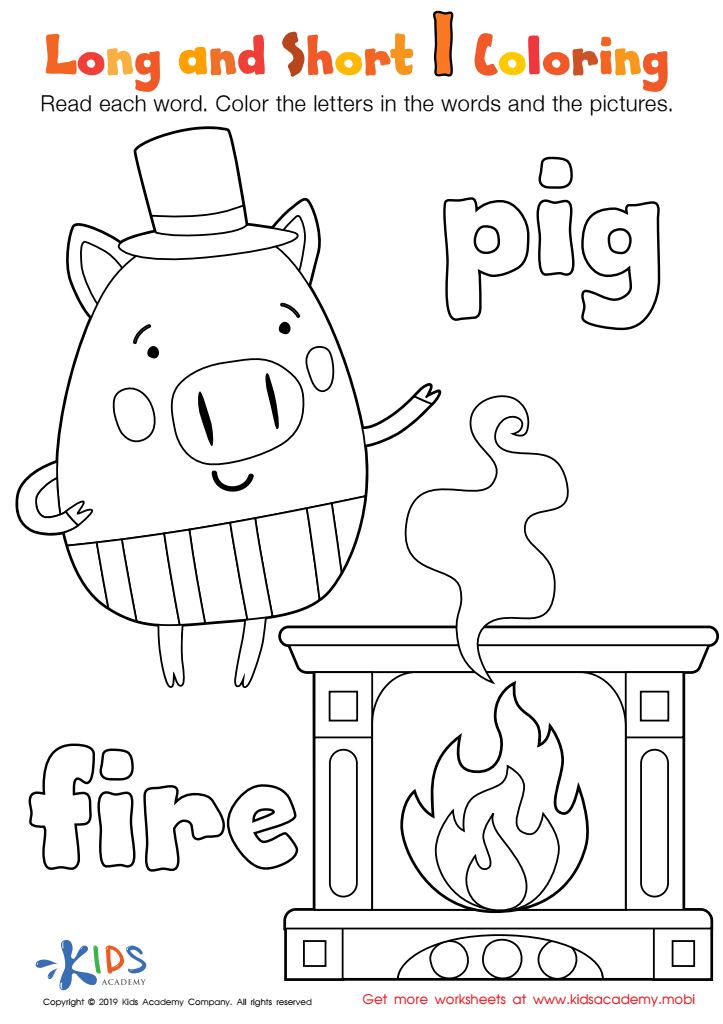
Long and Short I Worksheet
Print the worksheet and have the students read "pig" and "fire". Check for understanding the difference between long and short vowels. Color in words and pictures to make learning phonics fun! This exercise is perfect for introducing the topic to your students.
Download (PDF)
 Assign to My Students
Assign to My Students
Long and Short I Worksheet
Worksheet
Join Kids Academy for Free
Who is primarily going to use this learning content?







Understanding vowel sounds is crucial for children aged 6-7 as it lays the foundation for their reading and writing skills. At this stage, children are beginning to decode words and develop phonemic awareness, making it essential for them to differentiate between short and long vowel sounds. Mastery of these sounds influences their ability to blend phonemes, which is key to reading fluency.
For parents and teachers, ensuring children grasp vowel sounds enhances their overall literacy development. It enables them to tackle new words more independently, fostering a sense of accomplishment and boosting their confidence. When children can easily identify and articulate vowel sounds, they are better equipped to engage with phonics exercises, word recognition activities, and spelling.
Moreover, understanding vowel sounds supports language comprehension, vital for college and career readiness. By focusing on this skill, adults support children's critical thinking and analytical abilities, encouraging them to become lifelong learners.
Ultimately, the effort invested in teaching vowel sounds during these formative years creates a solid literacy foundation, equipping children with the necessary tools for future academic success and effective communication in an increasingly literate world. This highlights the importance of adult involvement in children's educational journey.







