Uppercase identification Normal Alphabet Worksheets for Ages 6-7
5 filtered results
-
From - To
Boost your child's literacy skills with our Uppercase Identification Normal Alphabet Worksheets suitable for ages 6-7. Each engaging worksheet is designed to help young learners recognize, identify, and differentiate between uppercase letters within the standard alphabet. Through fun activities, children will enhance their letter recognition abilities, setting a solid foundation for future reading and writing proficiencies. Perfect for classroom use or extra practice at home, our worksheets make learning interactive and enjoyable. Download now from Kids Academy to give your child the educational advantage they deserve!
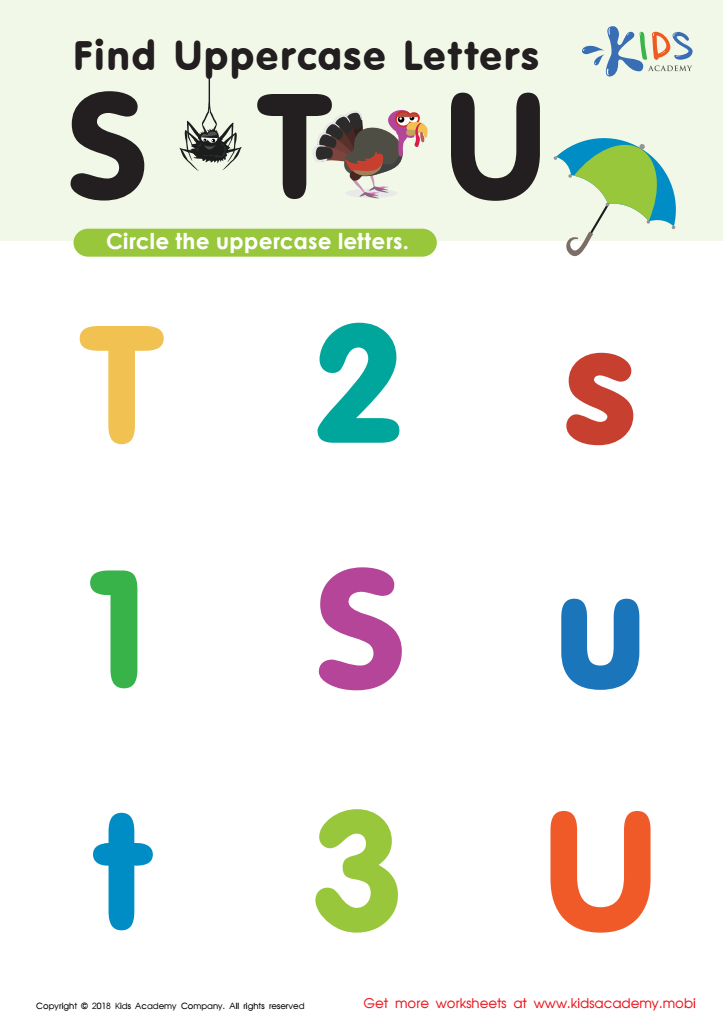
Find Uppercase Letters Worksheet
 Assign to My Students
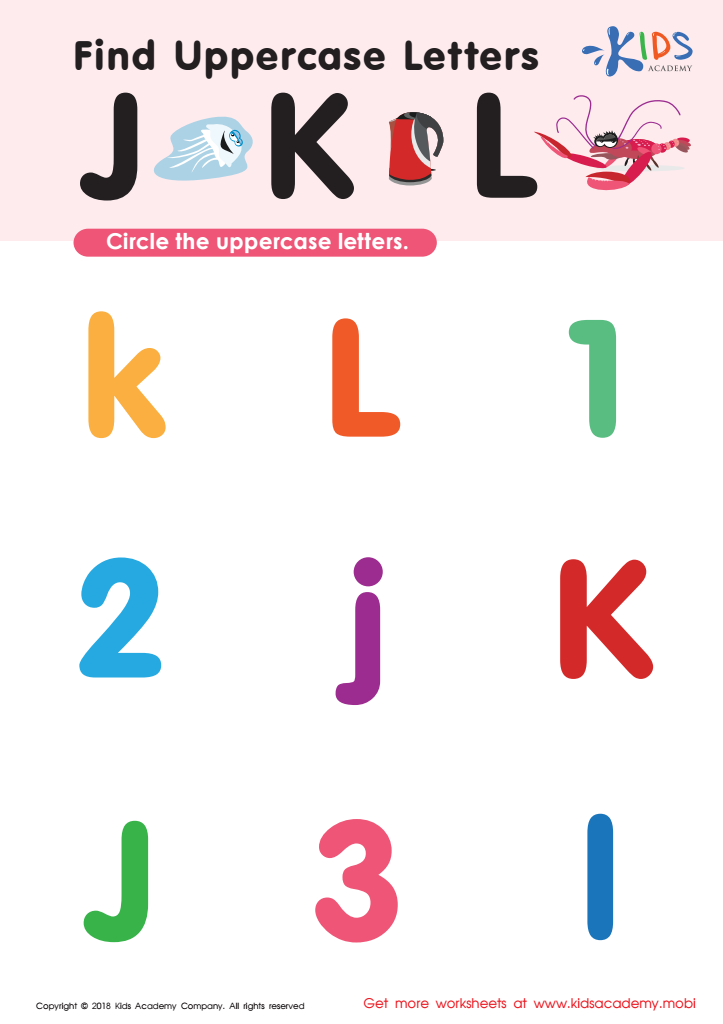
Find Uppercase Letters J, K, and L Worksheet
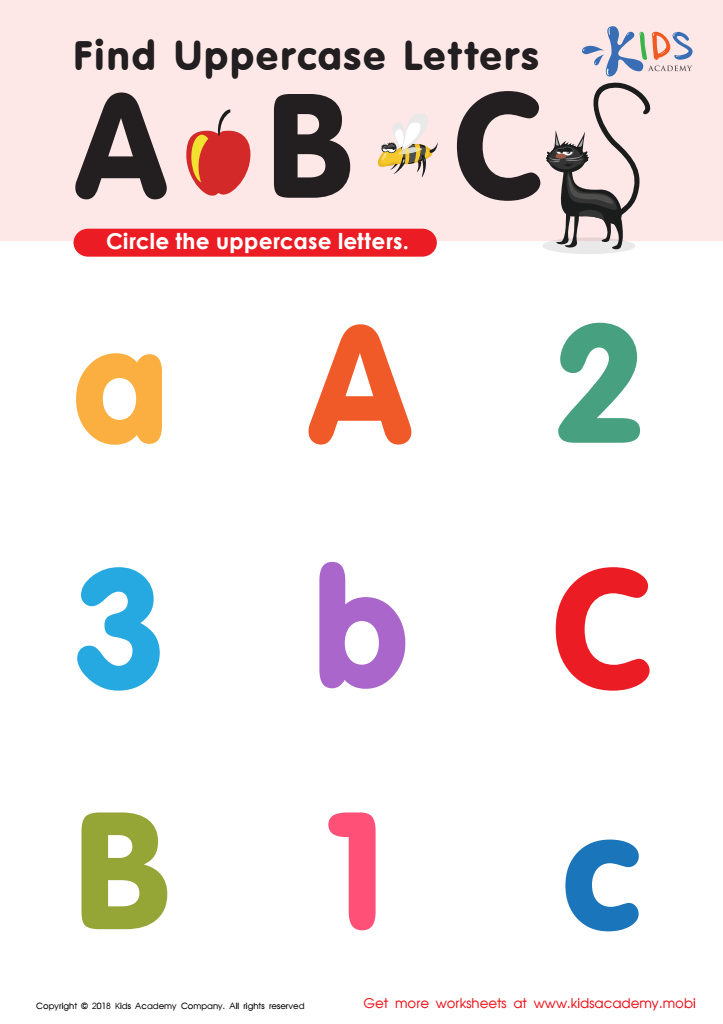
Find Uppercase Letters A, B, and C Worksheet
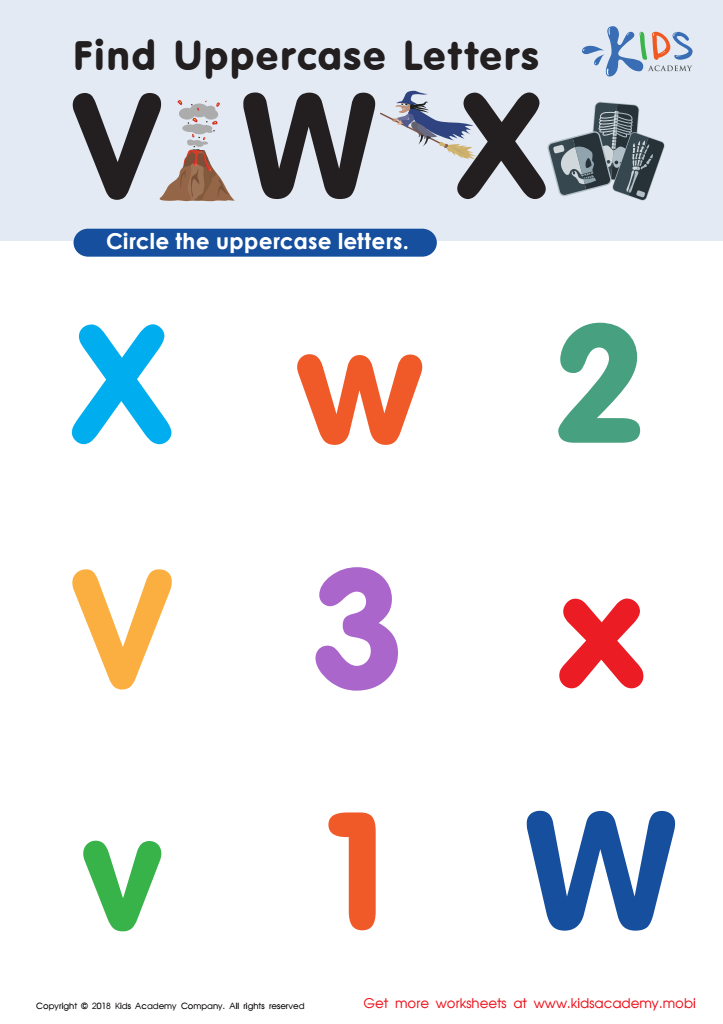
Find Uppercase Letters V, W, X Worksheet
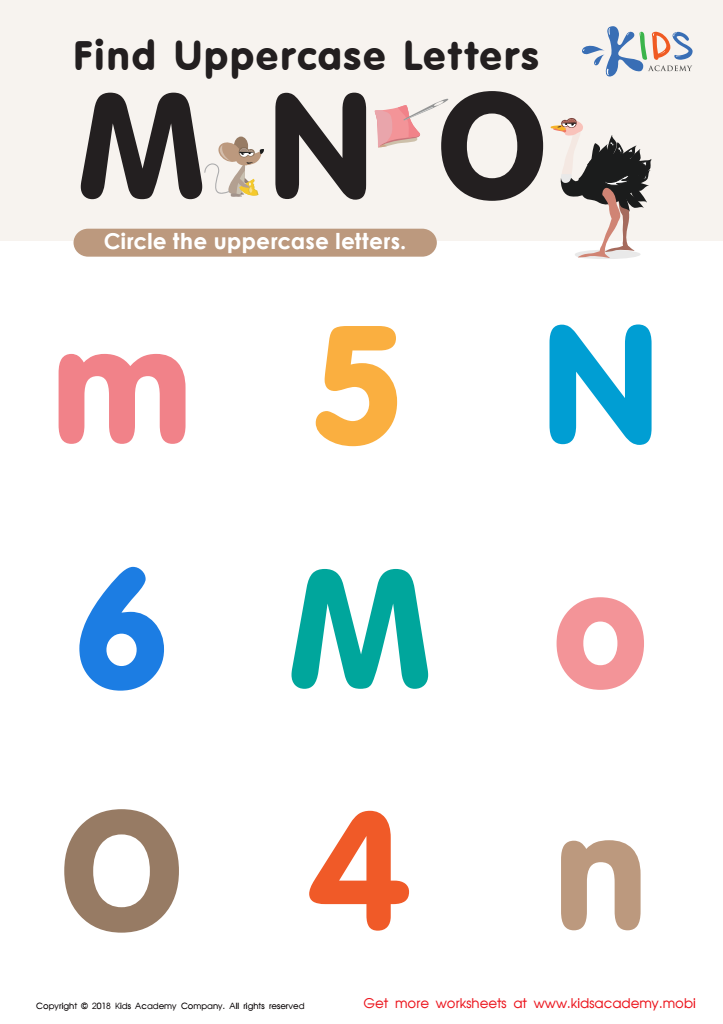
Find Uppercase Letters M, N, and O Worksheet








Parents and teachers should prioritize uppercase identification in the normal alphabet for children aged 6-7 because this skill is foundational for literacy development. Around this age, children are in the crucial stage of learning to read and write. Recognizing uppercase letters boosts their ability to comprehend written text, enhancing their overall reading fluency and confidence. Uppercase letters often appear at the beginning of sentences and in proper nouns, which are quite common in early reading materials. Familiarity with uppercase letters, therefore, supports children in understanding sentence structure and recognizing names, making reading simpler and more engaging.
Moreover, uppercase letter identification aids in alphabetic sequencing and phonographic awareness, which are vital components of early literacy. When children can easily identify and distinguish uppercase letters, they are better situated to grasp the corresponding lowercase letters and sounds, leading to improved writing competence. Early mastery of letter identification also contributes to early spelling and vocabulary skills, as many sight words emphasize the use of both letter cases.
The foundational literacy skills developed from uppercase letter recognition are stepping stones for more complex literacy tasks. Therefore, parents and teachers fostering this knowledge equips children with essential tools for academic success and lifelong learning.







