Visual discrimination skills Normal Alphabet Worksheets for Ages 6-7
5 filtered results
-
From - To
Enhance your child's reading readiness with our Visual Discrimination Skills Normal Alphabet Worksheets for Ages 6-7. Crafted by education experts, these worksheets assist young learners in recognizing and distinguishing between visually similar letters. They build crucial reading and writing skills by boosting attention to detail and improving letter identification. Engaging activities ensure learning is interactive and fun, promoting confidence in young readers. Perfect for at-home practice or classroom use, these resources aim to bridge the gap between recognizing the alphabet and mastering reading. Give your child a head start with effective and enjoyable learning tools!
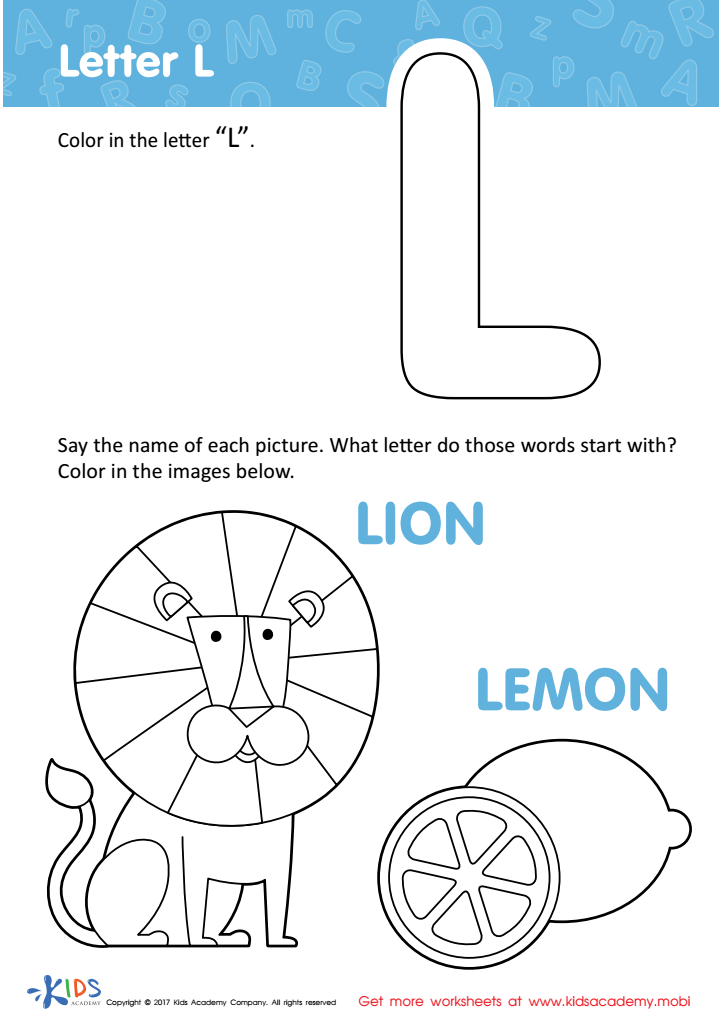
Letter L Coloring Sheet
 Assign to My Students
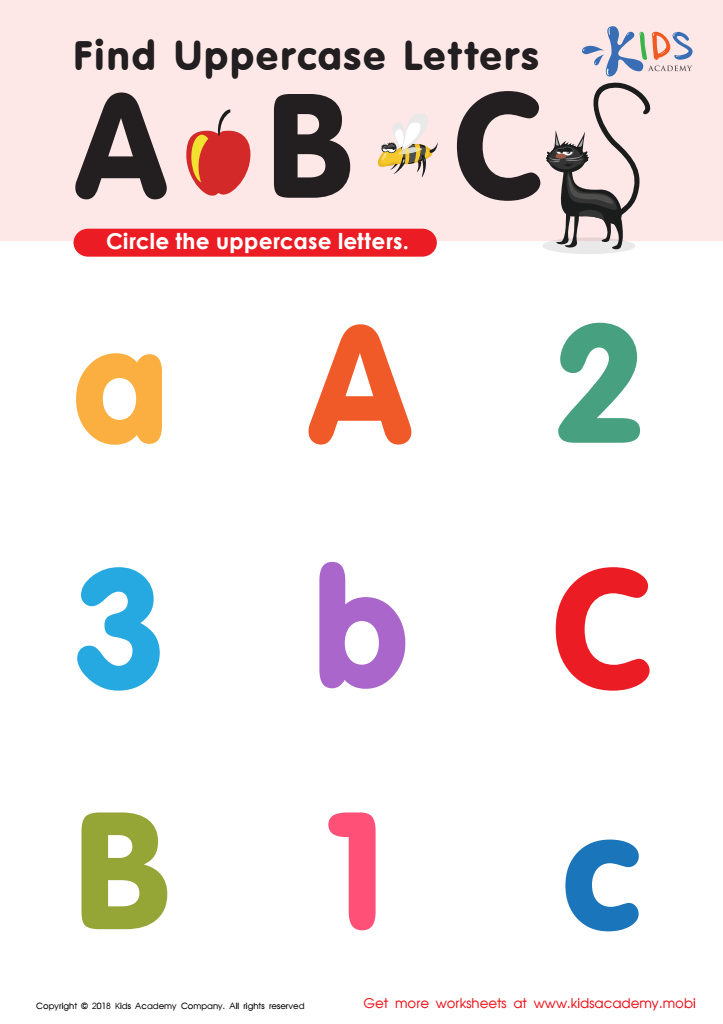
Find Uppercase Letters A, B, and C Worksheet
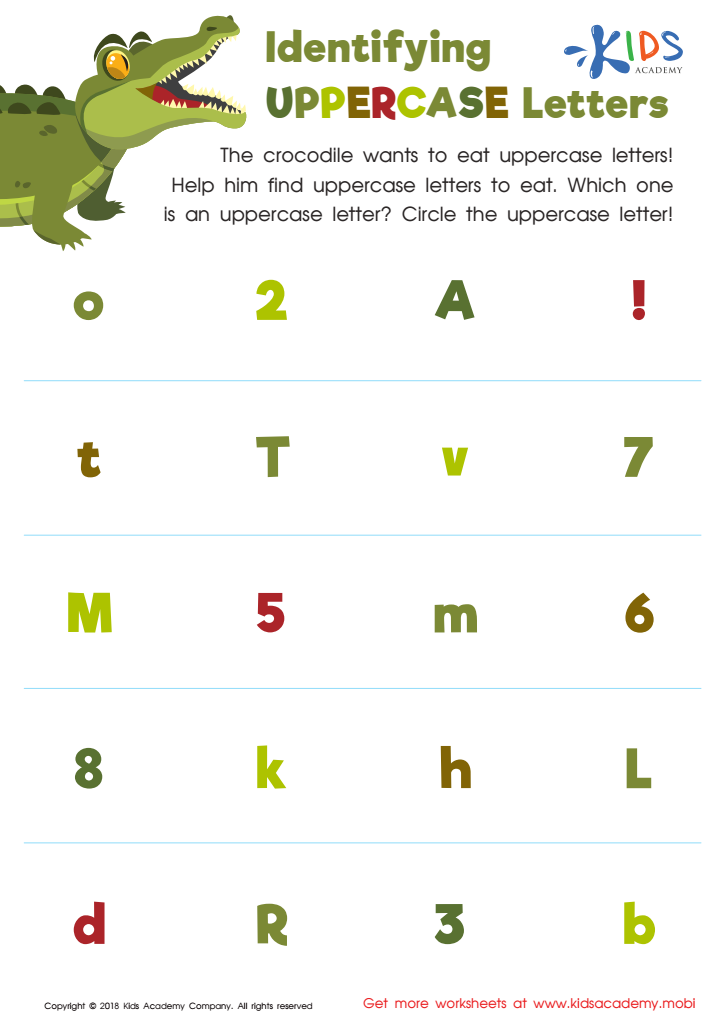
Identifying Uppercase Letters Worksheet
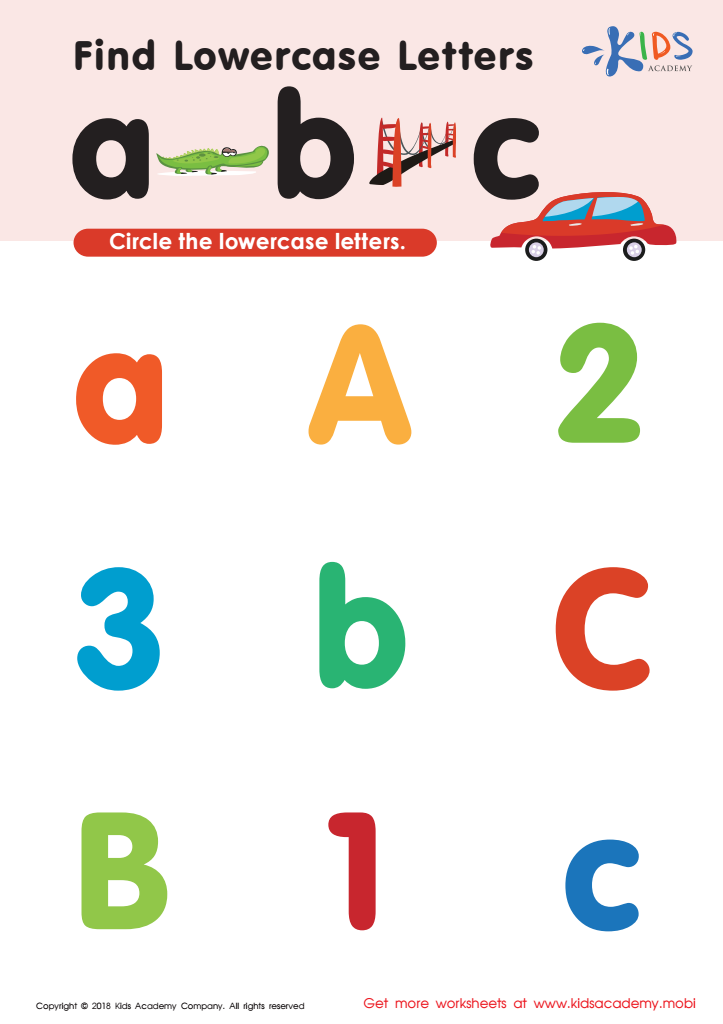
Find lowercase letters a b c Worksheet
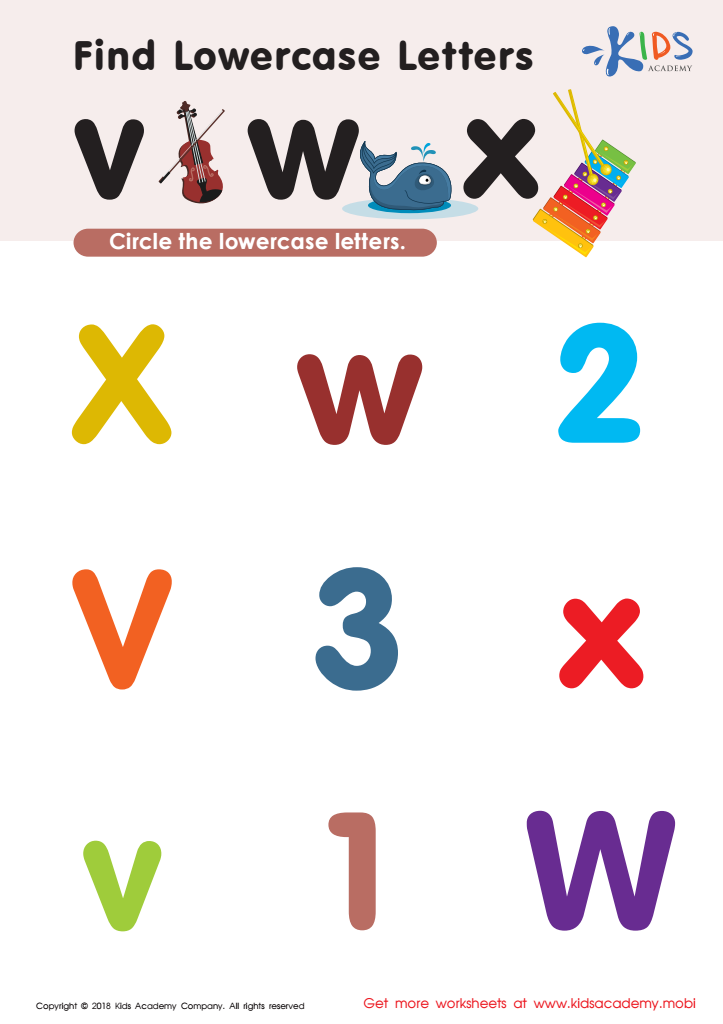
Find Lowercase Letters v w x Worksheet






Visual discrimination skills refer to the ability to notice and compare the features of items such as their shapes, sizes, colors, and positions. At ages 6-7, children are typically in the early elementary school years where foundational skills for reading, writing, and math are developed. Visual discrimination plays a critical role in their academic success and overall cognitive development.
Parents and teachers should care about visual discrimination skills because they directly impact a child's reading abilities. Being able to distinguish between different letters, such as 'b' and 'd' or 'p' and 'q', is essential for recognizing words and comprehending text accurately. In writing, these skills help in forming letters correctly and spacing words properly on a page.
Additionally, good visual discrimination skills aid in the understanding of mathematical concepts, such as recognizing numbers and understanding patterns. This is fundamental for numeracy skills which are built upon during future education levels.
Moreover, strengths in these skills can improve a child’s ability to follow instructions, organize their work, and focus attention on important tasks—all contributing to better academic performance. Supporting the development of visual discrimination through games, puzzles, and engaging activities can create an encouraging and effective learning environment for young children.
Parents and teachers collaboratively fostering these skills can ensure a solid educational foundation, setting children on a path toward more complex learning and critical thinking abilities.







