Letter-sound association Normal Letter Recognition Worksheets for Ages 6-7
5 filtered results
-
From - To
Enhance your child's literacy skills with our engaging Letter-Sound Association Worksheets for ages 6-7! Designed to promote effective letter recognition, these worksheets combine fun activities with essential learning elements. Each worksheet encourages children to identify letters and connect them with their corresponding sounds, setting a strong foundation for reading development. Our interactive tasks, including tracing, matching, and coloring, stimulate creativity while reinforcing key phonetic concepts. Perfect for classroom practice or home learning, our resources cater to early readers and foster confidence in their reading abilities. Equip your child for success with our carefully crafted worksheets that make learning enjoyable and effective!
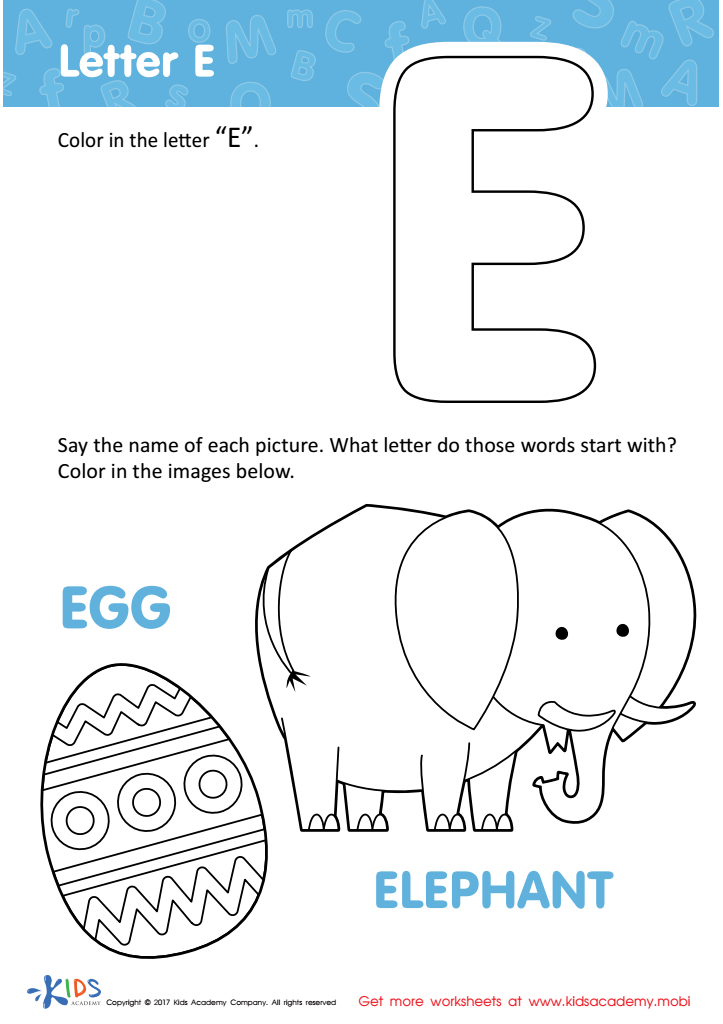
Letter E Coloring Sheet
 Assign to My Students
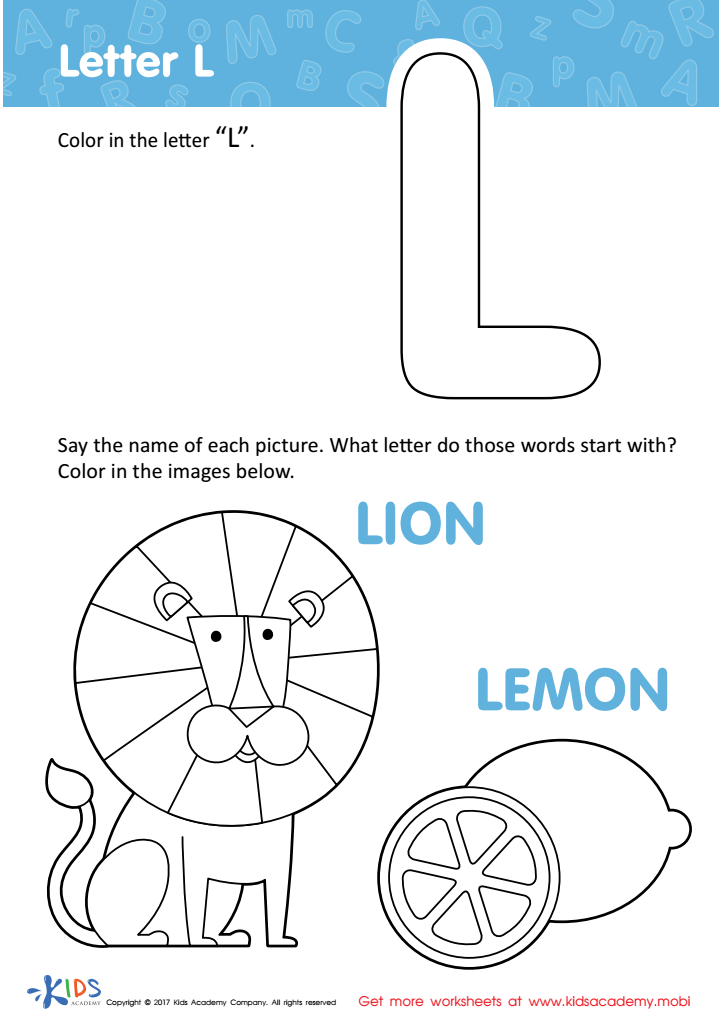
Letter L Coloring Sheet
Assign to My Students
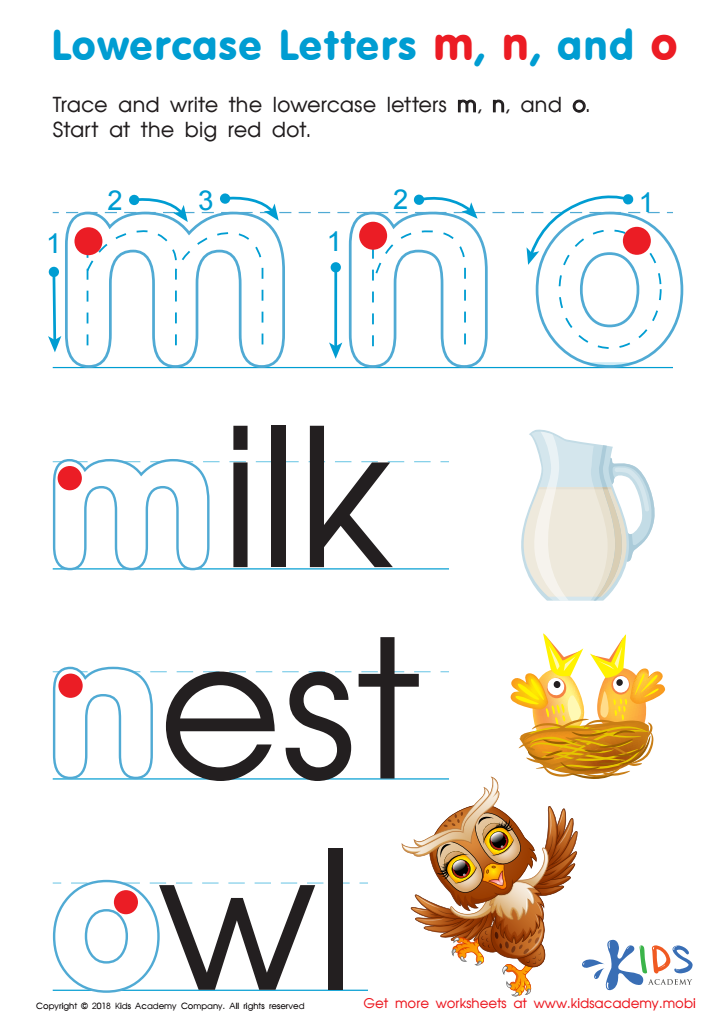
Lowercase Letters m n o Worksheet
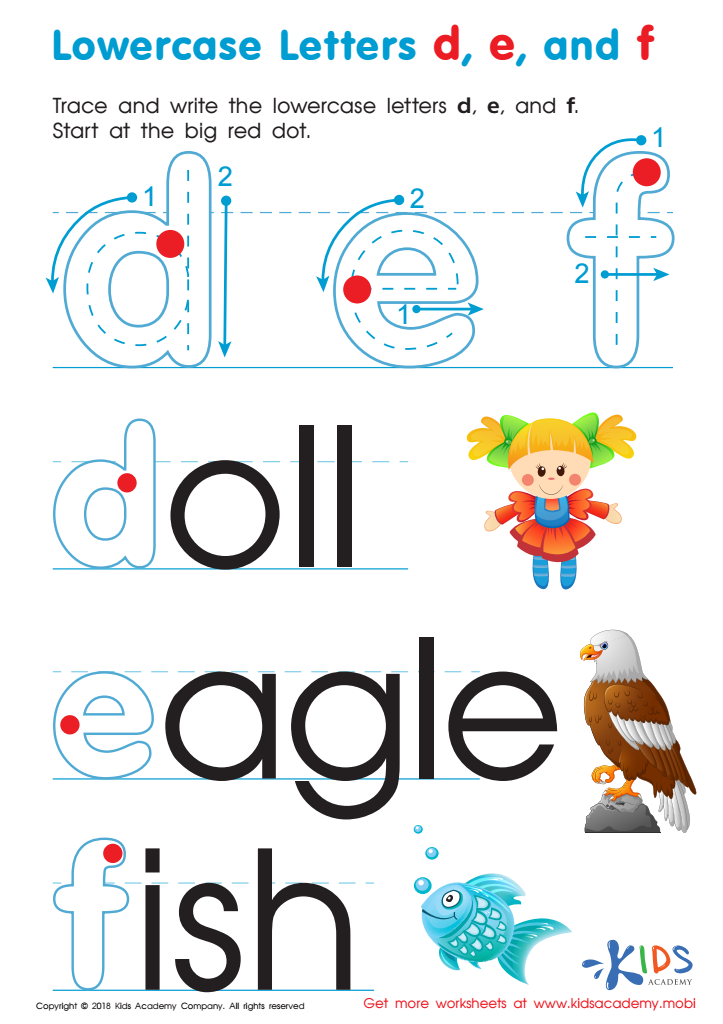
Lowercase Letters d e f Worksheet
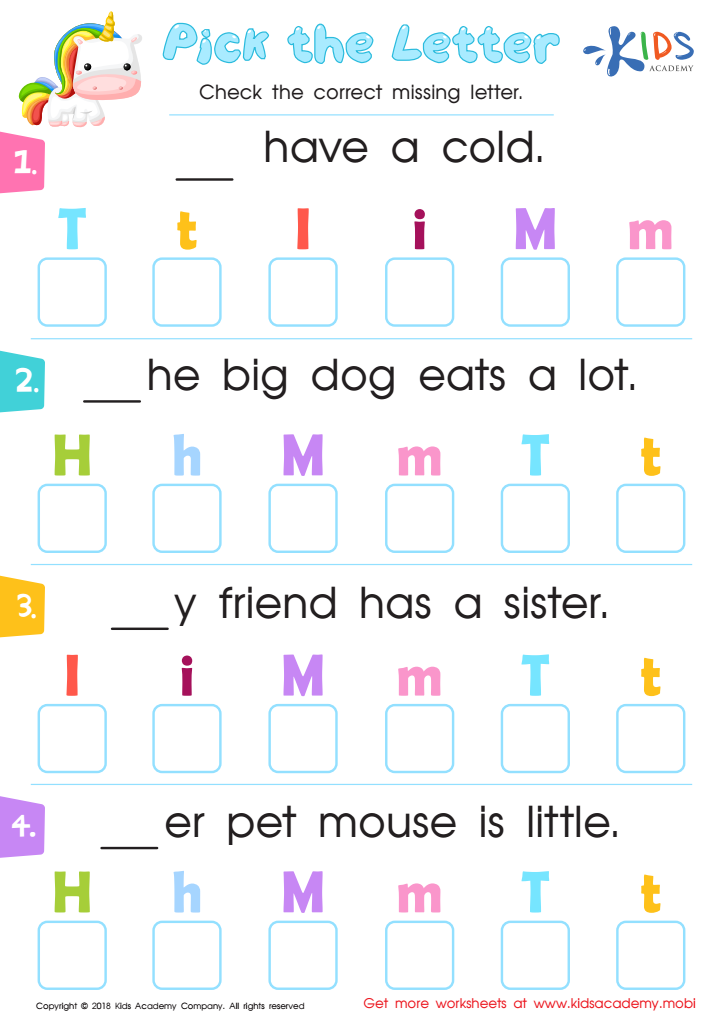
Pick the Letter Worksheet








Letter-sound association and letter recognition are crucial components in early literacy development for children aged 6-7. During this stage, children transition from recognizing letters to understanding the sounds they make, a skill fundamental for reading and writing. When parents and teachers prioritize these skills, they lay a strong foundation for children's reading proficiency.
Firstly, letter-sound associations help children decode words. By understanding the sounds associated with each letter, children can sound out unfamiliar words, leading to better comprehension and fluency. This skill not only enhances reading but also fosters a love for books and storytelling.
Secondly, good letter recognition lays the groundwork for writing. Children need to identify letters quickly and accurately to spell words correctly, which boosts their confidence in writing activities.
Furthermore, reinforcing these skills helps spark intellectual curiosity, allowing children to explore language in creative ways. When parents and teachers actively engage in activities that promote letter-sound association and recognition, such as games, reading aloud, and interactive learning, they foster an enriching environment conducive to academic success.
In short, cohesive efforts to support letter-sound associations and recognition in young learners can significantly impact their educational journey and overall love for learning.








