Phonics Skills Normal Letter Sounds Worksheets for Ages 6-7
3 filtered results
-
From - To
Unlock your child's reading potential with our "Phonics Skills: Normal Letter Sounds Worksheets" designed for ages 6-7. These engaging and educational worksheets help young learners master standard letter sounds, paving the way to fluent reading. Featuring a variety of fun activities and exercises, each worksheet supports essential phonics skills that are crucial for literacy development. Whether at home or in the classroom, these worksheets provide children with the practice they need to confidently recognize and pronounce letter sounds. Give your child the foundation they need for reading success with our expertly crafted phonics resources.
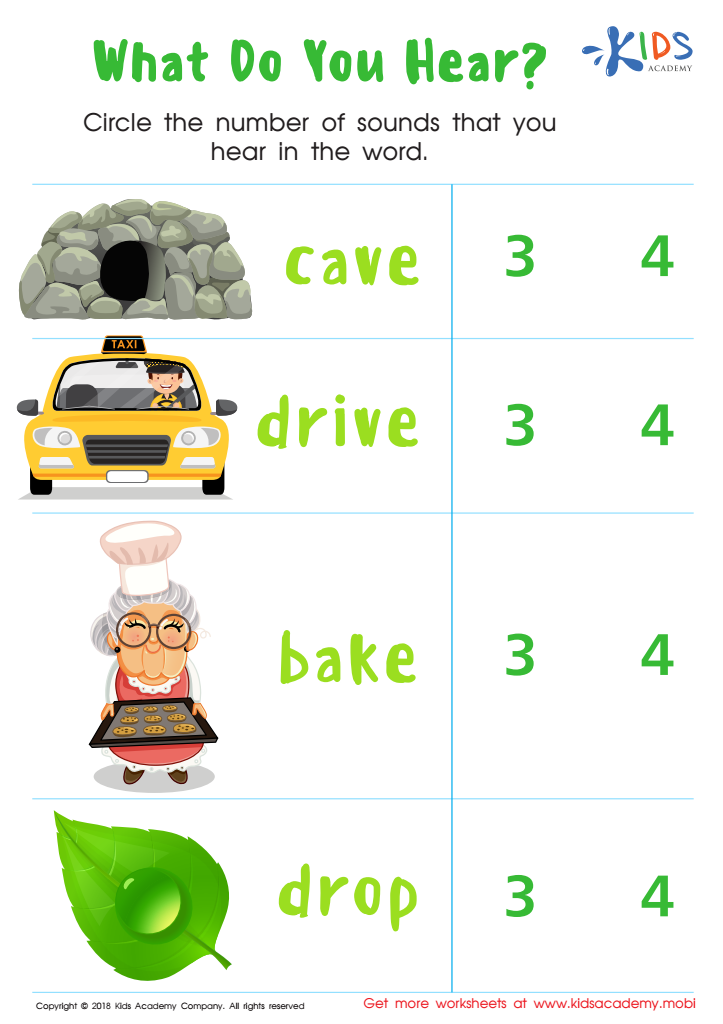
What Do You Hear? Worksheet
 Assign to My Students
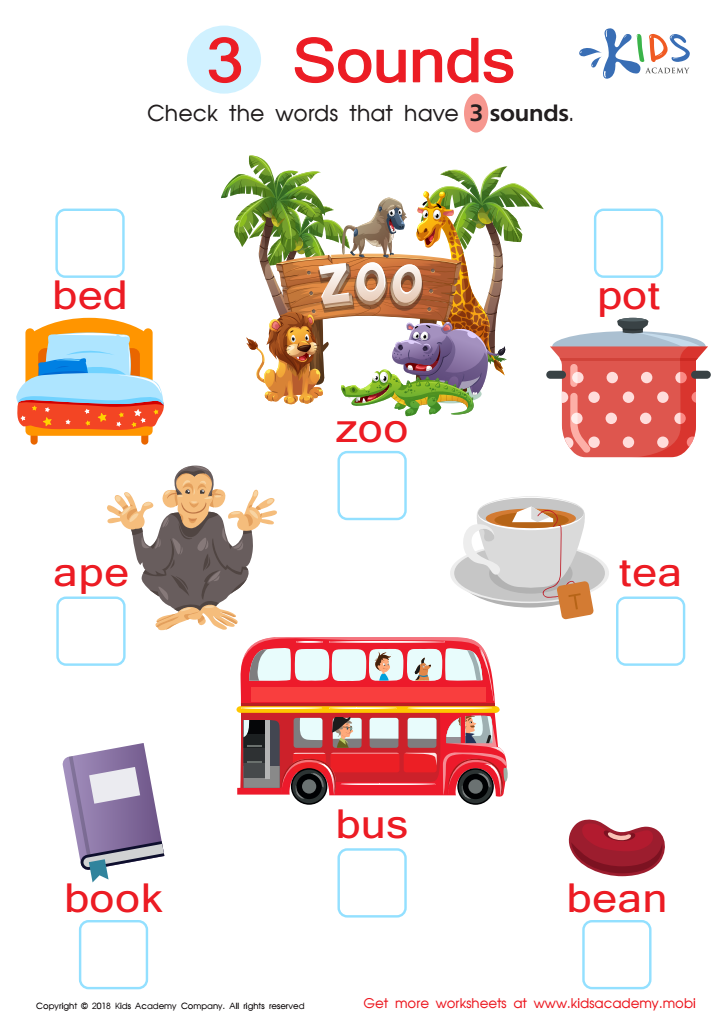
3 Sounds Worksheet
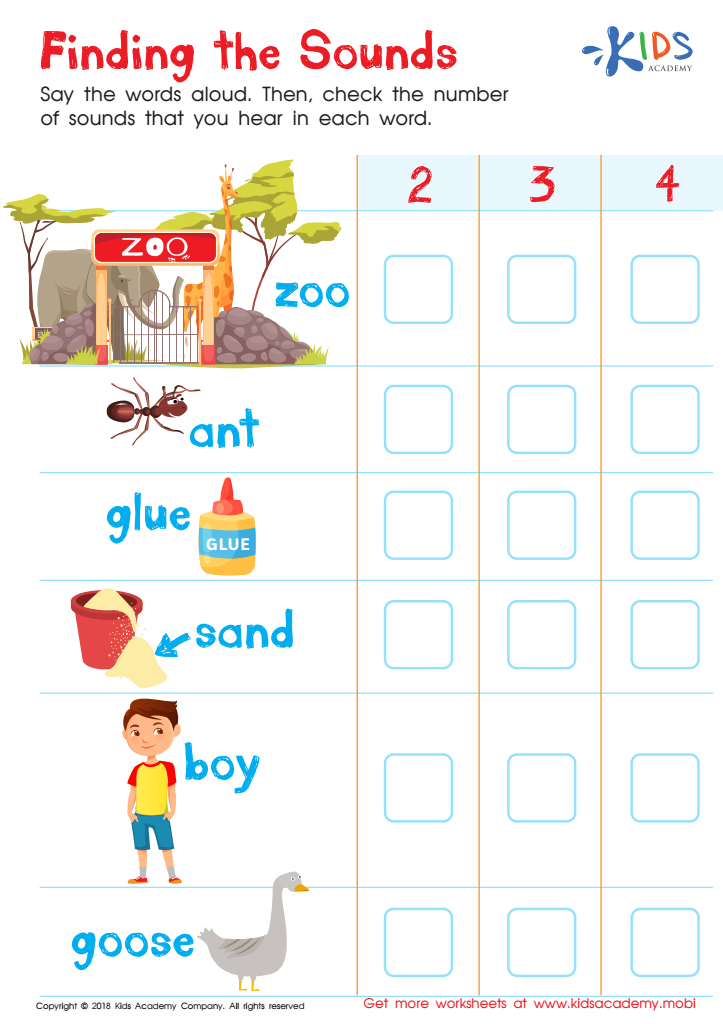
Finding the Sounds Worksheet








Parents and teachers should care about phonics skills and normal letter sounds for children ages 6-7 because these fundamental skills lay the groundwork for reading proficiency, which is essential for academic and lifelong success. At this critical age, children transition from recognizing letters to blending sounds and forming words, a process pivotal for developing fluent reading abilities.
Phonics involves associating sounds with written letters or groups of letters, enabling children to decode new words independently. Proficiency in phonics enhances children's reading comprehension as they can focus more on understanding the text than on deciphering individual words. Early success in reading fosters confidence and a love for learning, setting a positive tone for future educational experiences.
Moreover, phonics skills are closely tied to spelling and writing. By mastering how sounds correspond to different letter combinations, children improve their spelling accuracy and writing coherence—a skill that helps in effective written communication.
Research consistently supports early phonics instruction as foundational. Struggling with phonics can lead to reading difficulties, potentially causing frustration and reduced self-esteem. Thus, focusing attentively on these skills ensures children are equipped with the necessary tools to thrive in more advanced literacy tasks and fosters a strong educational beginning.






