Sound Association Normal Letter Sounds Worksheets for Ages 6-7
4 filtered results
-
From - To
Unlock your child's reading potential with our "Sound Association Normal Letter Sounds Worksheets for Ages 6-7." These expertly crafted, engaging activities help young learners master essential phonics skills by associating letters with their typical sounds. Perfect for early readers, each worksheet features fun exercises that promote sound recognition, improve pronunciation, and reinforce foundational language skills. Boost your child's confidence and reading ability as they explore and enjoy vibrant, interactive activities designed by educational professionals. Ideal for classroom use or homeschooling, our printable worksheets make learning phonics fun and effective! Download and start building strong literacy foundations today.
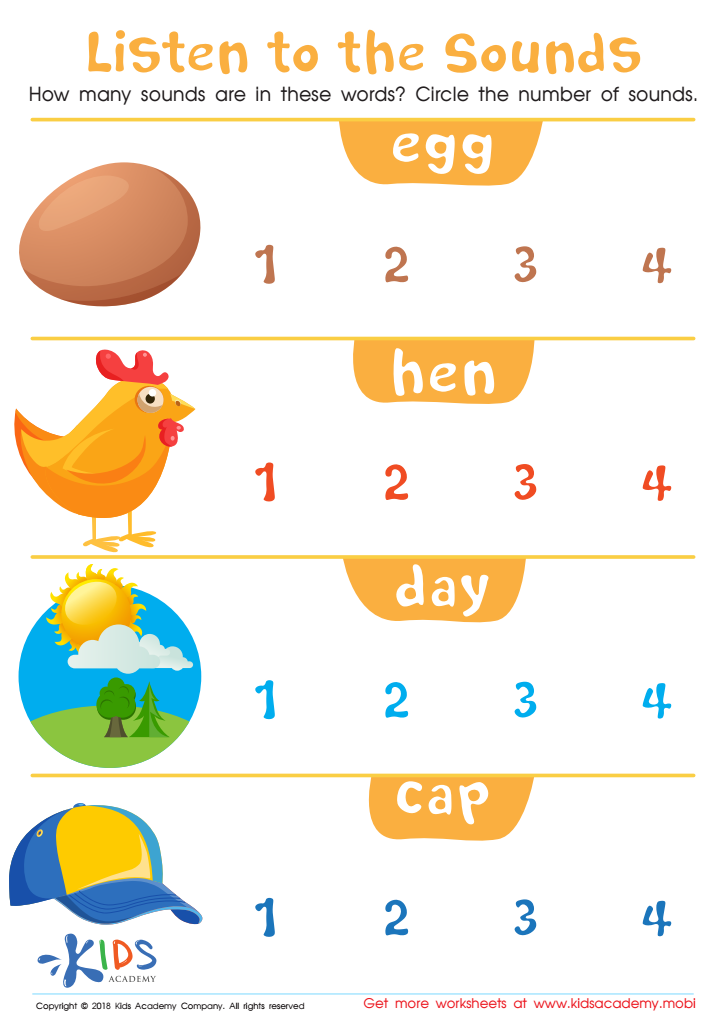
Listen to the Sounds Worksheet
 Assign to My Students
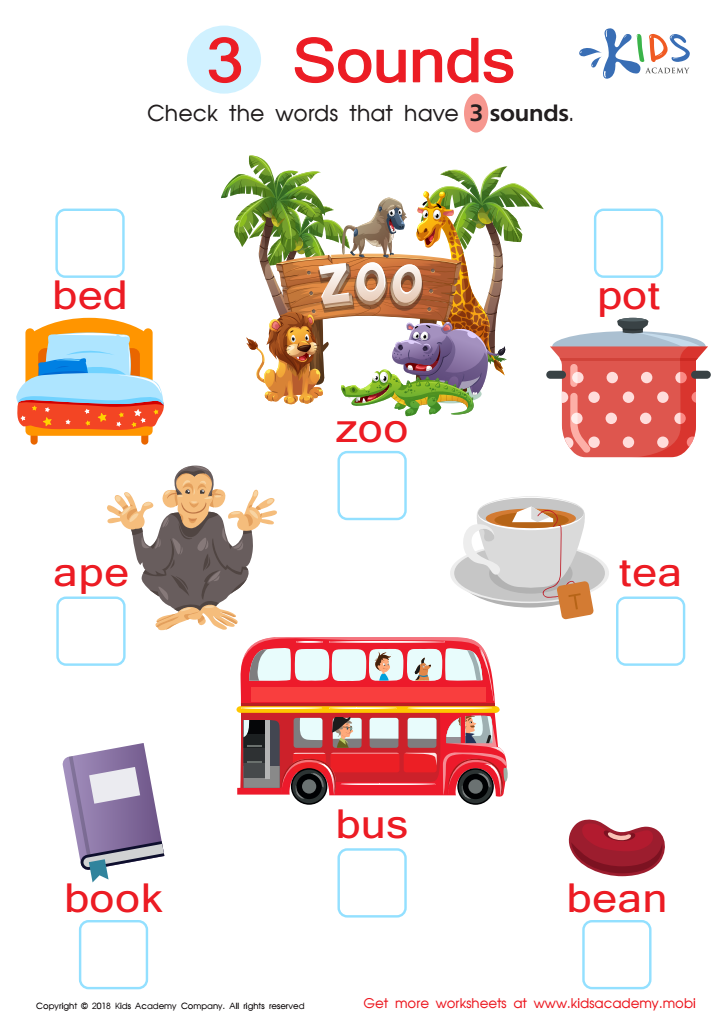
3 Sounds Worksheet
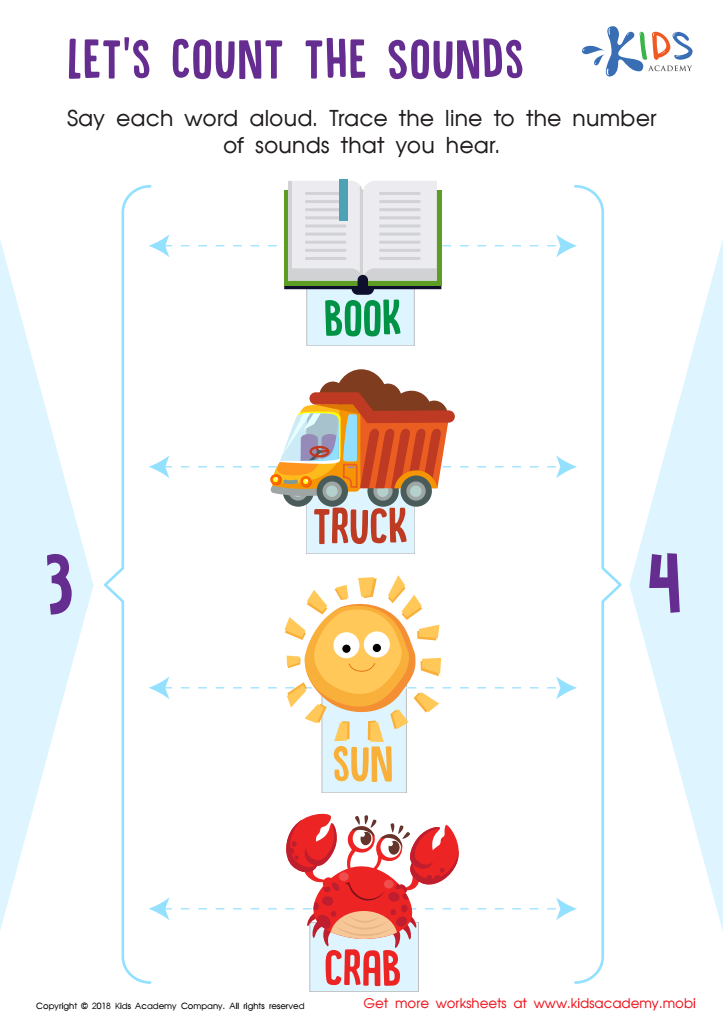
Let's Count the Sounds Worksheet
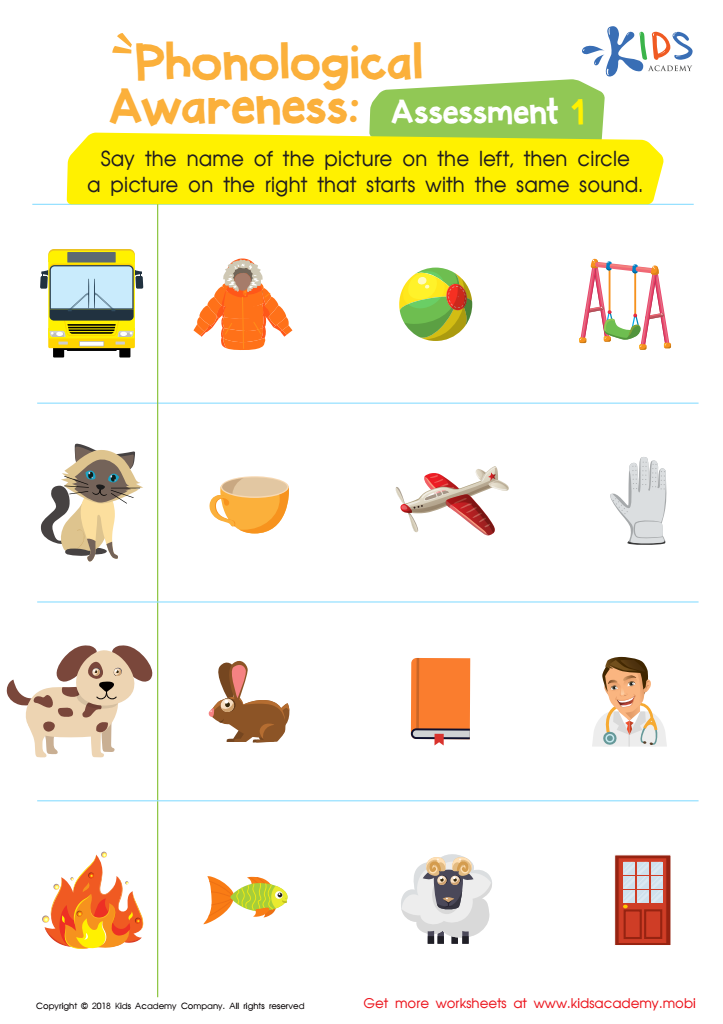
Phonological Awareness: Assessment 1 Worksheet








Sound association with normal letter sounds, often referred to as phonemic awareness, forms the cornerstone of early literacy, making it essential for parents and teachers to prioritize it for children aged 6-7. At this critical developmental stage, children are transitioning from recognizing letters to reading full sentences. Phonemic awareness allows them to understand the relationship between letters and sounds, enabling them to decode words quickly and accurately.
Effective sound-letter association aids in building a solid reading foundation. Without these skills, children may struggle with reading fluency, leading to difficulties in comprehension, which can affect their overall academic performance. Moreover, early literacy skills are also linked to future success; children who read well early on tend to perform better in school and possess better critical thinking skills.
Moreover, poor phonemic awareness is a strong predictor of reading difficulties as seen in dyslexia. Early intervention can mitigate such issues, helping children to keep pace with their peers.
For parents and teachers, integrating phonemic awareness activities—such as rhyming games, letter-sound matching, and simple decoding exercises—into daily routines can make learning fun and effective. Their involvement not only accelerates literacy development but also fosters a supportive learning environment, nurturing a lifelong love for reading and learning in young children.






