Spelling practice Normal Long Vowels Worksheets for Ages 6-7
8 filtered results
Difficulty Level
Grade
Age
-
From - To
Subject
Activity
Standards
Enhance your child's spelling skills with our Spelling Practice Normal Long Vowels Worksheets, designed specifically for ages 6-7. These engaging worksheets focus on the fundamentals of phonics, helping young learners recognize and spell words with long vowels like 'a', 'e', 'i', 'o', and 'u'. Each worksheet provides fun activities and exercises that make learning enjoyable while reinforcing spelling patterns. Perfect for home or classroom use, these resources support literacy development and boost confidence in reading and writing. Equip your child with the tools they need for spelling success with our expertly crafted worksheets. Ideal for young budding readers!
Favorites
With answer key
Interactive
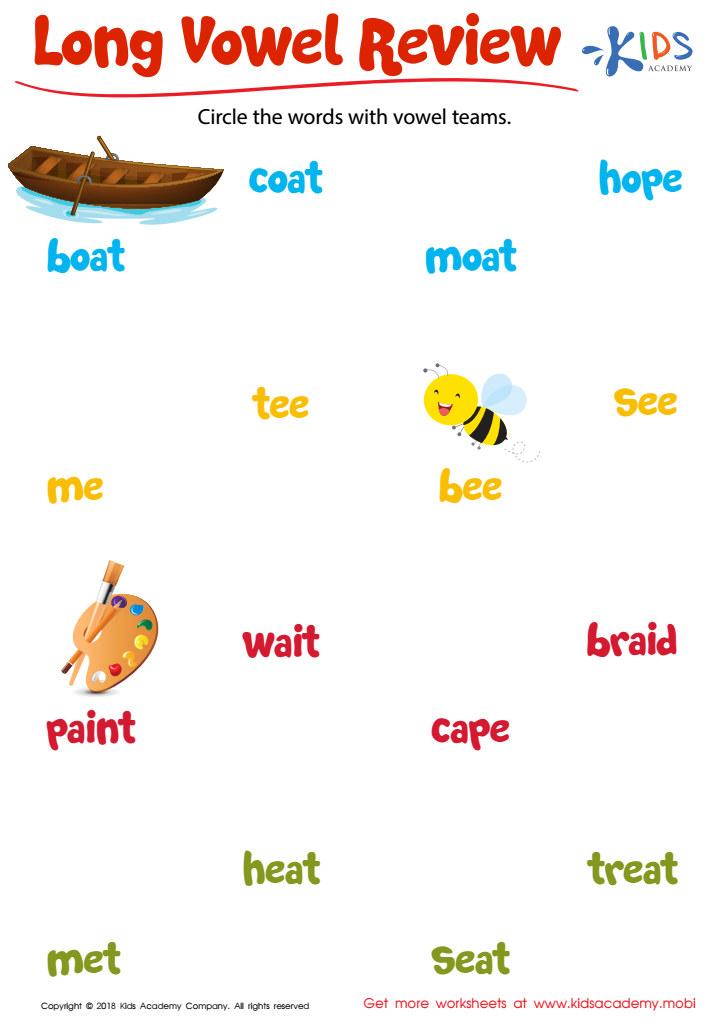
Long Vowel Review Worksheet
Vowel teams like "ea" and "ai" help us make words, and understanding these patterns aids emerging readers in becoming more fluent. This review worksheet has students finding words with vowel teams that make the long vowel sound, and helps them recognize high-frequency words.
Long Vowel Review Worksheet
Worksheet
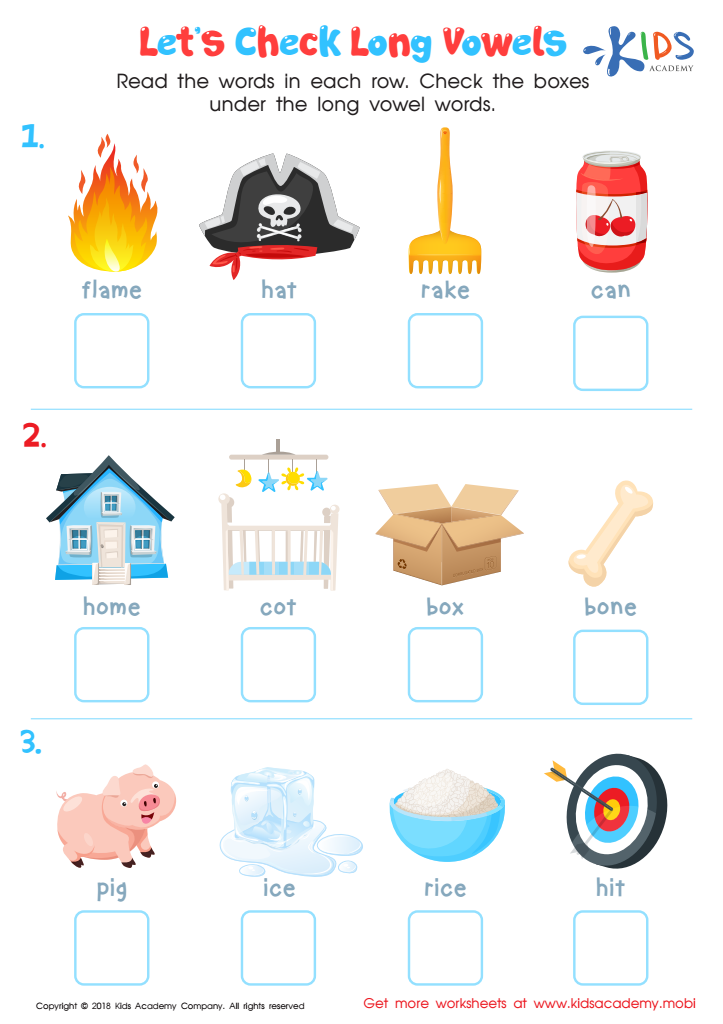
Let's Check Long Vowels: Assessment Worksheet
This worksheet helps your child identify objects and learn long vowel sounds. Ask them to say the names of the four objects in each row. Then, help them check the boxes to confirm they know the long vowel sounds. This will help them develop their reading skills.
Let's Check Long Vowels: Assessment Worksheet
Worksheet
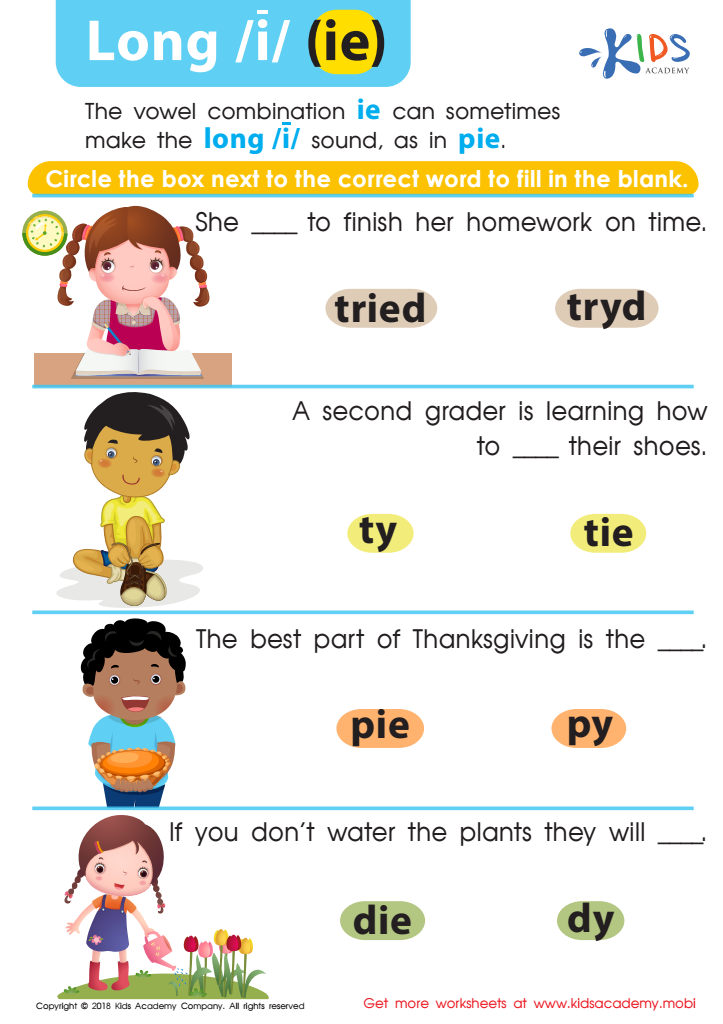
Reading: Long I and IE Worksheet
Have your child list words with the long /i/ sound (eg. 'pie'), and if needed, help them out with some examples. Read each word in the worksheet together and check their answer by having them circle the correct word.
Reading: Long I and IE Worksheet
Worksheet
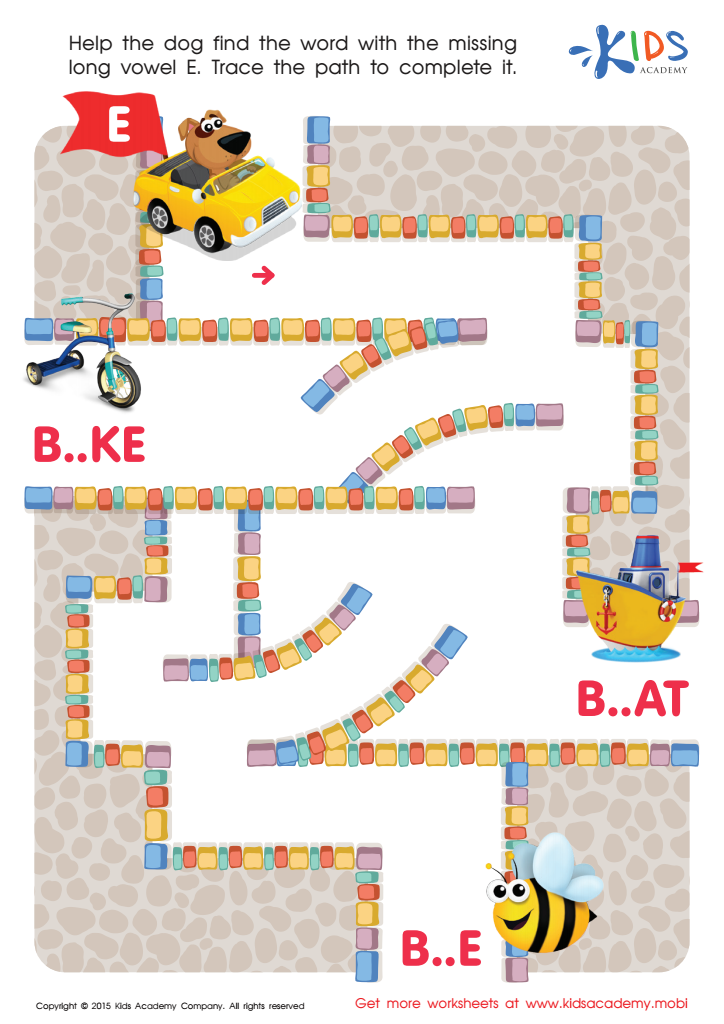
Long Vowel Sound E Worksheet
Practice distinguishing long and short vowel sound E with this free printable! Kids must complete the word “bee” by tracing the maze and adding the missing letter E. Remind them to say the word aloud to help sharpen their phonics ear. Get more phonics fun with the vowel sound E here.
Long Vowel Sound E Worksheet
Worksheet
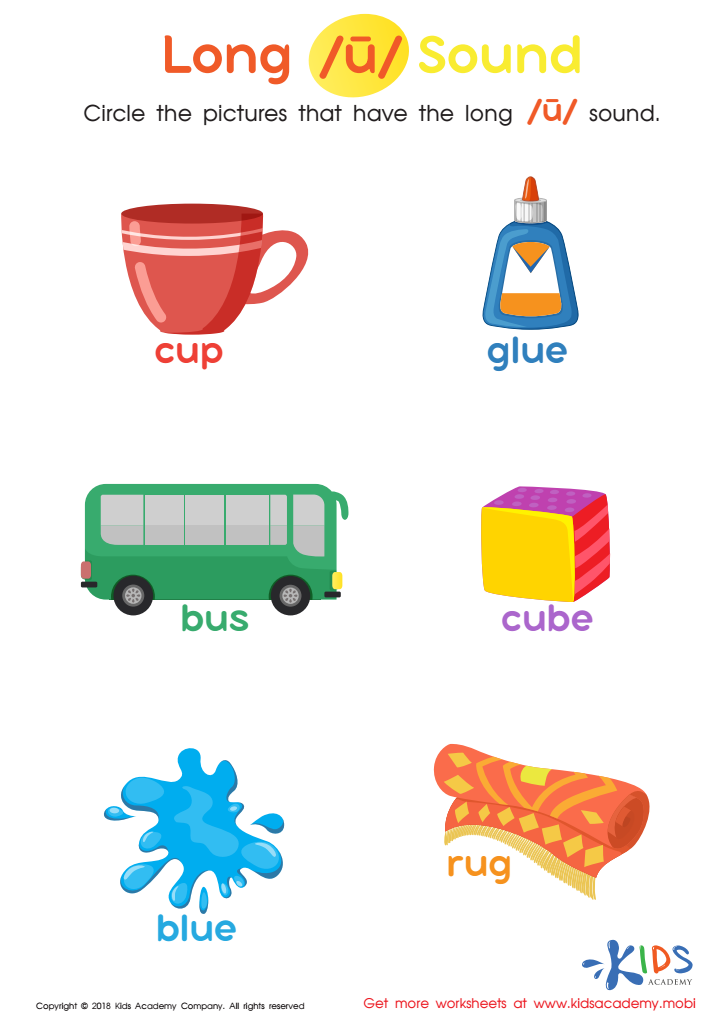
Long «u» Sound Worksheet
This fun and engaging free PDF worksheet teaches kids to differentiate between long and short «u» sounds. Through tracing circles around the correct words, they'll practice their fine motor skills while also recognizing patterns (silent-e for «ū» sound) in closed-syllable words. Bright and cheery pictures make it a great confidence booster for new readers!
Long «u» Sound Worksheet
Worksheet
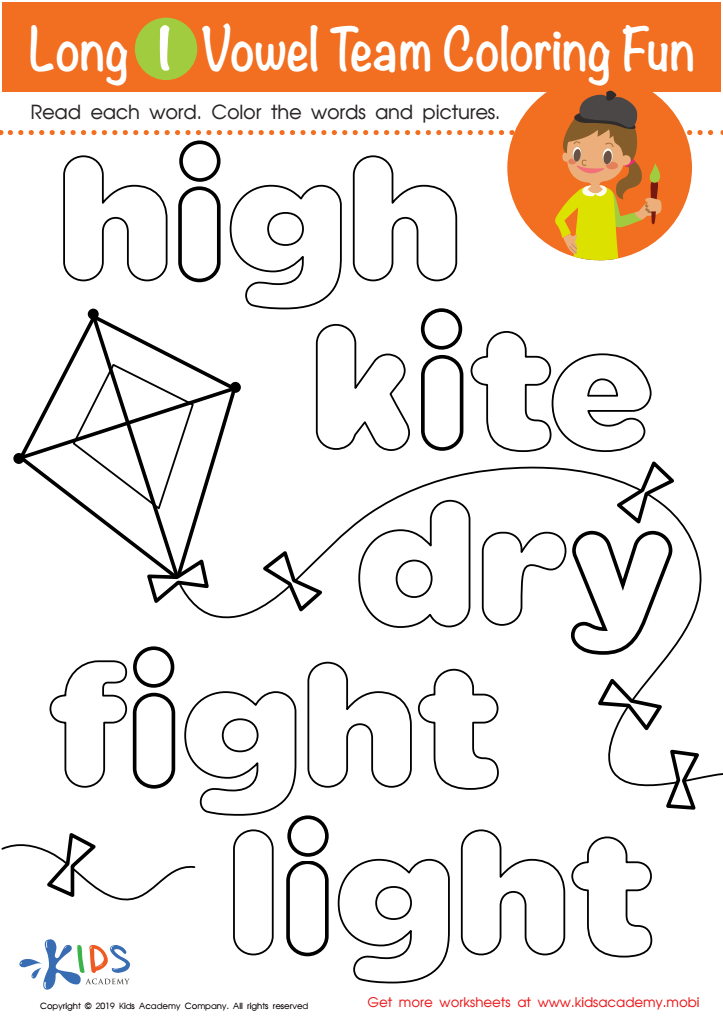
Long I Vowel Team Coloring Worksheet
This worksheet provides practice with letter combinations that make the long "i" sound while enhancing creativity and motor skills with a fun coloring activity. Unknowingly, new readers learn key phonics skills while having fun!
Download (PDF)
 Assign to My Students
Assign to My Students
Long I Vowel Team Coloring Worksheet
Worksheet
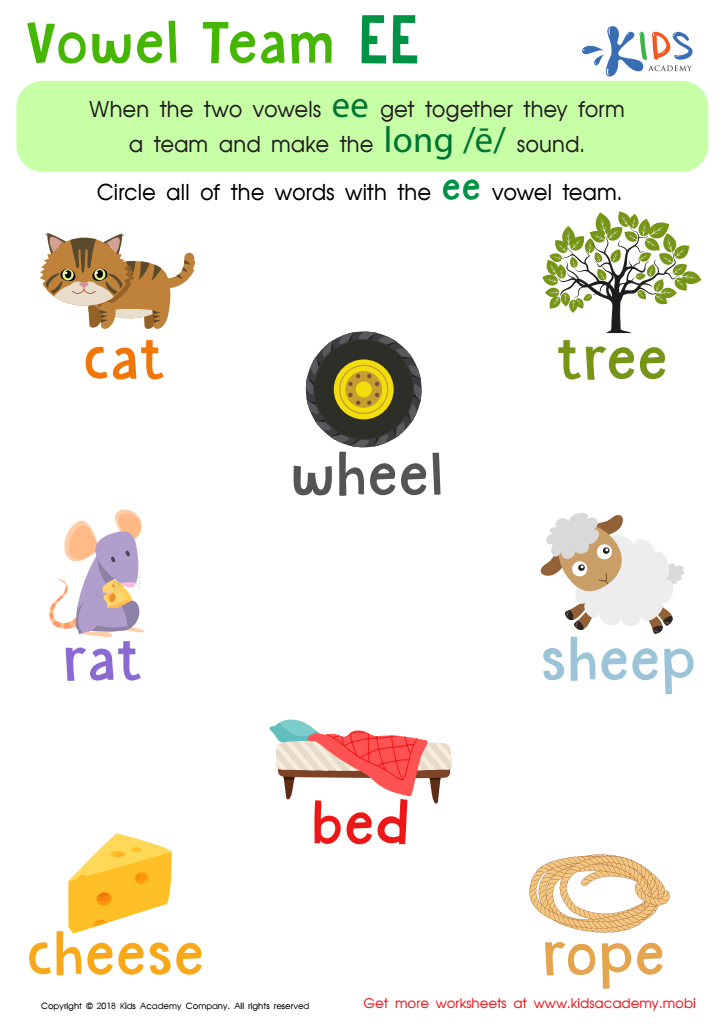
Reading: Vowel Team EE Worksheet
This worksheet is perfect for helping young learners master the /ee/ vowel team. It shows the first vowel with a long sound and the second vowel silent. It also provides pictures for unfamiliar words for readers of all levels. It's an ideal resource for teaching phonics skills.
Reading: Vowel Team EE Worksheet
Worksheet
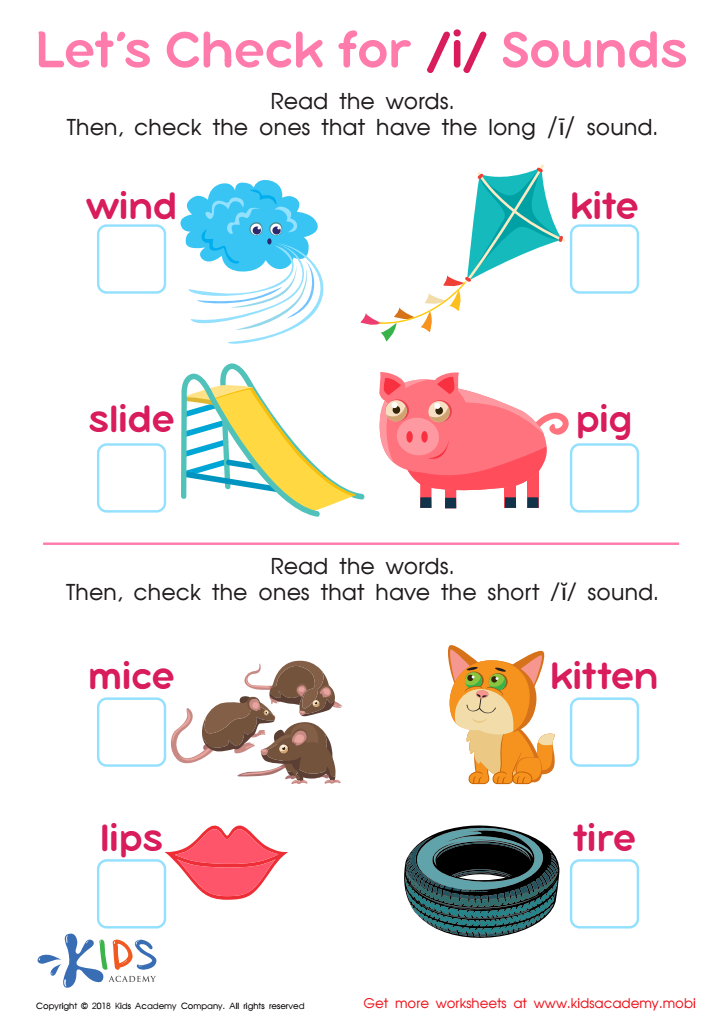
Let's Check for «i» Sounds Worksheet
This fun worksheet with pictures boosts phonics skills - differentiating between long «ī» and short «i» sounds in 1- and 2-syllable words. Kids use picture clues to read words, then check off the correct ones. It's a great way for new readers to practice early reading skills and find success on their own.
Let's Check for «i» Sounds Worksheet
Worksheet
Join Kids Academy for Free
Who is primarily going to use this learning content?



Spelling practice that focuses on normal long vowels is crucial for children ages 6-7 for several key reasons. During these formative years, children are in a critical period for developing foundational literacy skills that will support their future reading and writing abilities. One of the essential components of mastering English is understanding vowel sounds, specifically the distinction between short and long vowels.
By focusing on normal long vowels, educators and parents help children recognize patterns in language, such as the 'silent e' at the end of words like "cake" or vowel teams like "oa" in "boat." These patterns are pivotal for decoding new words, which in turn enhances reading fluency. Fluent readers are more likely to enjoy reading, leading to higher engagement with texts and better comprehension skills.
Additionally, spelling practice reinforces the connection between phonemes (sounds) and graphemes (written letters), aiding in clearer and more accurate written communication. This practice develops phonemic awareness, critical for spelling accuracy, and helps children avoid common pitfalls and confusion, such as spelling 'hope' instead of 'hop.'
Overall, investing time in spelling practice with an emphasis on normal long vowels can build children's confidence in their language abilities, secure a strong literacy foundation, and foster a lifelong love of learning and reading. Parents and teachers play a cardinal role in guiding this critical aspect of their educational journey.