
Hand-eye Coordination Normal Phonics Worksheets for Ages 6-7
5 filtered results
Difficulty Level
Grade
Age
-
From - To
Subject
Activity
Standards
Enhance your child's learning experience with our Hand-eye Coordination Normal Phonics Worksheets for Ages 6-7! Designed specifically for young learners, these engaging worksheets combine phonics practice with essential hand-eye coordination exercises. As children identify letters, sounds, and words, they also develop fine motor skills crucial for writing and other activities. Our fun and interactive resources foster a love for learning while building confidence in early literacy. Perfect for classroom use or at-home practice, these worksheets cater to diverse learning styles. Equip your child with the foundational skills they need for academic success today!
Favorites
With answer key
Interactive
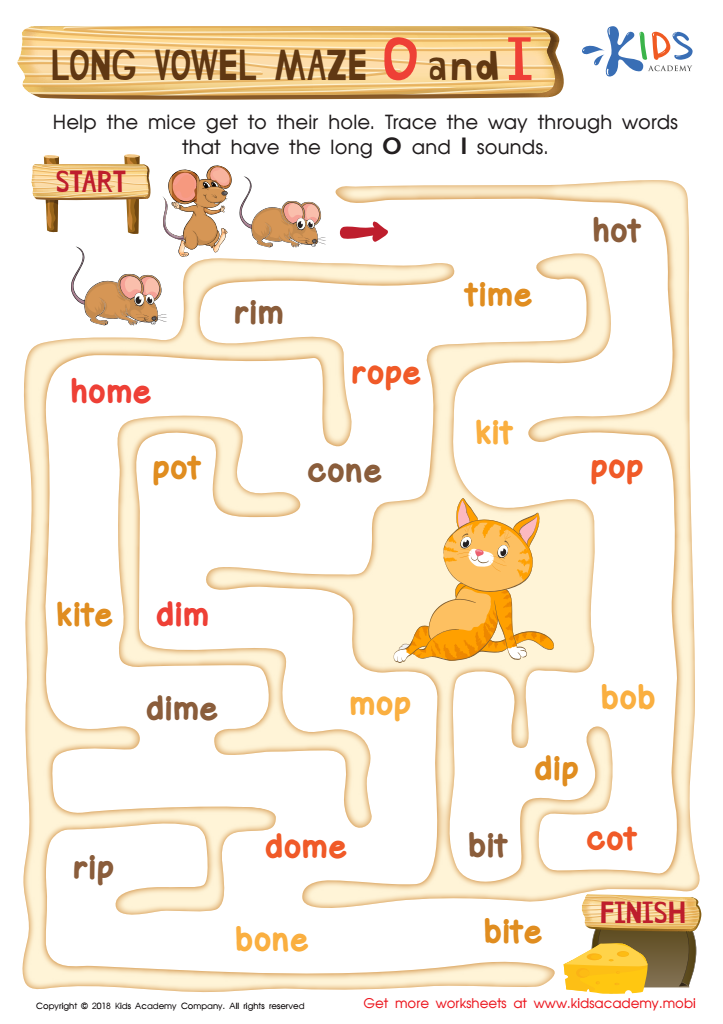
Long Vowel Maze /o/ and /i/ Worksheet
Help your new readers have fun and build their sight word vocabulary! Guide the mice to their prize cheese by having them trace the route on the worksheet, using words with the long o and long i sounds. But watch out for the kitty!
Long Vowel Maze /o/ and /i/ Worksheet
Worksheet
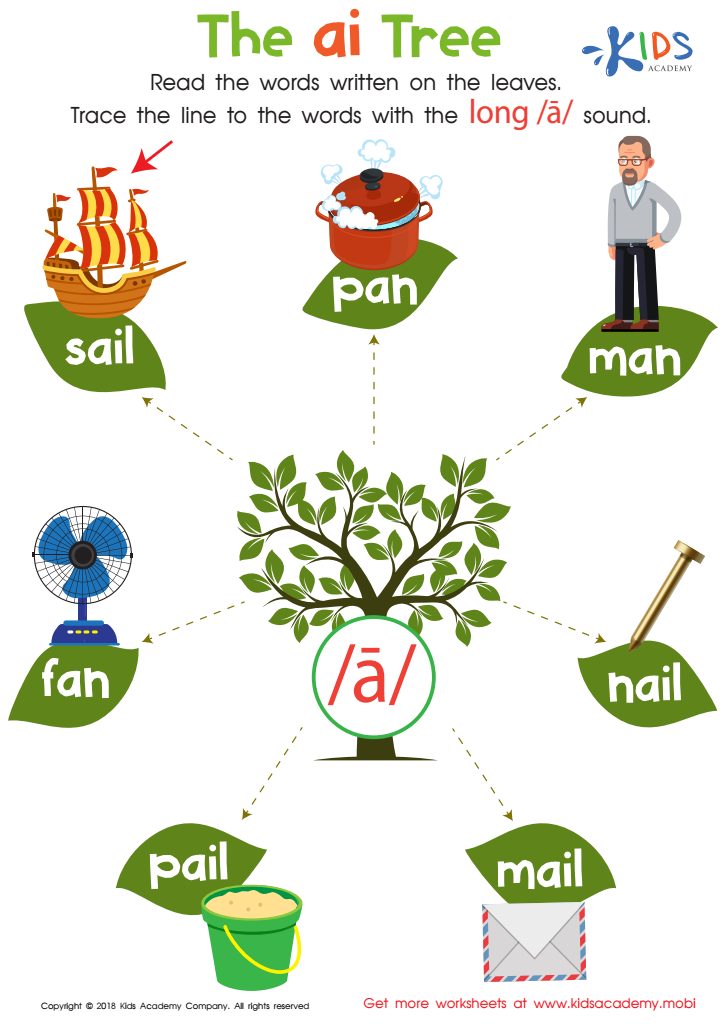
The AI Tree Worksheet
Help your kids learn to read better with this worksheet! Introduce the vowel pair 'ai' and give them familiar examples. Ask them to give you some in return. Then, have them read the words on the leaves and help them trace the ones with the long /a/ sound.
The AI Tree Worksheet
Worksheet

Long and Short U Worksheet
Revised: Spice up your lesson on long and short vowels with this fun printout! Kids read the words "tube" and "tub," then reinforce the sound by coloring in the words and pictures. It's a great way to make phonics class enjoyable!
Download (PDF)
 Assign to My Students
Assign to My Students
Long and Short U Worksheet
Worksheet
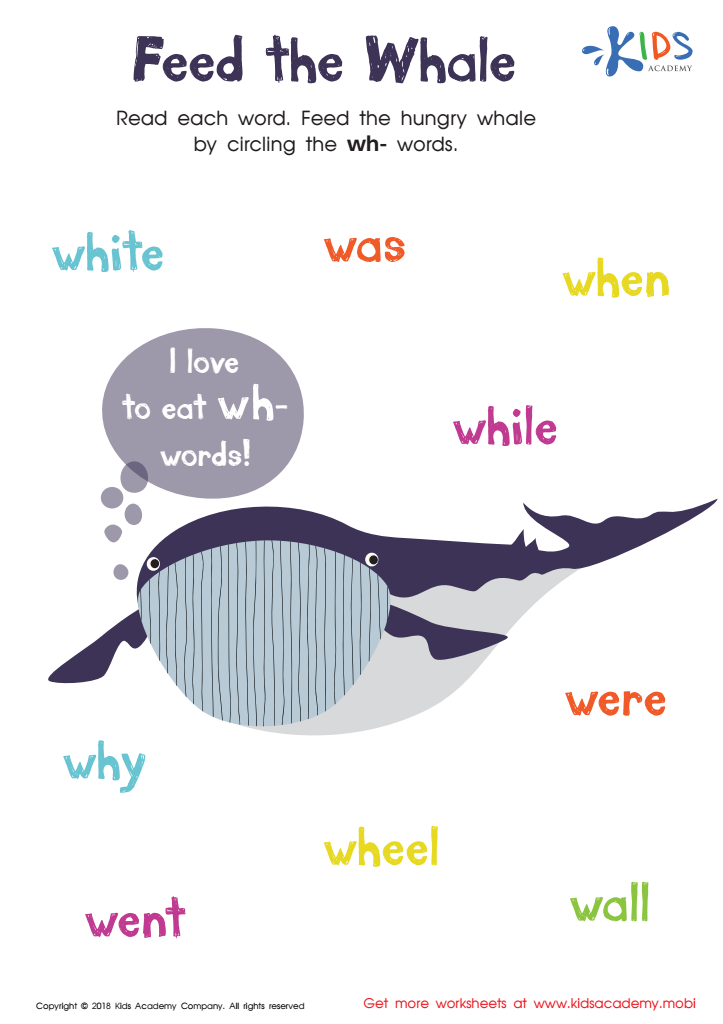
Feed the Whale Worksheet
Help your early reader build beginning consonant and blend recognition with this fun whale worksheet! They'll feed the whale wh- words, circle sight words, and build fine motor skills—all while discriminating between differently colored words.
Feed the Whale Worksheet
Worksheet
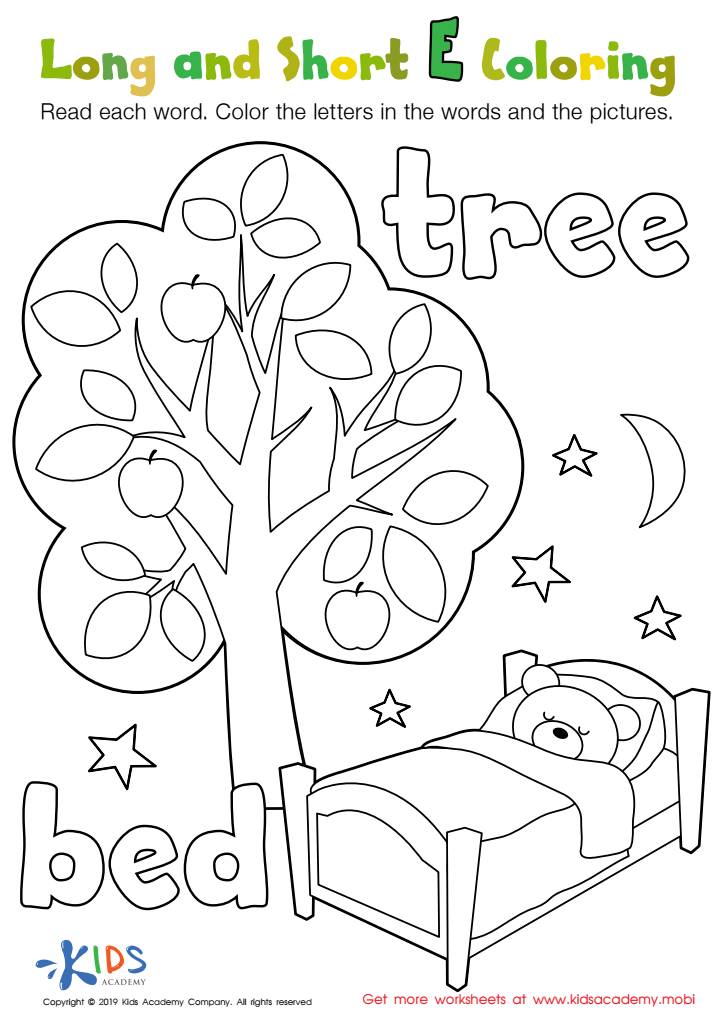
Long and Short E Worksheet
This fun printout makes learning phonics enjoyable for Grade 3 students. Get them to read the words “tree” and “bed” to recognize the different sounds of the letter “E”. After hearing the words they can color the words and the pictures to understand differences between long and short vowels.
Download (PDF)
Assign to My Students
Assign to My Students
Long and Short E Worksheet
Worksheet
Join Kids Academy for Free
Who is primarily going to use this learning content?








Hand-eye coordination is a crucial skill for children aged 6-7 as it enables them to effectively manage tasks that require visual and physical coordination. For educators and parents, understanding this developmental aspect is essential as it lays the groundwork for various academic and life skills, including fine motor skills necessary for writing, engaging in sports, and participating in everyday activities.
Normal phonics instruction focuses not just on recognizing letters and sounds but also on integrating activities that promote hand-eye coordination, such as tracing letters, cutting exercises, and interactive learning games. These activities enhance a child's ability to connect visual input with physical movements, thus boosting their confidence and competence in literacy.
When children possess strong hand-eye coordination, they are better equipped to engage in learning with less frustration, resulting in healthier educational experiences. This, in turn, influences their motivation and love for learning. By focusing on hand-eye coordination within phonics education, teachers and parents provide essential support that encourages children to thrive academically and socially. Emphasizing this coordination can foster a more comprehensive development that will benefit children not just in their academics but throughout their lives.







