
Number Recognition Normal Phonics Worksheets for Ages 6-7
3 filtered results
Difficulty Level
Grade
Age
-
From - To
Subject
Activity
Standards
Discover engaging "Number Recognition Normal Phonics Worksheets" designed specifically for ages 6-7! These worksheets combine fun and learning, helping young students master essential number recognition skills through interactive phonics activities. Each worksheet features colorful illustrations and age-appropriate exercises that reinforce number identification, counting, and early math concepts. Perfect for classroom use or at-home learning, these resources support literacy development while enhancing numeracy skills. Our carefully crafted worksheets promote a hands-on approach to education, making learning enjoyable and effective. Prepare your child for academic success with these stimulating number recognition worksheets that align with their developmental needs!
Favorites
With answer key
Interactive
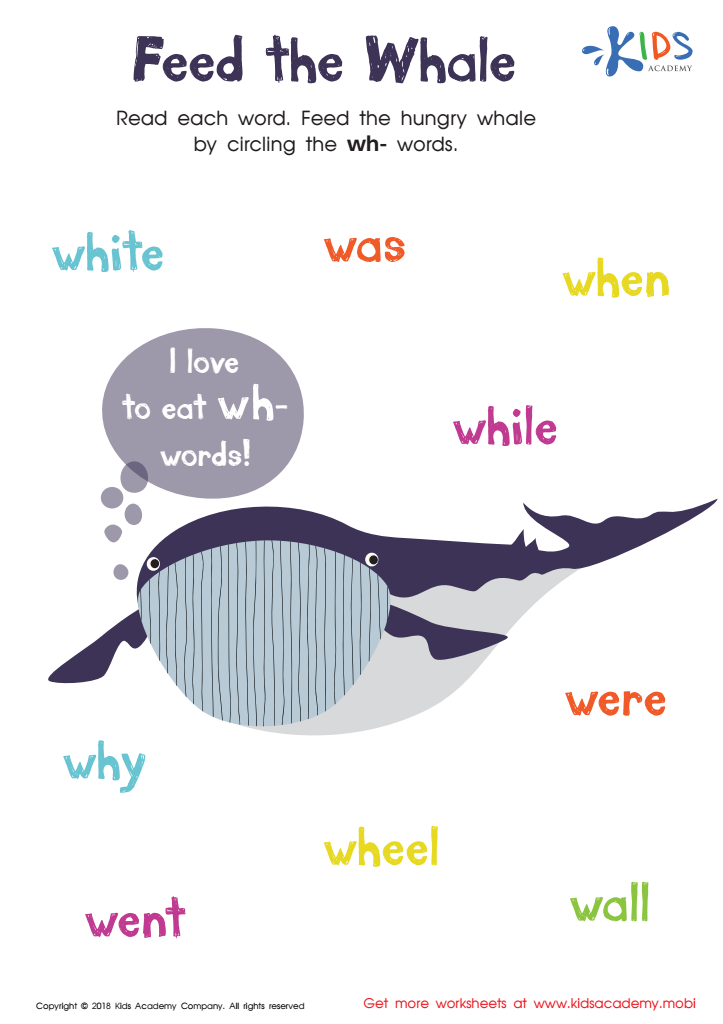
Feed the Whale Worksheet
Help your early reader build beginning consonant and blend recognition with this fun whale worksheet! They'll feed the whale wh- words, circle sight words, and build fine motor skills—all while discriminating between differently colored words.
 Assign to My Students
Feed the Whale Worksheet
Worksheet
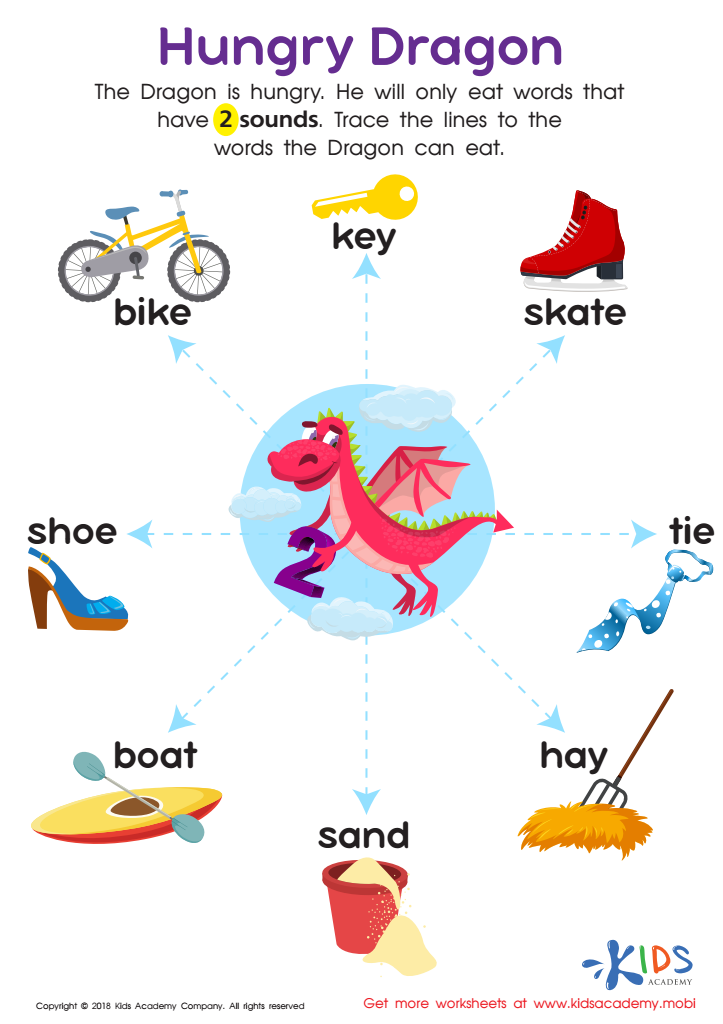
Hungry Dragon Worksheet
Feed the dragon words and watch your child strengthen their phonological awareness and auditory discrimination skills! Download this free PDF for tracing exercises that build their fine motor skills too. Kids will love spending time with the cute dragon while they unwittingly learn reading skills!
Hungry Dragon Worksheet
Worksheet
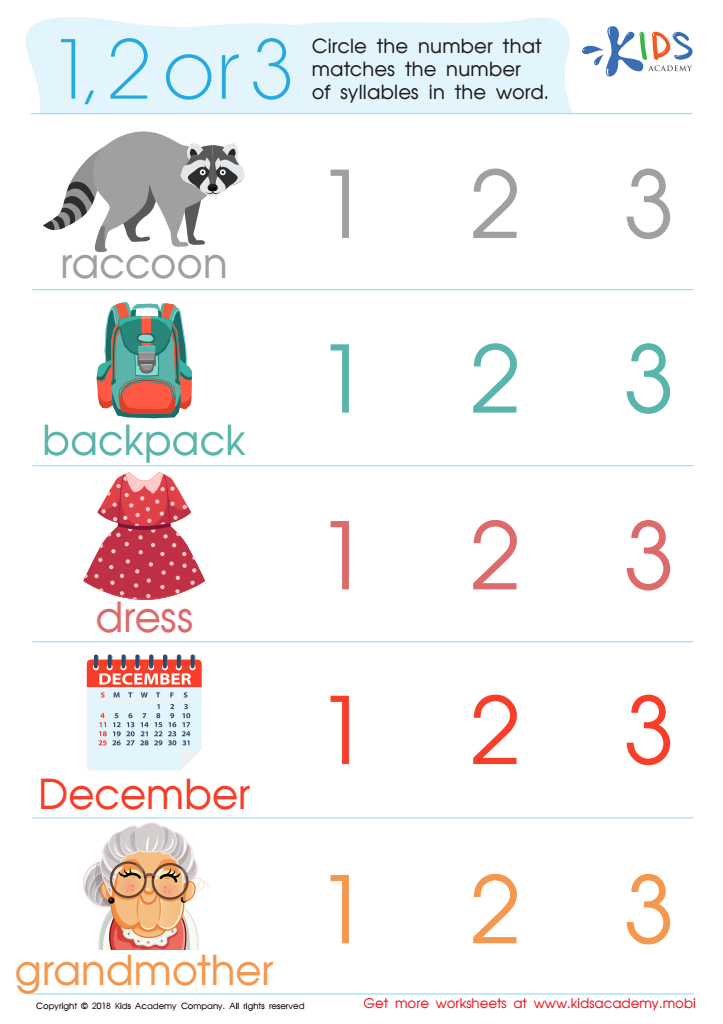
1, 2 or 3? Worksheet
Do your kids know about syllables? Test their understanding with this worksheet. Read the words aloud and ask them to say them with you. Help them circle the number that matches the number of syllables in each word. Perfect for expanding knowledge or testing how much they've already learned.
1, 2 or 3? Worksheet
Worksheet
Join Kids Academy for Free
Who is primarily going to use this learning content?








Number Recognition and Phonics are crucial foundational skills for children aged 6-7, and understanding their significance can greatly benefit both parents and teachers.
Firstly, number recognition is essential for numeracy development. At this age, children begin to engage with mathematical concepts like addition and subtraction. Recognizing numbers reinforces their ability to solve problems and understand the world around them. Without this skill, students may struggle with more advanced math topics as they progress in their education.
Secondly, phonics is foundational for developing reading and writing skills. It equips children with the tools they need to decode words, helping to build their vocabulary and comprehension. A solid understanding of phonics facilitates independent reading, fostering a love for books and learning.
Moreover, intertwining number recognition and phonics creates a well-rounded educational experience, enhancing critical thinking and cognitive abilities. Engaging parents and teachers in reinforcing these skills can create a supportive learning environment, making learning fun and enriching for children.
Ultimately, nurturing number recognition and phonics at this early age establishes a strong educational base, setting the stage for future academic success and learning confidence. Therefore, both parents and teachers should prioritize these areas in their educational efforts.







